
Introduction:
His Real Name Was Harold Jenkins — But That Name Was Too Small for the Legend He Was About to Become
Before the gold records, before the sold-out theaters, and long before the duets that transformed country music into intimate late-night conversations, he was simply Harold Jenkins.
It was an ordinary name for a boy born into the rich cultural landscape of the Mississippi Delta—a place where music floated through open windows, echoed from front porches, and drifted across warm summer evenings like a familiar breeze. But there was never anything ordinary about Harold Jenkins.
As a young man, his first love was baseball. For a time, it seemed entirely possible that athletics—not music—would shape his future. He had natural talent, determination, and the kind of confidence that made people pay attention. Had life taken a different turn, the world might have remembered him for his swing instead of the unmistakable voice that would one day stop audiences in their tracks.
Everything changed with a name.
The name “Conway Twitty” wasn’t inherited or passed down through family tradition. It was discovered on a map—borrowed from two small American towns: Conway, Arkansas, and Twitty, Texas.
What seemed like a simple decision became the first step toward creating a legend.
Harold Jenkins was becoming someone larger than life—a performer with a voice too distinctive and a presence too magnetic to remain confined by the world he had known.
The transformation wasn’t instant, but it was undeniable.
Conway Twitty entered the music industry with a rare combination of confidence and vulnerability. His voice carried warmth, longing, and just enough edge to make every lyric feel deeply personal. He could sing about love as if he had lived every word, turning heartbreak into poetry and tenderness into truth.
As the hits continued to climb the charts, so did his legacy.
Conway Twitty became one of country music’s most successful artists, earning an extraordinary string of No. 1 records and building a career that spanned decades. His songs found their way into kitchens, dance halls, pickup trucks, and quiet living rooms across America.
People didn’t simply listen to Conway Twitty—they felt him.
His music invited listeners into a private conversation. It was smooth without losing its authenticity, emotional without becoming fragile. He understood the power of restraint and knew exactly when to let a single note linger just long enough to leave a lasting impression.
Then came his unforgettable partnership with Loretta Lynn.
Together, Conway Twitty and Loretta Lynn created something far greater than a series of hit duets. Their performances felt genuine, lived-in, and deeply human. They weren’t merely singing songs—they were telling stories about love, regret, devotion, and hope.
Some artists perform duets.
Conway Twitty and Loretta Lynn created conversations the entire country wanted to overhear.
Their chemistry was built not on spectacle, but on trust, timing, and emotional honesty. For millions of fans, they became the soundtrack to real life.
Then, on June 4, 1993, the music unexpectedly grew quiet.
After performing in Branson, Conway Twitty boarded his tour bus, preparing to return home to Nashville, just as he had done countless times before.
But this time, he collapsed.
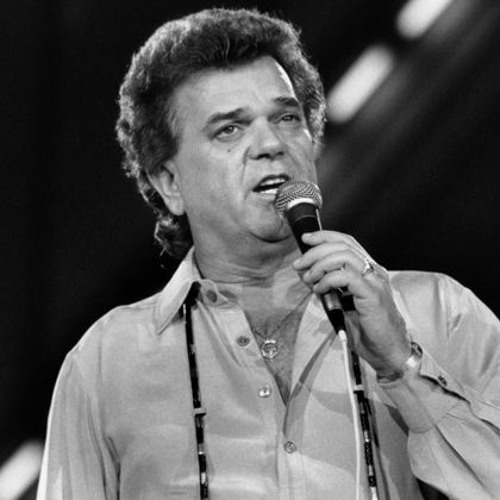
At the hospital, Loretta Lynn happened to be there while visiting her husband, who was recovering from surgery. She arrived before she realized she was about to say goodbye.
Conway Twitty passed away the following morning at just 59 years old.
His final album had already been recorded.
Its title was Final Touches.
Even now, the name feels impossibly fitting—as though the final chapter of his life had been written with the same quiet grace that defined his music.
Harold Jenkins became Conway Twitty.
And Conway Twitty became far more than a stage name.
He became a voice that defined an era, an artist who understood the emotional heartbeat of a song, and a performer whose legacy still feels deeply personal to those who listen today.
Some men leave behind a catalog of music.
Some leave behind memories.
Conway Twitty left both—and in the closing moments of his remarkable story, he left behind an ending that felt almost poetic, as if the music itself knew how to bow its head one final time.