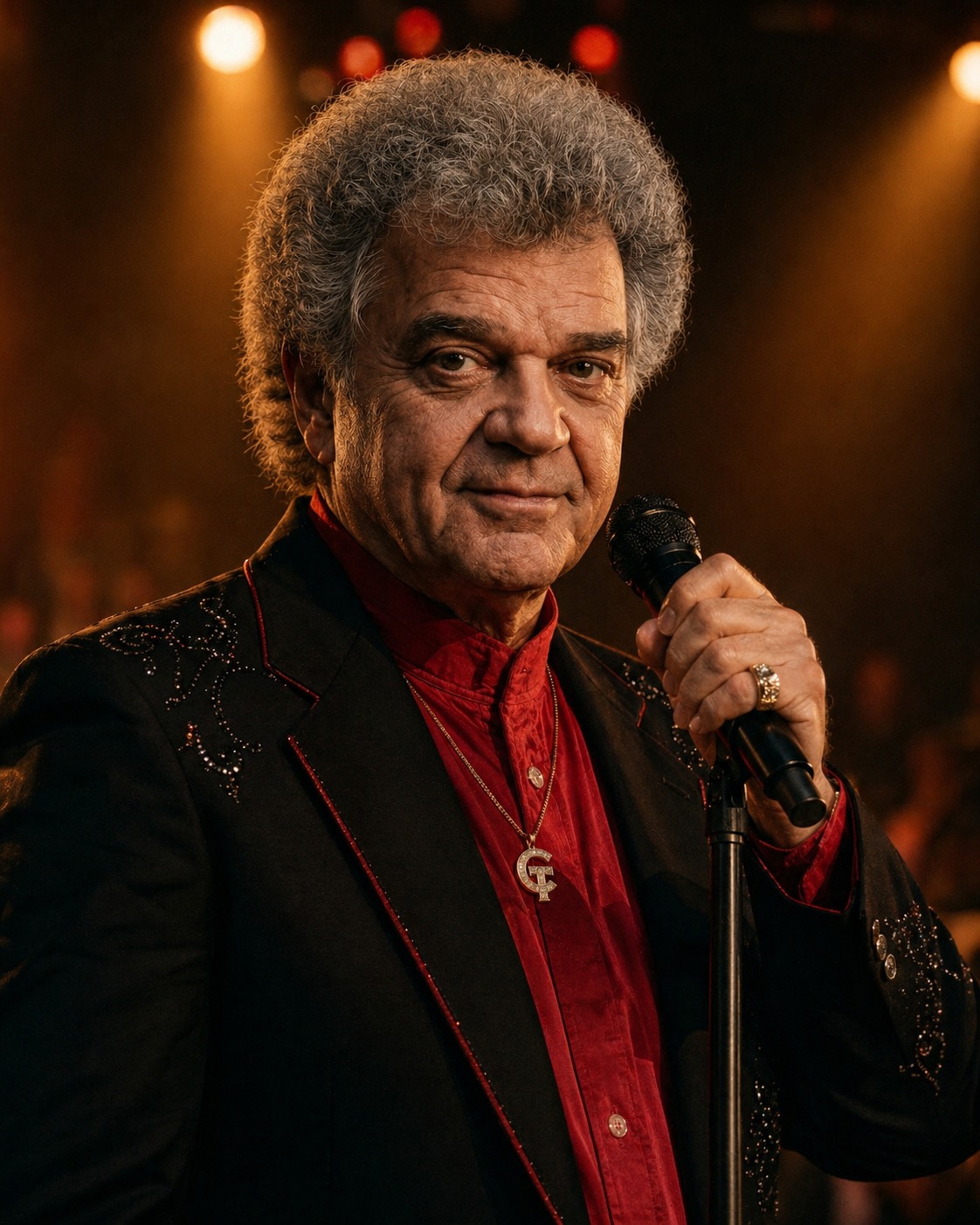
Introduction:
The Last Ride Home: Conway Twitty, Twitty City, and the Goodbye Fans Still Remember
Before sunrise on June 5, 1993, Conway Twitty was still on the road, making his way back to Tennessee. The tour bus was outside Springfield, Missouri—hours away from Hendersonville, a place he had transformed into something far greater than a private residence. It was a carefully built world, a vision of home that extended beyond family into the hearts of fans who felt connected to him through every song.
But he never made it back.
Born Harold Lloyd Jenkins in 1933, Conway Twitty’s early life carried little hint of the towering country career that would follow. He moved through baseball dreams, military service, and early recording attempts at Sun Studios, where American music was being reshaped in real time. Even his stage name—borrowed from Conway, Arkansas, and Twitty, Texas—sounded destined for memory. Once it entered public consciousness, it became more than identity. It became a promise of presence, warmth, and emotional truth.
A Home Built for More Than One Life
By the early 1980s, Conway Twitty was already one of country music’s most commanding voices. His catalog stretched across themes of love, heartbreak, devotion, and quiet faith, delivered in a voice that felt both intimate and authoritative. His audiences did not simply listen—they belonged.

Then came Twitty City.
Located in Hendersonville, Tennessee, it was more than an estate. It was a sprawling expression of family, legacy, and connection. With a 24-room mansion, surrounding homes for relatives, landscaped gardens, and a gift shop that welcomed thousands, Twitty City blurred the line between private life and public devotion. Fans did not feel like outsiders. They felt invited in.
During Christmas seasons, the property became a pilgrimage site. Cars lined the streets just to see the lights. Families turned it into tradition. For many, it confirmed something rare about a star of his magnitude: he had not built distance from his audience. He had built a place where that distance seemed to disappear.
The Final Performance
On June 4, 1993, Conway performed at the Jim Stafford Theatre in Branson, Missouri. At 59, he remained steady on stage—measured, calm, and deeply connected to the emotional core of his music. One of the songs that night, “That’s My Job,” carried a father’s quiet promise of unwavering love, a theme he delivered without theatrics, relying instead on honesty and restraint.
After the show, he boarded the bus headed home.

Somewhere near Springfield, tragedy struck suddenly. A medical emergency unfolded while the bus continued its journey through the night. Surrounded by his touring team, the man who had spent decades singing about loyalty and presence was gone before dawn broke.
A Legacy Interrupted, Not Erased
News of his passing moved through country music with an almost unreal silence. In Hendersonville, fans arrived with flowers, letters, and memories. Many had never met him, yet felt they had known him for years. Twitty City itself became a place of mourning, its gates holding back a grief that felt both personal and collective.
In the years that followed, the estate changed. Ownership shifted, traditions faded, and the physical space that had once welcomed thousands no longer held the same form. Yet its meaning remained intact in memory.
Because what Conway Twitty left behind was never just property or performance—it was connection. His songs still carry that familiar closeness. His voice still feels like it is speaking directly to the listener. And his legacy endures not in a single place, but in the lives of those who once felt invited into his world.
The last ride home never reached Hendersonville. But in a deeper sense, he arrived there long before that night—every time a song made someone feel understood, remembered, or less alone.