INTRODUCTION:
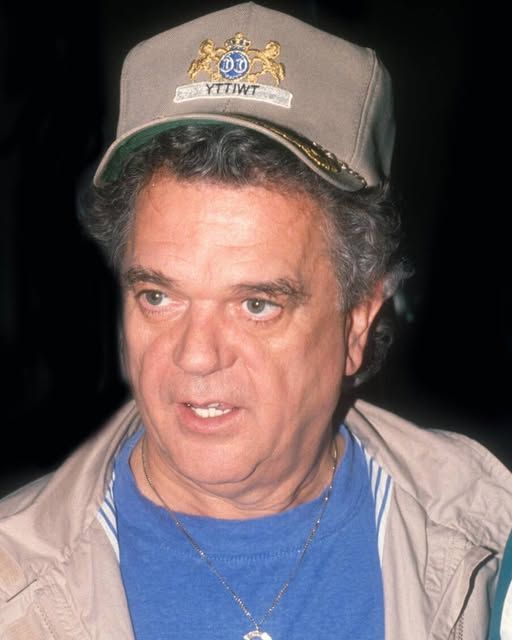
In 1970, Conway Twitty didn’t raise his voice to be heard. He did something far more dangerous. He slowed everything down.
One quiet opening. One careful greeting.
A single word that felt less like a lyric and more like a knock on a familiar door.
Hello darlin’.
It wasn’t sung. It was spoken. And in that moment, country music changed its posture. No dramatic buildup. No clever metaphor to hide behind. Just a man addressing the past as if it were standing right in front of him — close enough to hurt, close enough to matter.
What followed was not a chorus designed to lift a room, but a confession designed to lower it. Hello Darlin’ didn’t ask for attention. It assumed it. By the mid-1970s, audiences already knew what was coming. Not the melody — the pause. That breath between words where honesty lived. That space where listeners leaned forward because they recognized themselves in it.
This was not a performance built to impress.
It was built to admit something most people never say out loud.
The song spoke of time moving on while feelings stubbornly stayed behind. Of lives continuing in opposite directions while memories refused to loosen their grip. Conway Twitty didn’t dramatize regret. He normalized it. He gave it a calm voice, one steady enough to carry the weight without collapsing under it.
That restraint is why older listeners hear the song differently than younger ones. With age comes recognition. The understanding that not all love ends with closure. Some of it simply learns how to remain quiet. Hello Darlin’ doesn’t ask for forgiveness. It doesn’t beg for another chance. It just acknowledges what never fully left.
And that honesty was not an act.
Those who followed Conway Twitty’s life closely understood that his music often mirrored the emotional terrain he walked himself. He sang not as an observer, but as a participant. Someone who understood that tenderness and distance often coexist. That the hardest truths are the ones spoken gently.
When country historians later voted Hello Darlin’ as the number one country song of all time, it wasn’t because of its production or chart dominance. It was because it trusted silence. It trusted the listener. It trusted that a softly spoken truth could land harder than anything shouted.
Then, on June 5, 1993, in Springfield, Missouri, United States, Conway Twitty was gone.
No dramatic farewell.
No final speech.
No moment staged for memory.
Just the absence of a voice that had taught country music how to speak softly and still be devastating.
What remained was the echo.
Some songs say goodbye. They announce endings clearly, decisively. Hello Darlin’ did the opposite. It began with a greeting — and never really ended. It continues to live in the spaces between verses, in the pauses where listeners supply their own history.
For those who have lived long enough to look back, the song becomes less about who he was singing to — and more about who we remember when we hear it. The people time took away. The conversations we rehearsed but never had. The emotions we learned to live with instead of resolve.
That is why the final question still lingers, decades later.
Was Conway Twitty remembering her…
or admitting he never stopped?
The song never answers.
And that may be why it still hurts —
and still matters.