Introduction:
The Hidden Story Behind Patsy Cline’s Costumes: Why Every Stitch Looked Different
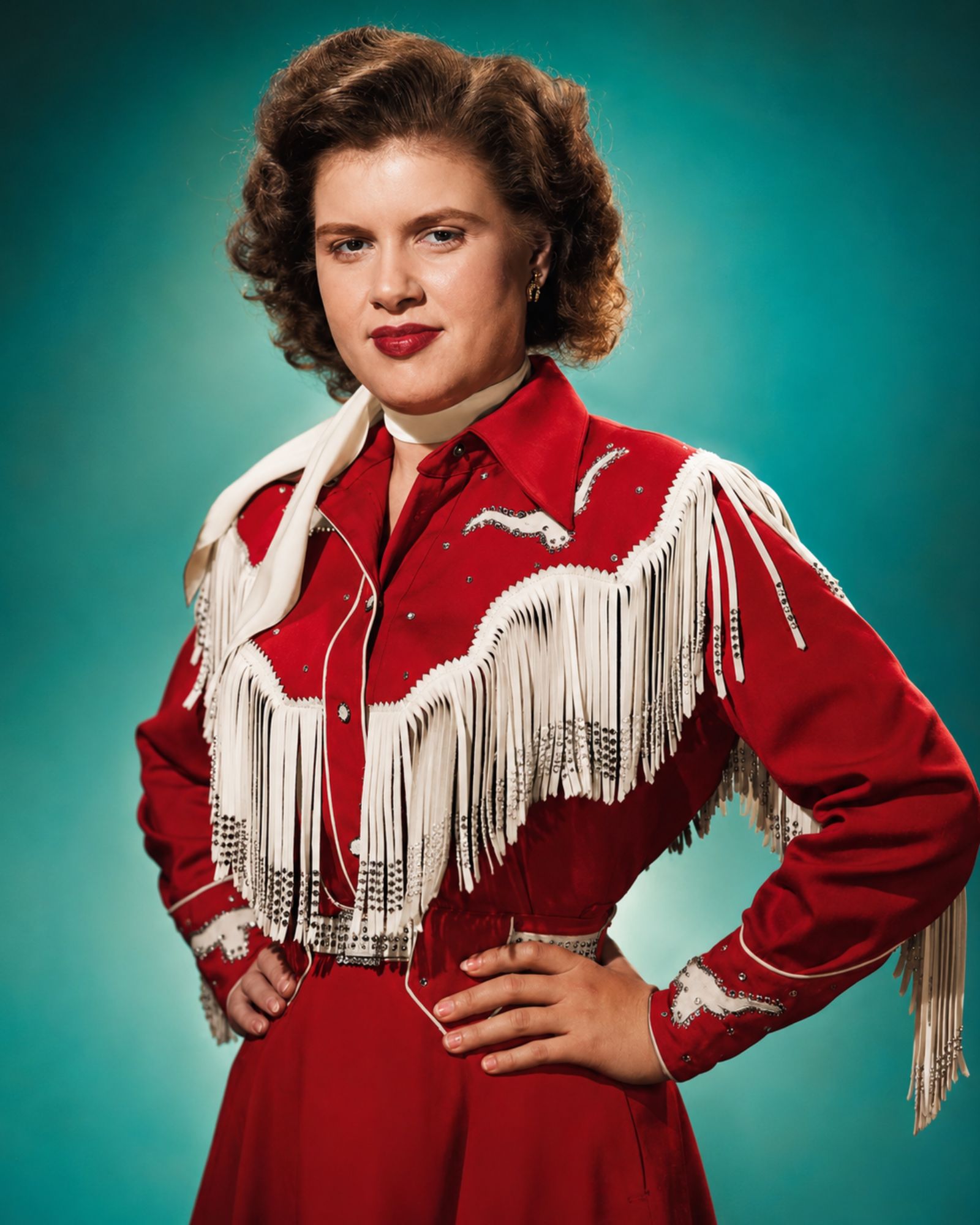
For years, fans and fellow performers admired Patsy Cline’s stage wardrobe without fully understanding why it felt so different from the glamorous costumes worn by other country stars.
The details were impossible to miss. The seams carried a sense of warmth. The embroidery felt deeply personal. Even the decorative stitching seemed to hold a character and charm that stood apart from the polished, factory-perfect designs emerging from Nashville’s costume shops.
Some believed a celebrated tailor had discovered a secret technique. Others assumed the outfits only appeared special because Patsy wore them with such unmistakable confidence.
The truth was far more touching.
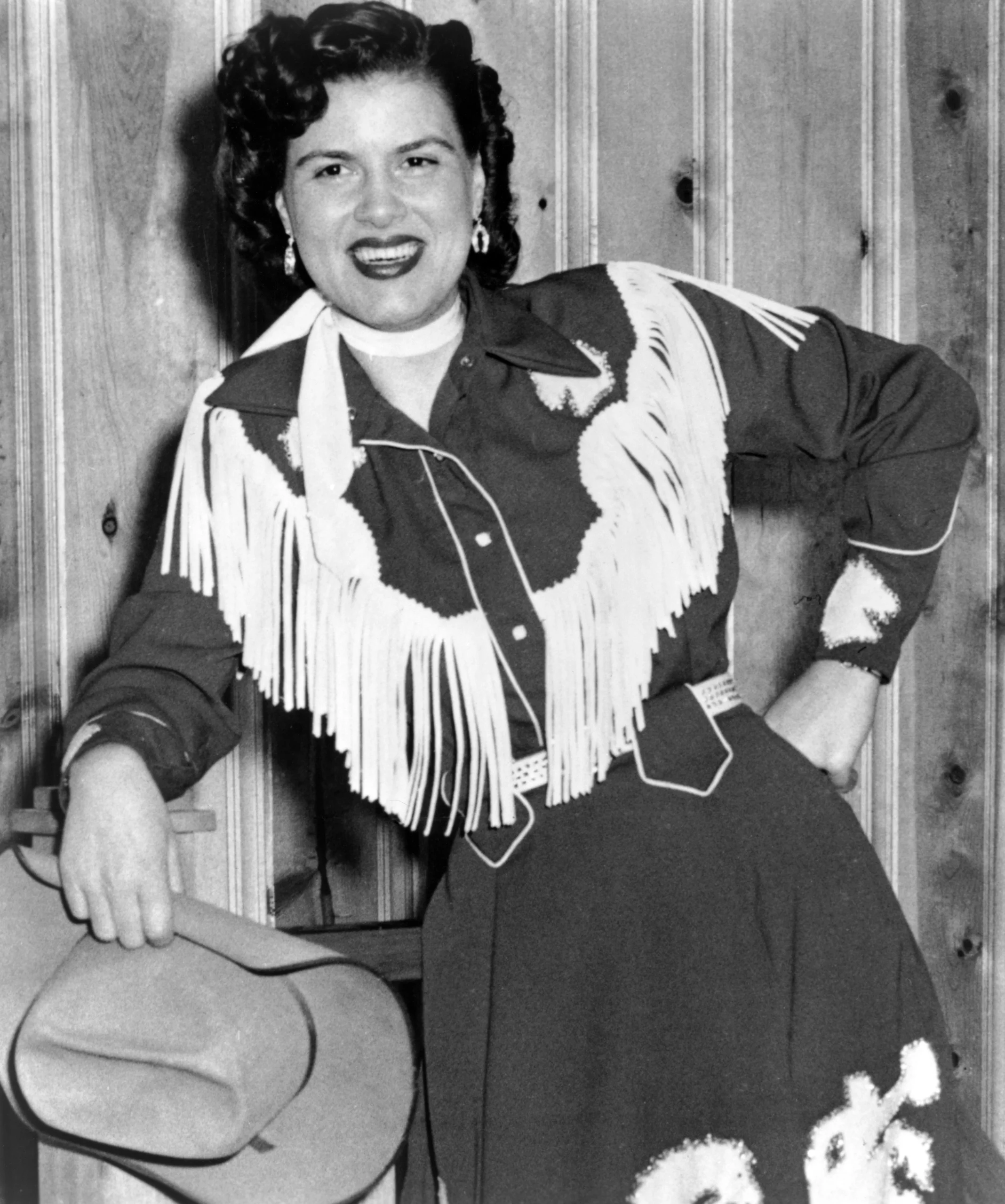
Every dress Patsy Cline wore on stage was sewn by the same pair of hands: her mother’s.
Their story began in the small town of Winchester, Virginia, where Hilda Hensley became a mother at just sixteen years old. Over the years, their relationship grew into something uniquely close. Hilda would later say they felt more like sisters than mother and daughter—a bond that would shape Patsy’s life and career in ways few people ever realized.
When Patsy first began performing, professional stylists and custom designers were far beyond her budget. Instead, she relied on creativity, determination, and the unwavering support waiting for her at home.
Patsy sketched her own costume ideas, carefully imagining how she wanted to appear under the stage lights. She then brought those sketches to Hilda, who transformed them into reality using a sewing machine in their modest Winchester home.
There was no costume department, no fashion team, and no luxury wardrobe budget.
There was simply a kitchen table, a sewing machine, and a mother determined to help her daughter succeed.
Among Hilda’s creations, one outfit became legendary: a vibrant pink Western suit that perfectly captured Patsy’s bold personality.
It was playful yet elegant, eye-catching without feeling excessive. Black wool patches shaped like vinyl records featured the titles of Patsy’s songs, while pink rhinestones were sewn on one by one, creating a sparkle that came alive beneath the spotlight.
Every detail reflected patience, care, and love.
These were not just stage costumes. They were part of Patsy’s story.
Audiences saw a rising star stepping confidently onto the stage. Hilda saw the little girl she had encouraged, supported, and believed in from the very beginning.
Her support extended far beyond sewing.
In January 1957, Patsy received an opportunity that could change everything: an appearance on Arthur Godfrey’s Talent Scouts. The problem was that contestants needed professional management—and Patsy did not have a manager.
So Hilda stepped forward.
She walked into CBS and introduced herself as her daughter’s manager.
When Arthur Godfrey jokingly asked, “You’ve known her all her life?” Hilda smiled and replied, “Yes, just about.”
It was a simple exchange, but it captured the heart of their relationship.
That night, Patsy performed “Walkin’ After Midnight,” delivering a performance that stunned audiences and launched her into national recognition.
The song opened the door to stardom, but behind that breakthrough stood a mother whose love had helped carry her there—one stitch at a time.
Six years later, Patsy Cline’s life was tragically cut short in a plane crash at just thirty years old. Yet her legacy continues to inspire generations of listeners.
Today, the famous pink suit sits behind glass at the Smithsonian.
Visitors see a beautiful piece of country music history. But those who look closely discover something even more meaningful.
They see a mother’s handiwork.
They see a daughter’s dream.
They see a small home in Winchester where ambition was sketched on paper, pinned into fabric, and sewn together with love.
That is why the stitches looked different.
Because they were different.
They were never the work of an anonymous tailor in Nashville. They were the careful, loving marks of a mother helping her daughter step into the spotlight.
And long after the music faded, those stitches continue telling a story that fame alone never could.