Introduction:
Loretta Lynn at 88: Walking Back Into the Song One Last Time
In country music, legends are often remembered for their peak years. But some stories stretch far beyond the charts, carried by resilience rather than nostalgia. Loretta Lynn belonged to the second kind of story—a life shaped as much by survival as by success.
By 2017, Loretta Lynn had already lived several musical lifetimes. For nearly six decades, she toured relentlessly, becoming one of the most recognizable and influential voices in American country music. Then a stroke abruptly ended that rhythm. Touring stopped. The stage fell silent. For many artists, that moment would have marked a permanent closing of the curtain.
But Loretta Lynn’s story rarely followed expected endings.

Her life had always been built on hardship rather than comfort. Long before awards and national recognition, she was a coal miner’s daughter from rural Kentucky who learned early that endurance was not optional. She married young, raised a family, and entered a music industry that often resisted women speaking with direct honesty. Yet that honesty became her signature. She sang about marriage, motherhood, heartbreak, and the contradictions of womanhood without softening the edges.
Even after fame arrived, she never adopted the posture of someone removed from struggle. Instead, she carried herself like someone still in conversation with it.
Eight months after her stroke, another setback arrived. A fall at her Hurricane Mills ranch resulted in a broken hip. At that point, age, illness, and recovery had already begun reshaping her daily life. For most people, the accumulation of such events would suggest withdrawal from public life. A natural conclusion.
Loretta Lynn was not most people.
Rather than stepping away completely, she returned to the one place that had always defined her identity—music. But this time, it was not about touring or spectacle. It was about presence. About proving that voice and identity do not disappear simply because the body slows down.

The result of that return came in 2021 with her album Still Woman Enough. The title was not a plea or a defense. It was a statement—steady, unembellished, and certain. At 88, she released her 50th studio album, not as a nostalgic reflection, but as a continuation of a life still actively being lived.
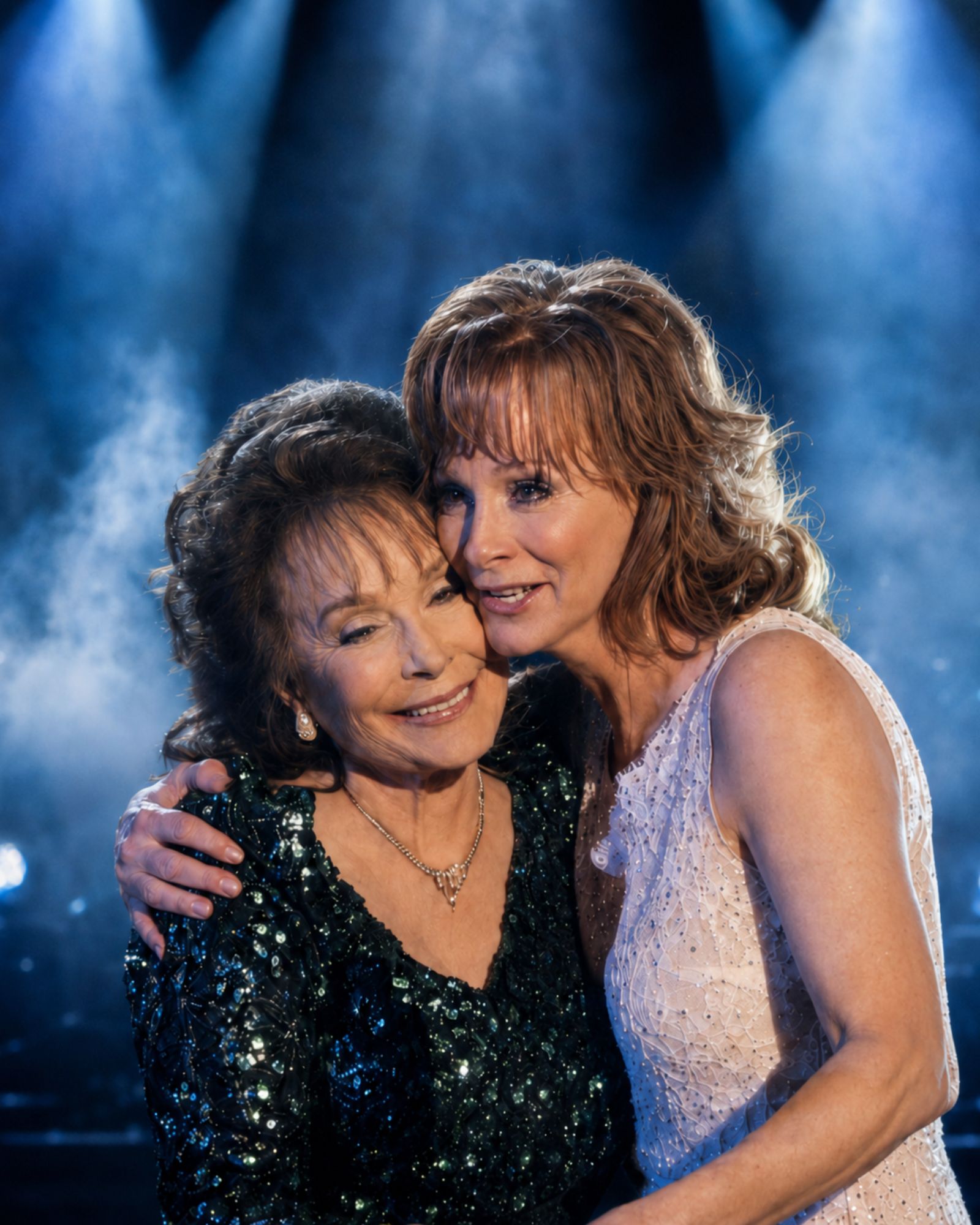
The project gained additional weight through collaboration. Artists such as Reba McEntire, Carrie Underwood, Tanya Tucker, and Margo Price joined her on various tracks. Their presence did not overshadow her; instead, it framed her influence. The album became less about a comeback and more about continuity—an exchange between generations who had been shaped by her voice.
There was no attempt to recapture youth in the recording. Instead, there was clarity. A sense that what mattered was not how long she had left, but what she still chose to say with the time she had.
Loretta Lynn passed away 19 months later, quietly at her ranch. Yet Still Woman Enough remains more than her final studio work. It stands as a document of endurance—proof that a career does not necessarily diminish with age, and that identity is not erased by injury or time.
In the end, her final chapter was not written in retreat, but in return. Even when the road ended and the body failed to keep pace, she did what she had always done: she leaned back into the song.
At 88, Loretta Lynn did not simply revisit her legacy. She reaffirmed it—showing that some voices do not fade with time. They simply rise again when called, steady and unbroken, and sing once more.