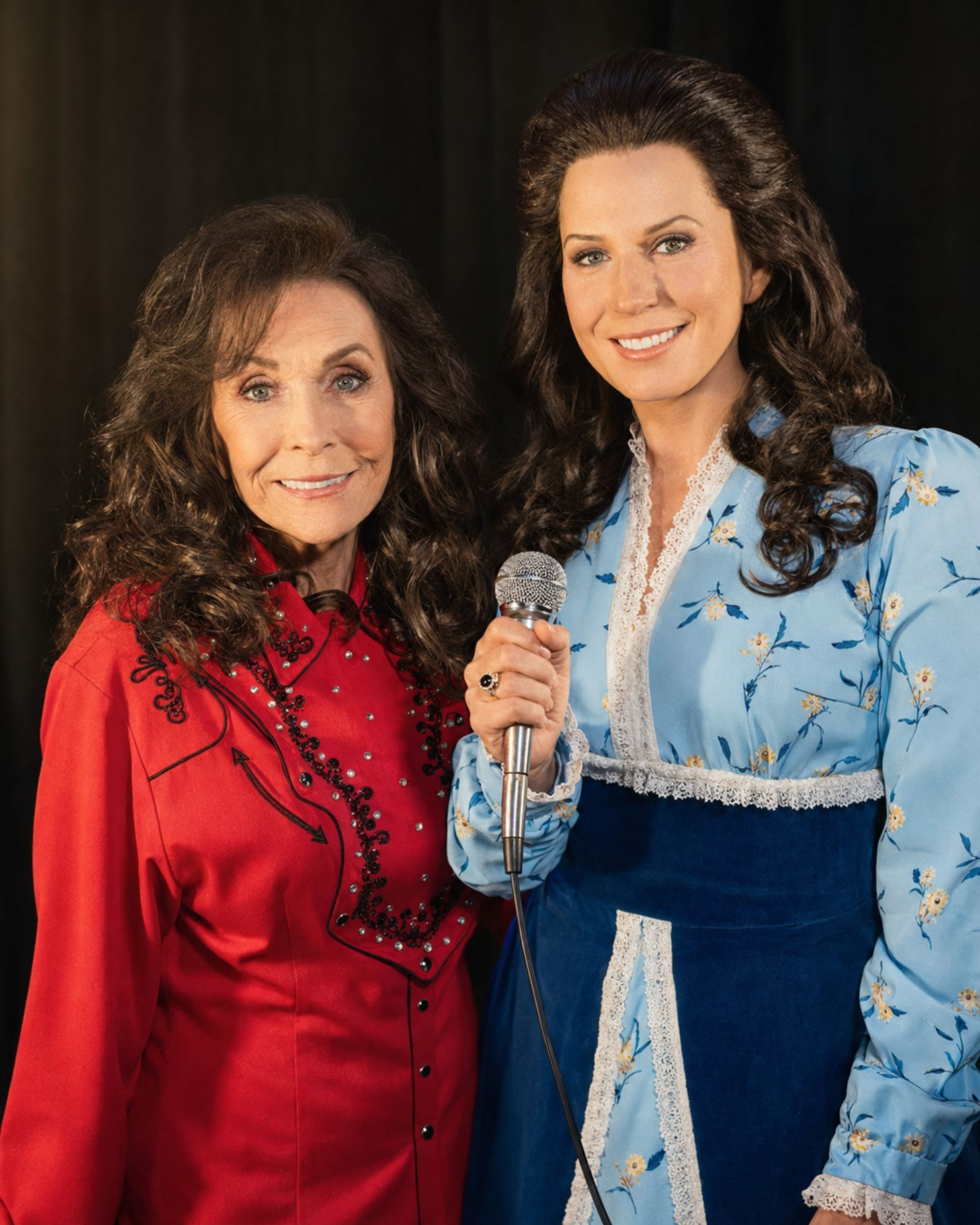
Introduction:
When news broke on a Tuesday morning that country music legend Loretta Lynn had died, America reacted with sadness. But by the end of that same week, something deeper had happened. Millions of people were not only mourning her — they were returning to her music as if they had suddenly remembered just how much of the nation’s story had been living inside her songs all along.
Loretta Lynn never came from glamour, polish, or privilege. She came from Butcher Hollow, Kentucky, where life was shaped by coal dust, poverty, hard work, and survival. She grew up barefoot in a tiny mining cabin, learned responsibility before childhood had fully ended, married at just fifteen, became a mother young, and later a grandmother while many women her age were still discovering adulthood. Nothing about her life was easy, and that was exactly why her voice carried so much truth.
She did not sing about fantasy. She sang about reality.
At a time when many women were expected to stay quiet about hardship, marriage, or disappointment, Loretta Lynn did the opposite. She wrote openly about poverty, motherhood, cheating husbands, birth control, exhaustion, pride, and the emotional weight of being a woman in a world that often refused to listen. Songs like “The Pill,” “Fist City,” and “Don’t Come Home A-Drinkin’” unsettled parts of country radio because they were too honest, too direct, and too fearless. Yet that honesty became the reason millions of listeners loved her. People heard themselves in her music.

Loretta Lynn was never manufactured for stardom. She lived the life country music often romanticized, but she lived it for real. That authenticity gave her songs uncommon power. When she sang, listeners could hear pain, humor, anger, resilience, and tenderness all in the same breath. Her voice did not sound polished by industry expectations. It sounded lived-in.
That is why her music endured across generations.
“Coal Miner’s Daughter” became far more than a hit record. It became part of America’s cultural memory — a deeply personal story that somehow also belonged to everyone. The song captured not only where Loretta came from, but also the dignity and struggle of working-class families across the country.
On October 4, 2022, Loretta Lynn passed away peacefully in her sleep at her ranch in Hurricane Mills, Tennessee, at the age of 90. What followed was immediate and emotional. Her music streams surged dramatically within hours. By the end of the week, millions had returned to her catalog, with “Coal Miner’s Daughter” alone crossing more than a million streams.
The numbers mattered, but the feeling behind them mattered more.
It felt less like casual nostalgia and more like collective recognition. America was not simply revisiting old songs. It was rediscovering the emotional honesty that had always existed inside them. Her death reminded people that Loretta Lynn had spent decades documenting the lives, frustrations, and quiet courage of ordinary people — especially women whose stories were often ignored.
The tributes that followed showed just how wide her influence truly reached. Twenty-six days later, the Grand Ole Opry honored her with an emotional celebration featuring artists such as Alan Jackson, George Strait, Dolly Parton, Jack White, and Taylor Swift. The lineup itself told the story. Loretta Lynn’s influence stretched far beyond traditional country music. She changed the way artists spoke, wrote, and told the truth.
Many who came after her understood something important: Loretta Lynn made space for them by refusing to ask permission for her own voice. She challenged Nashville simply by being honest, and eventually Nashville adjusted around her.
That is why her songs still hit so hard today.

They are built from ordinary pain, ordinary resilience, and ordinary survival. They speak to exhaustion, loyalty, disappointment, humor, love, and endurance — emotions that never become outdated. Her music still feels alive because truth does not expire.
Loretta Lynn did more than entertain audiences. She documented lives that history often overlooks. She preserved the emotional realities of working-class America and gave countless women permission to speak openly about their own experiences.
She did not leave country music quietly.
She left it transformed.
And when America played her songs again after her death, they did not sound like echoes from the past.
They sounded necessary.