Introduction:
There are concerts that entertain, concerts that inspire, and concerts that fade into memory with time. Then there are those rare performances that become something far greater—a defining moment in history, forever transformed by what followed. Such was the case on June 26, 1977, when nearly 18,000 fans gathered inside Indianapolis’ Market Square Arena to watch Elvis Presley perform, unaware they were witnessing the final concert of one of music’s greatest legends.
That evening, the arena buzzed with anticipation. Fans carried cameras, handmade signs, and lifelong memories attached to songs that had become the soundtrack of their lives. They had come simply to see Elvis. No one imagined they were about to witness the closing chapter of an extraordinary career that had forever changed popular music.
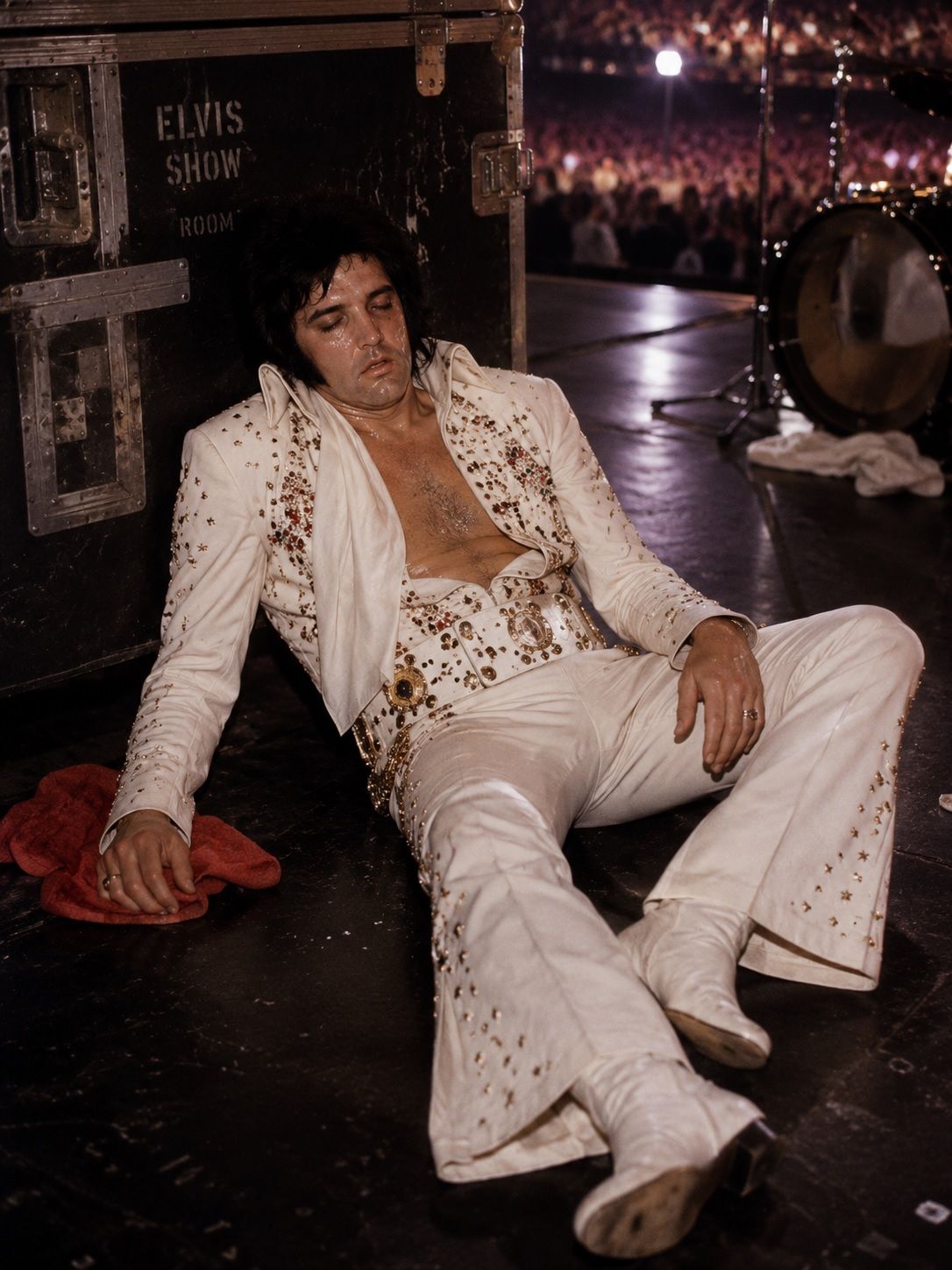
When the lights dimmed and Elvis stepped into the spotlight wearing his iconic white jumpsuit, the crowd erupted. Decades after revolutionizing rock and roll, his presence still commanded an emotional response unlike any other performer of his generation. He was more than a singer—he was a cultural phenomenon, a symbol of charisma, rebellion, vulnerability, and timeless artistry.

For those few precious hours, the headlines surrounding his declining health disappeared. The audience saw the man who had electrified television audiences in the 1950s, broken musical barriers, and become one of the most recognizable faces in the world. Yet behind the applause lay a far more complicated reality.
By the summer of 1977, Elvis was physically exhausted and emotionally burdened after years of relentless touring, immense fame, and ongoing health struggles. Those closest to him later described a man carrying the enormous weight of being “The King” while privately fighting battles few could truly understand.
Still, he continued to perform.
The stage remained one of the last places where Elvis found genuine comfort. Music gave him purpose, and the love of his audience offered a brief escape from the pressures that had followed him for decades. Even as everyday movement became increasingly difficult behind the scenes, something remarkable happened whenever the band began to play.
The magic returned.
It was no longer effortless, nor was it flawless. But perhaps that is exactly why the Indianapolis performance continues to resonate nearly five decades later. The imperfections revealed not weakness, but humanity. Audiences no longer saw an untouchable icon—they saw a man determined to keep giving everything he had despite his own struggles.

As the evening drew to a close, Elvis performed “Can’t Help Falling in Love,” the song that had become his traditional farewell. Witnesses later recalled how the atmosphere shifted as excitement gave way to quiet reflection. His voice carried traces of weariness and fragility, yet those very qualities made the performance profoundly moving. It felt less like the end of a concert and more like a heartfelt goodbye.
Just seven weeks later, on August 16, 1977, Elvis Presley passed away at Graceland at the age of 42. Overnight, that Indianapolis concert became one of the most significant performances in music history. Fans who had filled the arena realized they had unknowingly witnessed his final smile, his final bow, and the last time his unmistakable voice echoed across a live audience.
Nearly fifty years later, the concert endures not because it was technically perfect, but because it revealed the man behind the legend. It reminds us that true greatness is not measured by flawless performances but by the courage to keep inspiring others even in life’s most difficult moments.
On that unforgettable June evening, Elvis Presley did exactly what he had always done throughout his remarkable career.
He gave his audience everything he had left—and in doing so, created a farewell that the world would never forget.