
Introduction:
“I’d Like to Live Up to My Reputation of Being a Nice Guy”: What Elvis Presley’s 1972 Madison Square Garden Press Conference Still Reveals Today
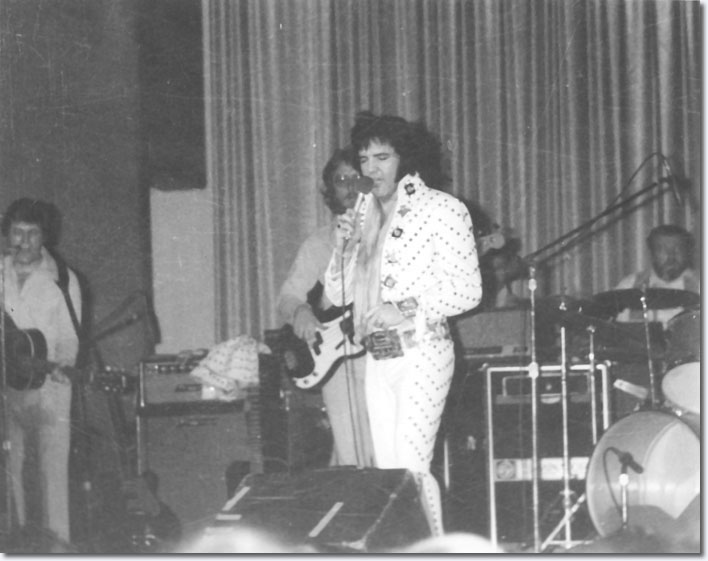
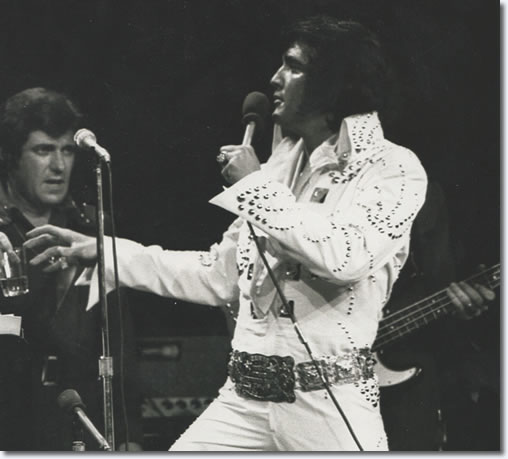
On June 9, 1972, just hours before stepping onto the stage for his historic performances at Madison Square Garden, Elvis Presley faced an auditorium packed with reporters eager to question one of the world’s biggest stars. The event marked a milestone. Although Elvis had conquered radio, television, film, and concert stages across America, he had remarkably never performed in New York City until that week.
The press conference could have been a carefully rehearsed publicity event. Instead, it became something far more memorable—a candid glimpse into the man behind the legend.
From the moment he entered the room, Elvis relied on the same qualities that audiences had always loved: quick wit, self-deprecating humor, and an easygoing charm. Asked how he had managed to outlast so many entertainers from the 1950s and 1960s, he smiled and joked, “I take Vitamin E,” before laughing at himself. Moments like that immediately dissolved the formality of the room.
Yet beneath the laughter was someone remarkably humble.
When a reporter suggested that many people considered him shy, humble, and genuinely kind, Elvis seemed almost uncomfortable accepting the compliment. Rather than embracing the praise, he simply admitted that living up to an image was difficult. “The image is one thing and a human being is another,” he reflected. It was a surprisingly honest observation from a performer whose public image had been discussed almost as much as his music.
Throughout the conversation, Elvis consistently avoided criticizing others. Whether asked about younger performers, changing musical styles, or controversial social issues, he refused to attack anyone. “There’s room for everybody,” he said, explaining that he disliked criticizing fellow entertainers. It was an attitude rooted in respect rather than competition.
The reporters also explored his return to live performance after years devoted primarily to Hollywood films. Elvis spoke enthusiastically about rediscovering the energy that only a concert audience could provide. He admitted that he had missed the closeness of performing live and explained that filming his recent concerts had become one of his most exciting new creative projects.
His ambitions remained surprisingly broad. He spoke openly about wanting to perform in Europe, Britain, and Japan—places he had never visited as a touring artist. For someone already regarded as an international icon, there was still genuine excitement about reaching audiences he had yet to meet.
Some reporters attempted to steer the conversation toward politics, the Vietnam War, and the growing social movements of the early 1970s. Elvis handled those questions with remarkable restraint. Rather than offering opinions simply because he was famous, he politely explained that he preferred to keep his personal political views private. At the same time, he respected the right of other entertainers to express themselves differently, never suggesting that his approach should become theirs.
One particularly revealing exchange centered on songwriting. Elvis acknowledged that talented unknown writers often struggled to have their work heard, admitting that major recording companies frequently favored established publishing networks. Still, he made it clear that he would gladly record a great song regardless of who wrote it. “If it’s good,” he said simply, “I’ll do it.” It reflected an artist who cared more about quality than reputation.
Perhaps the most touching moments came when his father, Vernon Presley, joined him. Asked whether fame had changed his son, Vernon answered without hesitation that he had seen no real change. Elvis immediately broke the seriousness with a joke about sweating more, drawing laughter throughout the room. Their affectionate exchange reminded everyone that behind the global celebrity remained a devoted son who still enjoyed sharing the spotlight with his family.
As the conference came to a close, Elvis excused himself with characteristic warmth, explaining that rehearsal awaited. Before leaving, he offered one final sentence that seemed to summarize his entire approach to fame: “I’d like to live up to my reputation of being a nice guy.”
More than five decades later, those words continue to resonate. The Madison Square Garden press conference wasn’t memorable because Elvis delivered headline-grabbing statements. It endures because it revealed something far more lasting—a superstar who never stopped trying to remain approachable, gracious, and genuinely human, even while standing at the very peak of his career.