Introduction:
Loretta Lynn: The Woman Nashville Tried to Silence — And the Truth They Could Never Bury
There are legends who entertain audiences, and then there are legends who change the course of history. Loretta Lynn belonged to the second category.
She never set out to be controversial. She never walked into Nashville determined to challenge the establishment or spark cultural debates. What she did was something far simpler—and far more powerful. She told the truth.
At a time when country music often wrapped life’s hardships in polite language and carefully crafted images, Loretta Lynn sang openly about the realities millions of women faced every day. She sang about birth control, marriage struggles, divorce, financial hardship, and the emotional weight carried by wives and mothers whose stories rarely made it onto the radio.
For many listeners, her songs felt like recognition. For parts of the industry, they felt like rebellion.
When “The Pill” was released in 1975, the backlash was immediate. Dozens of radio stations refused to play it. Critics accused her of crossing lines that respectable country artists were expected to respect. Religious leaders condemned the song from pulpits, while industry insiders questioned whether her honesty was damaging the image of country music itself.

Yet Loretta never responded with anger. She never softened her message to make others comfortable.
Instead, she kept singing.
Her journey from the coal-mining community of Butcher Hollow, Kentucky, to the biggest stages in America was built not on calculated ambition, but on authenticity. Armed with a guitar, a remarkable voice, and stories drawn directly from her own life, she arrived in Nashville carrying experiences that many women understood but few artists dared to express publicly.
The country music industry of the 1960s and 1970s had clear expectations for female performers. Women could sing about heartbreak. They could play the role of the devoted wife or the abandoned lover. But speaking openly about personal freedom, family planning, or female independence was considered risky territory.
Loretta Lynn walked straight into that territory and made it her own.
What made her extraordinary was not simply her courage, but her quiet confidence. She never spent her career seeking approval from executives, critics, or cultural gatekeepers. While others debated her lyrics, she focused on the people who mattered most—the fans who packed county fairs, concert halls, and small-town theaters across America.
She recognized herself in those audiences. She understood their struggles because she had lived them. Every song carried the voice of women who often felt unheard, and every performance reminded them that their experiences mattered.

Over time, something remarkable happened.
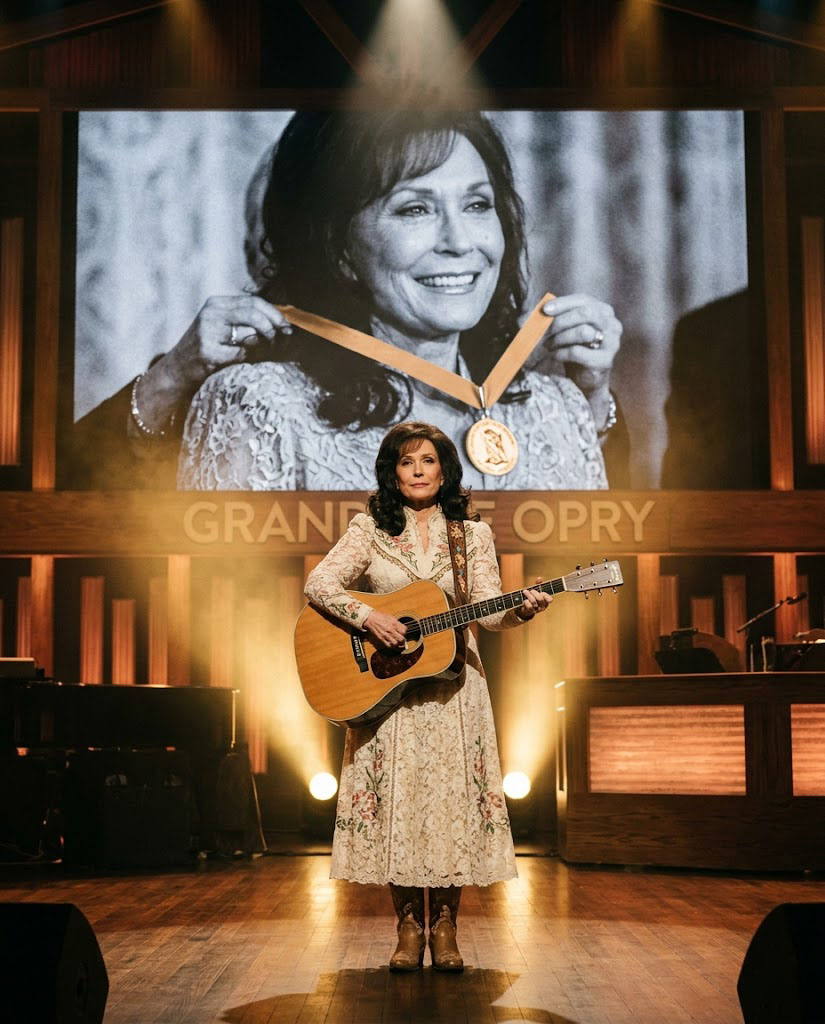
The songs once considered too controversial became celebrated as groundbreaking. The artist once viewed as a problem became recognized as a pioneer. Awards followed. Honors accumulated. The industry that had once resisted her influence eventually embraced her as one of the greatest figures country music had ever produced.
But Loretta Lynn’s greatest achievement was never the trophies, the accolades, or even the statues erected in her honor.
Her true legacy lives in the generations of artists she inspired to speak honestly and fearlessly. It lives in every songwriter who chooses authenticity over acceptance. Most importantly, it lives in the millions of people who found comfort and strength in her music when the world expected them to remain silent.
Nashville may have tried to silence her voice, but the truth has a remarkable way of surviving.
And Loretta Lynn proved that once the truth is sung, it can never be buried.