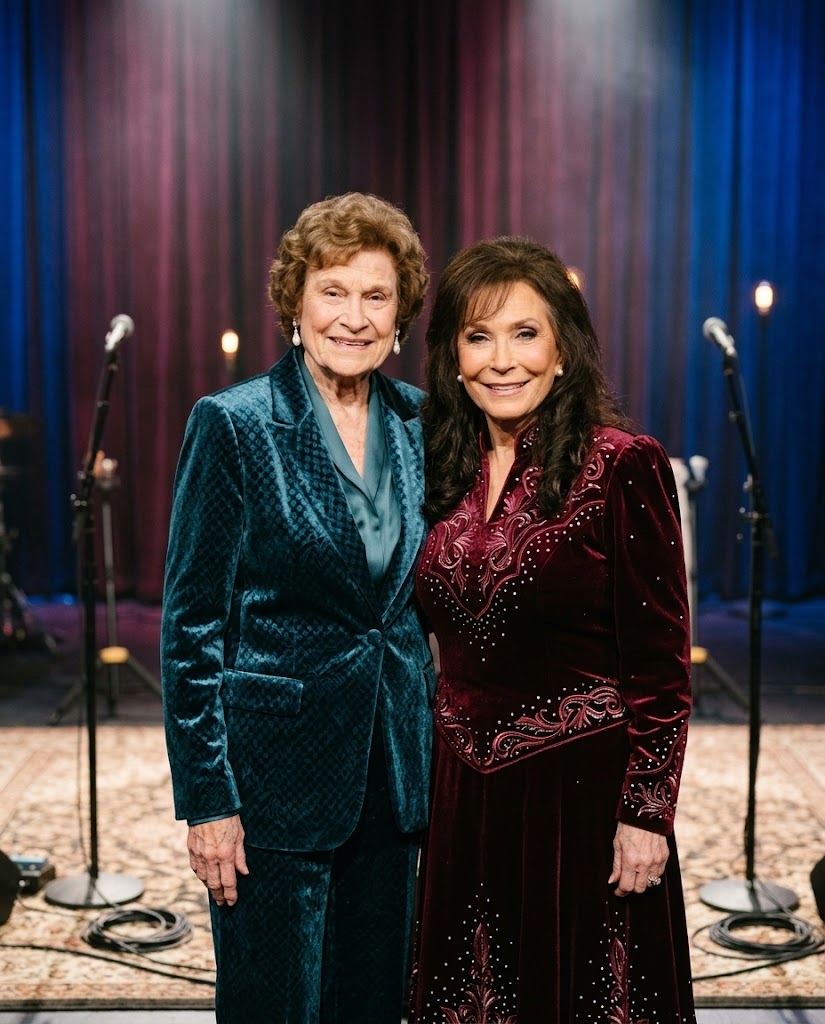
Introduction:
The $17 Guitar That Changed Country Music: How Kitty Wells Opened the Door for Loretta Lynn
Before the world knew her as the legendary “Coal Miner’s Daughter,” Loretta Lynn was simply a young wife and mother trying to make it through another day.
Life was not glamorous. There were babies to care for, meals to stretch, floors to clean, and endless responsibilities waiting from sunrise to sunset. In a modest home filled with noise, worry, and exhaustion, dreams often seemed like luxuries reserved for other people.
Yet somewhere amid that ordinary life, a radio played.
And through that radio came the voice of Kitty Wells.
For countless women across America, Kitty Wells was more than a country singer. She represented something rarely heard in country music at the time—a woman speaking honestly about the realities of women’s lives. Her songs reached kitchens, living rooms, and front porches where hardworking wives carried burdens that often went unnoticed.

Among those listeners was a young Loretta Lynn.
Long before Nashville knew her name, Loretta listened closely to Kitty Wells and heard something extraordinary. Kitty did not sound rebellious or confrontational. Her voice was gentle, humble, and familiar. Yet when she recorded “It Wasn’t God Who Made Honky Tonk Angels,” she quietly challenged an entire narrative that had dominated country music for years.
For generations, songs had blamed women for broken relationships while excusing the behavior of men. The woman was often cast as the villain, while the man received sympathy and forgiveness. Kitty Wells changed that conversation.
Without shouting, she answered back.
She sang for wives left behind. She sang for women judged unfairly. She sang for those carrying heartbreak they had never created alone. In doing so, she became one of the first female voices in country music to demand that women’s experiences be heard with honesty and respect.
Miles away, Loretta Lynn absorbed every word.
At that time, she was not a star. She was not yet the fearless songwriter who would later tackle subjects such as working-class marriage, birth control, female independence, and the struggles of everyday women. She was simply a young mother with a $17 Sears guitar and a dream she was still learning to believe in.
Her husband famously believed in her talent, often insisting she could sing better than almost anyone.
Almost.
The one exception was Kitty Wells.
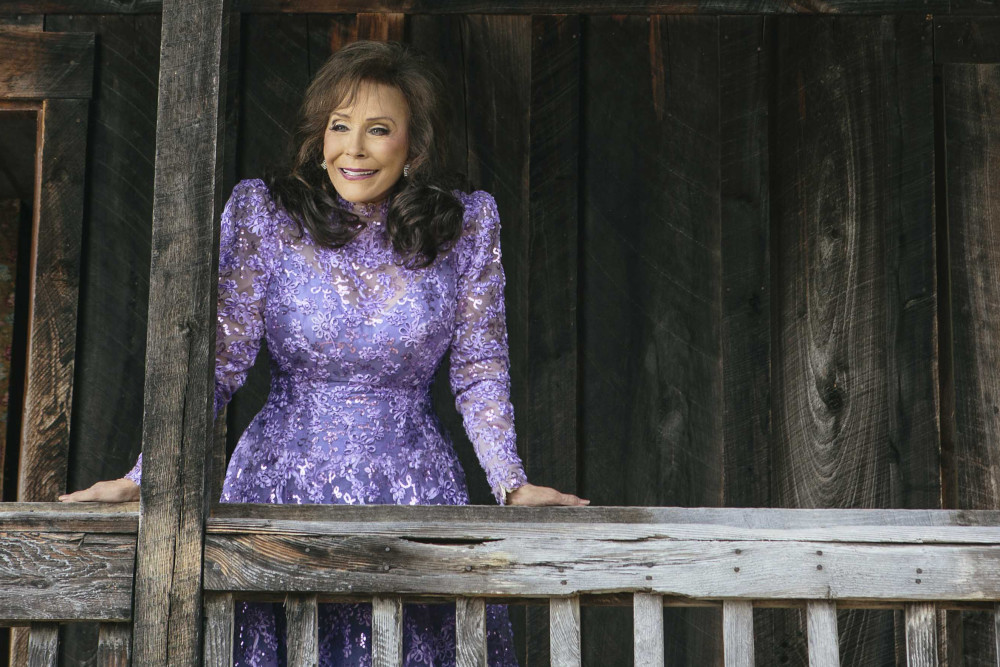
That exception was not criticism—it was admiration. Kitty Wells represented the highest standard. She had already proven that a woman could step to the microphone and sing her truth without apology.
As Loretta practiced chords on that inexpensive guitar, she was learning far more than music. She was learning that the stories of poor wives, exhausted mothers, and overlooked women mattered. She was learning that pain did not have to remain hidden. It could become a song powerful enough to travel far beyond the walls of a small house.
That is how true legacy works.
It moves from one voice to another.
Kitty Wells cleared the path with grace and courage. Loretta Lynn walked down that path carrying fire, transforming personal experience into some of the most influential music country music has ever known.
Today, both women have passed on, but the connection between them continues to echo through generations of artists. Every young woman who picks up a guitar and dares to tell the truth is, in some way, walking through the door that Kitty Wells opened and Loretta Lynn carried forward.
That $17 guitar was never just wood and strings.
It was the beginning of a journey—and on the other side of that door, Kitty Wells was already waiting, singing softly enough to sound gentle, yet bravely enough to change country music forever.