Introduction:
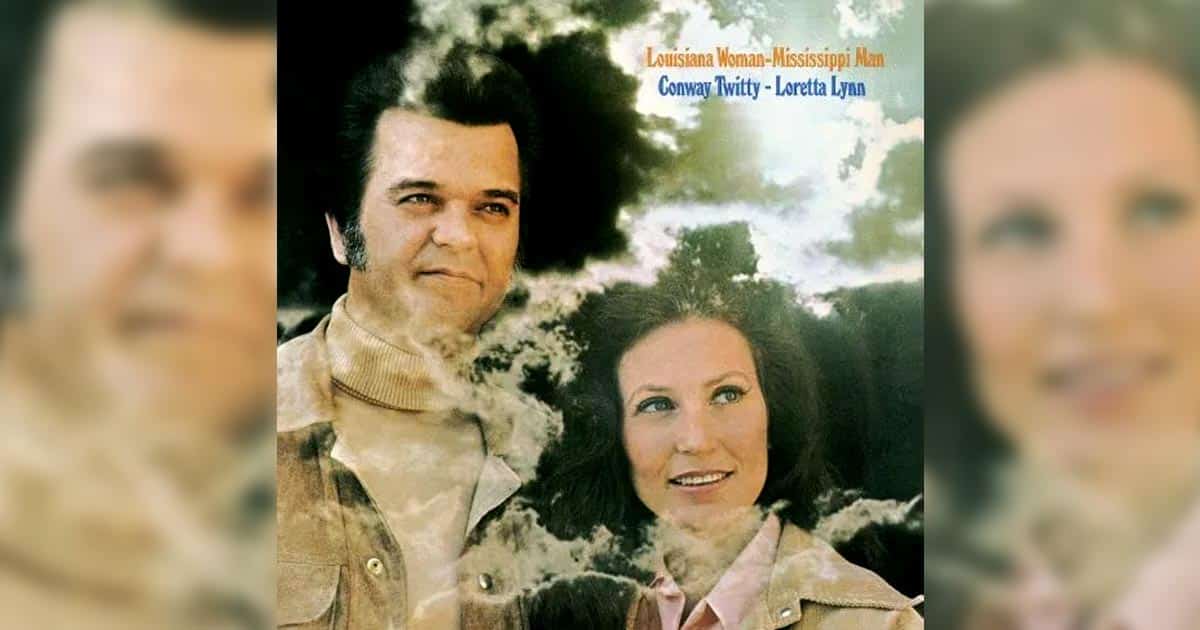
In the golden era of country music, few partnerships captured the imagination of listeners quite like Loretta Lynn and Conway Twitty. Their 1973 duet, Louisiana Woman, Mississippi Man, stands as a defining moment in their collaboration—an electrifying blend of storytelling, chemistry, and musical authenticity that resonated far beyond the American South. The song’s commercial success, reaching the top of the Canadian RPM Country Tracks and the U.S. Billboard Country Songs chart, only confirmed what fans already knew: this was a duo operating at the peak of their powers.
At its heart, “Louisiana Woman, Mississippi Man” is more than a chart-topping hit—it is a vivid narrative about love that refuses to be constrained by distance. Long-distance relationships were already a familiar struggle in the 1970s, and the song taps directly into that emotional reality. Through its lyrics, Lynn and Twitty give voice to two lovers separated not just by geography, but by the mighty Mississippi River—a symbolic barrier as much as a physical one.

Yet the story is not one of resignation. Instead, it is fueled by determination and passion. The Louisiana woman declares she would swim across the river for the man she loves, a striking image of devotion that borders on reckless courage. On the other side, the Mississippi man vows to abandon his fishing and even confront the dangers of the water—alligators included—just to reunite with her. These exaggerated promises are not meant to be taken literally, but rather as expressions of the depth and urgency of their connection. In a few short verses, the song transforms distance into drama, and longing into action.
Adding to its charm is the Cajun-infused musical arrangement crafted by songwriters Becki Bluefield and Jim Owen. The lively rhythm and playful call-and-response structure give the track an infectious energy, making it as enjoyable to listen to as it is emotionally engaging. It is this balance—between heartfelt storytelling and spirited performance—that helped the song earn widespread critical acclaim and enduring popularity.

Despite the undeniable chemistry between Lynn and Twitty, their relationship remained strictly professional. This only deepens the admiration for their work together. Over the course of their careers, the pair released 11 collaborative albums, produced five No. 1 country hits, and won a Grammy Award for their iconic duet After the Fire Is Gone. Their partnership became one of the most celebrated in country music history, earning recognition from institutions like the Academy of Country Music and the Country Music Association.
Individually, both artists were towering figures. Loretta Lynn’s fearless songwriting and unmistakable voice brought her numerous accolades, while Conway Twitty’s smooth delivery and versatility made him one of the genre’s most successful performers. Their inductions into the Country Music Hall of Fame only cemented their legacies.
Looking back, “Louisiana Woman, Mississippi Man” endures not just as a hit song, but as a testament to the power of musical storytelling. It reminds us that love—whether separated by rivers, miles, or time—thrives on commitment, imagination, and a willingness to cross any boundary. For country music lovers, it is not just a classic; it is an essential listening experience that continues to echo through generations.