INTRODUCTION:

There are moments in country music history when the loudest statement is made by refusing to raise one’s voice. Marty Robbins understood this truth instinctively. While much of mid-century American popular music chased novelty, volume, and immediacy, Robbins often chose another road entirely. He believed that a song could arrive not with a shout, but with a steady breath, a calm pulse, and an unforced emotional center. Few recordings reveal that philosophy more clearly than his interpretation of Beautiful Dreamer, a piece whose history stretches far beyond the recording studio and deep into the American musical conscience.
To understand why Robbins’ version matters, we must first let go of modern assumptions about success. In an age where impact is measured in first-week numbers and viral spikes, Beautiful Dreamer stands almost in quiet protest. It asks the listener to slow down. It invites patience. It offers no spectacle, no dramatic turn designed to startle. Instead, it rests on tone, phrasing, and the rare confidence that comes from knowing exactly what a song is meant to be.
At its core, Beautiful Dreamer is not a performance built to impress. It is a performance built to endure.
A Song With a Long Memory
The song itself was written by Stephen Foster, often called the father of American popular song. Foster’s melodies were never about excess. They were built for parlors, for evenings lit by lamps rather than spotlights. Beautiful Dreamer belongs to that tradition. It is gentle by design, lyrical without being ornate, emotional without tipping into melodrama. Long before Robbins ever sang a note of it, the song had already proven that simplicity, when honest, could travel across generations.
By the time Robbins approached Beautiful Dreamer, it was already familiar to many listeners. That familiarity posed a risk. Covering such a well-known melody can easily drift into imitation or nostalgia for its own sake. Robbins avoided that trap by doing something deceptively difficult: he trusted the song. He did not modernize it aggressively. He did not dramatize it beyond its nature. Instead, he allowed his voice to become a vessel, not a decoration.
What results is a recording that feels less like a reinterpretation and more like a private conversation between singer and listener.
Marty Robbins at Mid Career A Study in Control
Robbins recorded Beautiful Dreamer during a period of artistic maturity. This was not the sound of a young artist searching for identity, nor of a veteran trying to recapture former glory. It was the sound of a musician who had already proven himself and no longer needed to prove anything else.
That context matters. Mid-career recordings often reveal an artist’s truest instincts. The urgency of arrival has passed. The fear of irrelevance has not yet arrived. What remains is craft.
Robbins’ vocal delivery here is measured to the point of restraint. He resists the temptation to embellish. His phrasing is deliberate, almost conversational. Each line is given space to breathe. Silence becomes part of the arrangement, as meaningful as the notes themselves.
This is where Robbins separates himself from many interpreters. He understands that emotional weight is not added by force, but by clarity. When he sings, it feels as though time itself has softened around the melody.
A Recording That Refused the Race
When Marty Robbins recorded Beautiful Dreamer, he was not chasing trends or radio explosions. He was honoring restraint, tradition, and emotional clarity. Originally written by Stephen Foster, the song found new life in Robbins’ calm, velvet delivery, turning a familiar melody into something deeply personal.
Released as part of his mid career recordings, Beautiful Dreamer did not storm the charts or claim a high debut position, but that was never its purpose. It lived outside the race. While other songs fought for rankings, this one settled gently into the memories of listeners who valued sincerity over spectacle. Robbins sings as if time has slowed, as if the world has stepped back to listen. It is a reminder that not every great song needs a chart peak to prove its worth. Some songs endure because they speak softly, and truthfully, to the soul.
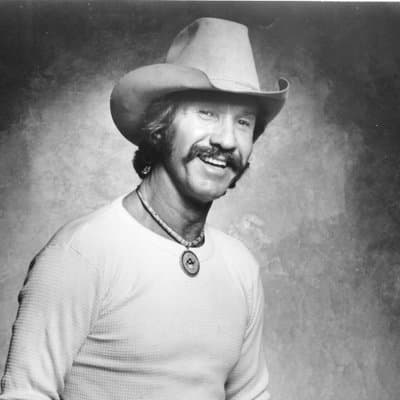
This passage captures the essential truth of the recording. Beautiful Dreamer was never meant to compete. It was meant to remain.
In the broader story of country music, songs like this often form the emotional backbone of an artist’s catalog. They may not define an era on the charts, but they define an artist’s character. For listeners who return to Robbins’ work decades later, it is often these quieter moments that feel most revealing.
The Voice as an Instrument of Calm
One of the most striking aspects of Robbins’ performance is how he uses tone rather than volume to communicate emotion. His voice carries a warmth that never presses forward. There is no urgency in his delivery, no sense of pleading. Instead, there is assurance.
That assurance creates trust. The listener feels safe inside the song. There is no manipulation, no attempt to extract a reaction. Robbins simply presents the melody and allows it to do what it has always done.
This approach reflects a broader tradition in classic country and folk recordings, where the singer’s role is not to dominate the song, but to serve it. Robbins understood that Beautiful Dreamer did not require interpretation as much as it required respect.
Why Older Listeners Hear This Song Differently
For mature audiences, Beautiful Dreamer often resonates in a deeply personal way. It recalls a time when music was encountered in stillness rather than distraction. When listening was an event, not a background activity.
Robbins’ recording speaks directly to that sensibility. It does not demand attention. It earns it.
There is also a subtle dignity in the way the song unfolds. It neither flatters nor challenges the listener. It simply invites reflection. For those who have lived long enough to recognize the value of quiet moments, this is not merely a song. It is a companion.
A Legacy Built on Sincerity
In evaluating Robbins’ legacy, it is easy to focus on his more dramatic successes, the songs that carried strong narratives or bold musical signatures. Yet recordings like Beautiful Dreamer reveal something equally important. They show his commitment to emotional honesty.
This is not a performance designed to impress critics or chase innovation. It is a performance designed to remain truthful to its source and its listener. That kind of integrity rarely announces itself loudly. It reveals itself over time.
Decades later, the recording still sounds unhurried. It has not aged because it was never tied to a moment. It belongs to a continuum, not a trend.
The Enduring Lesson of Beautiful Dreamer
Perhaps the most valuable lesson Beautiful Dreamer offers is one that modern music culture often forgets. Not every meaningful work arrives with fireworks. Some arrive quietly, sit patiently, and wait for the right listener.
Marty Robbins trusted that process. He trusted that sincerity would find its audience eventually. And it has.
In the end, Beautiful Dreamer is less about performance and more about presence. It reminds us that music does not always need to reach outward. Sometimes, its greatest power lies in drawing us gently inward, toward memory, toward stillness, toward a sense of emotional clarity that only time can fully reveal.
That is why this recording remains essential. Not because it changed the sound of country music, but because it preserved something fragile and enduring within it.
VIDEO: