INTRODUCTION:

There are moments in music history that refuse to stay in the past. They don’t settle quietly into anniversary playlists or coffee-table documentaries. They wait. They linger. They breathe beneath the surface, ready for the right spark to bring them back into the room. In 2026, that spark arrives—not with imitation or polite homage, but with something far rarer: presence.
At the center of this moment stands Elvis Presley, a voice that shaped generations and still bends time whenever it plays. And behind the vision stands Baz Luhrmann, a filmmaker known for refusing to treat icons as museum pieces. Together, through EPiC’s ambitious 2026 project, the impossible becomes tangible: not a tribute, not a reenactment, but a living musical encounter reconstructed from rare, long-lost concert footage and reimagined with contemporary cinematic daring.
Before we go further, pause with the question that opens the door to this experience—one that echoes through every frame, every restored note, every breath between songs:
If you could return to one concert night—one song, one heartbeat—would you go? Some legends never disappear. They wait. In 2026, EPiC brings Elvis Presley back—not as a memory, not as a tribute, but as a living moment. Crafted from rare, long-lost concert footage and reimagined through the daring vision of Baz Luhrmann, this isn’t nostalgia explained. It’s presence restored. For those who lived with Elvis, it feels like seeing him again. For everyone else, it’s the moment they finally understand. Some voices don’t fade. They return. Would you step inside that moment—if you could?
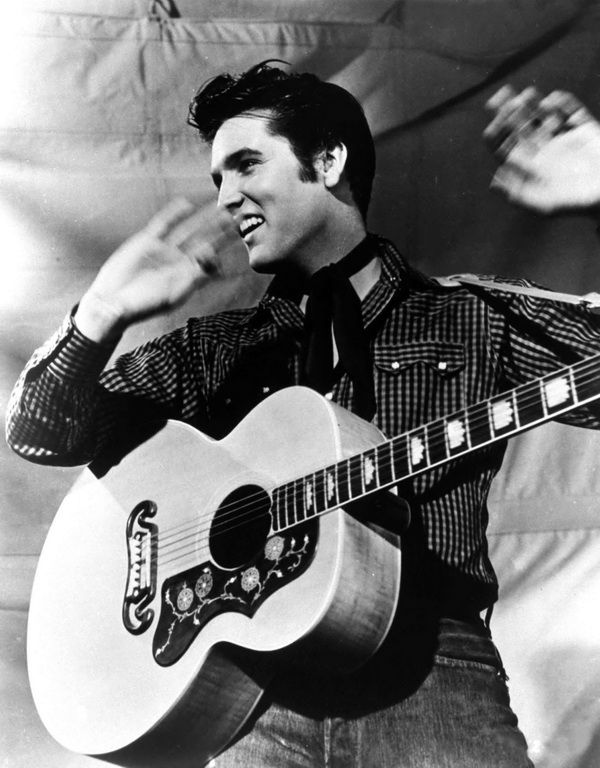
The Difference Between Remembering and Returning
Popular culture has grown comfortable with remembrance. We remaster albums, colorize photographs, and release deluxe box sets that promise clarity while preserving distance. What EPiC attempts in 2026 is something else entirely. It asks a deeper, more personal question: what if the past could meet us where we are—emotionally, sonically, visually—without apology?
Elvis Presley’s performances were never just about songs. They were about immediacy. Even on grainy television screens or scratchy vinyl, there was always a sense that he was right there, singing to you, not at you. Over time, that intimacy has been dulled by repetition and caricature. The jumpsuit becomes costume. The voice becomes impression. The man becomes myth.
This project strips that away. By returning to original concert footage—material that has not been overplayed or endlessly recycled—it recovers something fragile and human: the moment before the note, the flicker of concentration, the exchange between performer and audience that can’t be staged.
For older listeners who remember where they were the first time they heard Elvis live on the radio or saw him on television, this experience carries a quiet emotional weight. It does not shout, “Remember this?” It simply opens the door and lets you step back inside.
Baz Luhrmann and the Courage to Reimagine
Baz Luhrmann’s involvement signals intent. His work has always been about energy, rhythm, and emotional truth rather than strict realism. He understands that legends survive not because they are preserved perfectly, but because they are re-experienced honestly.
Rather than polishing Elvis into something untouchable, Luhrmann leans into contrast—between silence and sound, movement and stillness, youth and weariness. He allows the camera to linger where earlier edits rushed past. He trusts the audience to sit with a held note, a quiet smile, a breath drawn before the band comes back in.
This approach respects older viewers, especially those with lived musical memory. It assumes patience. It assumes listening. It assumes an audience that understands that meaning often arrives slowly.
EPiC and the Ethics of Revival
Any attempt to “bring back” a legendary artist carries risk. The line between celebration and exploitation can be thin. EPiC’s role here is crucial—not as a flashy brand, but as a careful steward of archival truth.
The project does not attempt to replace live performance. It does not claim that technology can improve on what once was. Instead, it acknowledges limitation while using modern tools to restore clarity without erasing character. The grain remains where it should. The imperfections are honored. The voice is not corrected into modern perfection; it is allowed to be what it was—strong, vulnerable, and unmistakably human.
For country and roots music audiences, this matters deeply. Authenticity has always been the currency of trust. Elvis may have crossed genres, but his emotional directness speaks directly to the same listeners who value truth over trend.
Why This Matters in 2026
The timing of this project is not accidental. We are living in an era saturated with content but starved for connection. Music is everywhere, yet moments feel fleeting. In this environment, returning to a single concert night—one song, one heartbeat—feels almost radical.
For younger audiences, this experience offers context rather than explanation. It does not lecture about Elvis’s importance; it lets them feel it. For older audiences, it offers recognition without sentimentality. It does not reduce the past to a highlight reel. It honors it as lived experience.
There is also something quietly reassuring about this return. It suggests that cultural memory is not linear—that what truly matters does not fade on schedule. Some voices wait until we are ready to hear them again.
A Voice That Refuses to Dim
Elvis Presley’s voice has always existed in a strange space between power and tenderness. It could command a room and then soften into something almost conversational. That quality is what makes this project resonate so strongly with mature listeners. It reflects a lifetime of listening—of learning when to speak and when to hold back.
In the restored performances, you hear the confidence, yes, but you also hear restraint. You hear a singer who understands that silence can be as expressive as sound. This is not the Elvis of parody or spectacle. This is the Elvis of connection.
Not a Museum Piece But a Meeting Place
Perhaps the greatest achievement of EPiC’s 2026 presentation is that it does not ask the audience to admire from a distance. It invites participation—not through clapping or singing along, but through attention.
You are not told how to feel. You are given space to feel.
That space is rare now, and precious.
Final Reflection
So, would you step inside that moment—if you could?
For some, it will feel like seeing an old friend again, unchanged where it matters most. For others, it will be a first meeting that finally makes sense of the stories, the influence, the devotion. Either way, the experience confirms a truth that country and roots music fans have always understood:
Legends do not survive because they are remembered.
They survive because, when the moment is right, they return.
And in 2026, Elvis Presley does exactly that—not as an echo, not as an idea, but as a living voice, waiting patiently for us to listen again.
VIDEO: