Introduction:
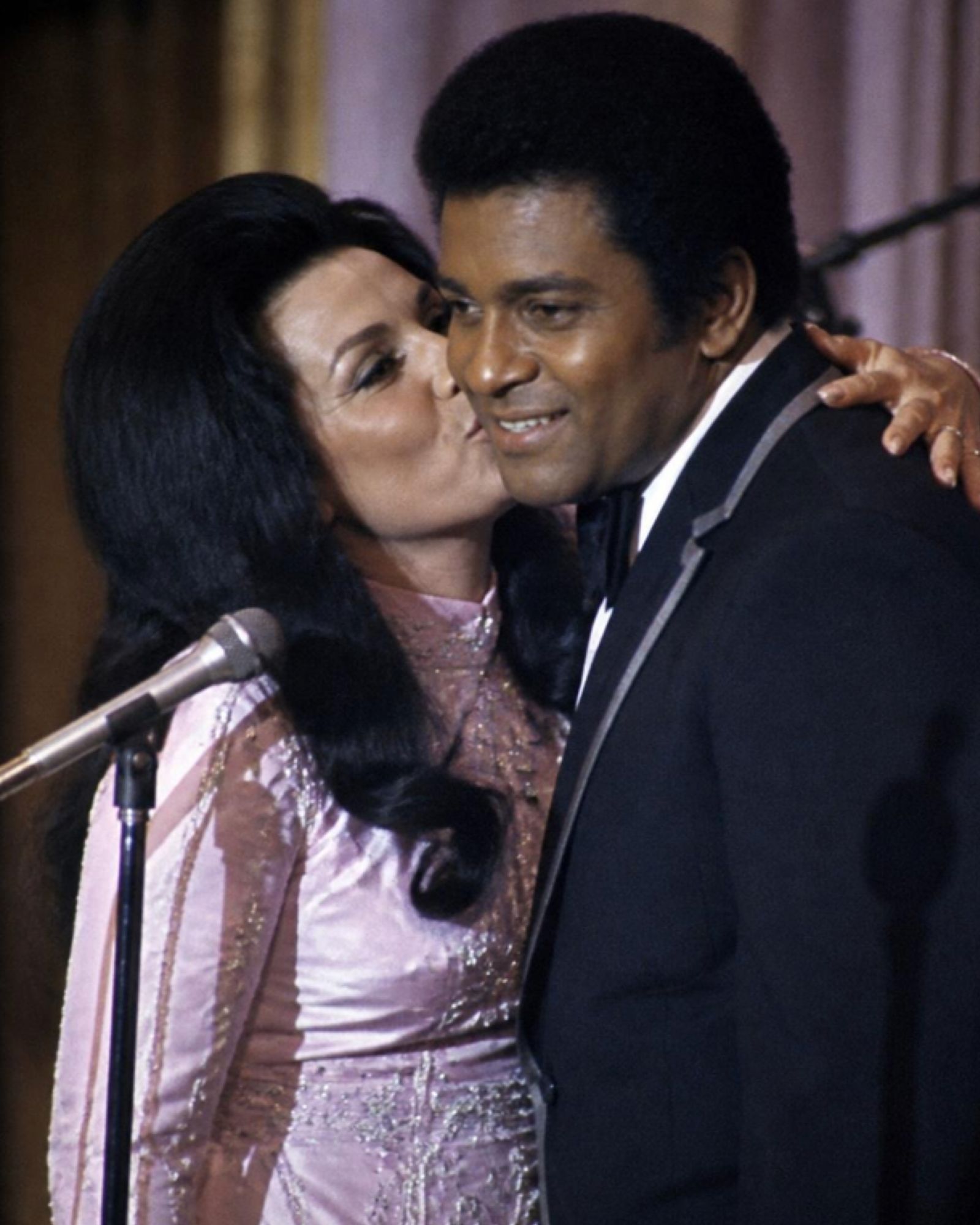
Loretta Lynn, Charley Pride, and the Kiss That Quietly Changed Country Music
Country music has always reflected the values, struggles, and changing attitudes of the people who love it. Yet some of its most powerful moments have come not through songs alone, but through simple acts of humanity. One such moment occurred on October 16, 1972, when Loretta Lynn embraced and kissed Charley Pride on live television during the CMA Awards. It lasted only seconds, but its meaning has echoed for decades.
The story became widely known because Loretta Lynn shared it in her 1976 memoir, Coal Miner’s Daughter, written with George Vecsey. According to Loretta, someone had warned her that showing affection toward Charley Pride on national television could hurt her reputation with country music fans. The suggestion reflected the racial tensions that still lingered in America during that era, even within the entertainment industry.
For Loretta Lynn, however, the warning made little sense. She often spoke about her father with deep admiration, recalling that he was “color-blind” in more ways than one. Not only did he struggle to distinguish certain shades, but he also refused to judge people by the color of their skin. That lesson shaped Loretta’s understanding of the world long before she became one of country music’s biggest stars.

So when her name was announced as Female Vocalist of the Year at the 1972 CMA Awards, Loretta simply walked to the stage, hugged Charley Pride, and kissed him. There was no hesitation, no concern about public opinion, and certainly no attempt to make a political statement. She treated him exactly as she would have treated any respected friend and fellow artist.
Looking back, Loretta recalled that nothing disastrous happened. The predictions of angry audiences and canceled performances never came true. In her unmistakably straightforward style, she remarked that even if someone had canceled her shows, she would have gone home, taken care of her children, canned string beans, and continued living her life. That response perfectly captured the resilience that defined her career. Fame mattered, but personal conviction mattered far more.
Ironically, the same evening became one of the greatest triumphs of Loretta Lynn’s remarkable career. She won Female Vocalist of the Year, shared Vocal Duo of the Year honors with Conway Twitty, and made history by becoming the first woman ever to receive the CMA Entertainer of the Year Award. The industry that some believed expected distance instead celebrated her with its highest honor.

It is also worth remembering an important historical detail that is often misstated today. Charley Pride had already been named CMA Entertainer of the Year in 1971, making him the first Black artist to receive that distinction. By the time he presented Loretta’s award in 1972, he was already one of country music’s most respected and successful performers. Keeping that timeline accurate helps preserve the true significance of both artists’ accomplishments.
More than fifty years later, the kiss remains memorable because it represented something larger than a television moment. Loretta Lynn was quietly rejecting the idea that kindness, friendship, or respect should ever be limited by prejudice. She did not deliver a speech or seek attention for making a statement. Instead, she acted according to the values she had carried since childhood.
That is why the moment continues to resonate today. It reminds us that history is not always changed by grand gestures or carefully planned speeches. Sometimes it changes through an instinctive act of decency performed in front of millions. Loretta Lynn chose compassion over fear, dignity over division, and authenticity over public approval. She gave Charley Pride a kiss, accepted one of the greatest honors of her career, and walked off the stage exactly as she had walked onto it—true to herself. In doing so, she left behind a lasting example that country music, and its fans, continue to remember with admiration.