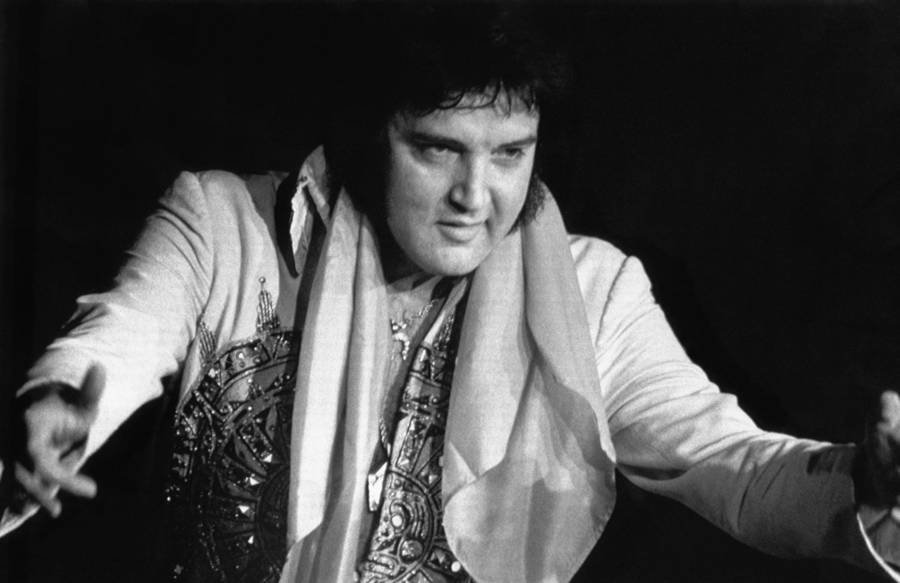
Introduction:
After Elvis Presley left the world in August 1977, countless stories emerged about the extraordinary artist who had transformed popular music forever. Fans remembered the unforgettable voice, the electrifying stage presence, and the cultural icon who became known as the King of Rock and Roll. Yet among all the memories shared over the years, one reflection from his father, Vernon Presley, continues to offer a deeply personal glimpse into the man behind the legend.
Vernon often believed that people saw Elvis as an unstoppable superstar, but they rarely recognized the immense sense of responsibility that guided his life. To those who knew him best, Elvis was not driven solely by fame or success. He was motivated by an unwavering desire to make people happy. Every concert represented more than another performance—it was a promise to thousands of fans who had traveled long distances, waited patiently, and placed their hopes in an unforgettable evening. Elvis never wanted to be the reason that promise was broken.
As the demands of his career grew heavier, so did the physical and emotional burden he carried. Even when his health began to decline, Elvis continued rehearsing, planning shows, and preparing to step onto the stage. Those closest to him recalled that he worried far more about disappointing his audience than about his own exhaustion. Canceling a performance was never an easy decision because he understood how much those moments meant to the people who had supported him throughout his remarkable journey.
The later years of Elvis’s life were undeniably complicated. He struggled with chronic health conditions and severe insomnia, challenges that required ongoing medical treatment. Vernon later reflected that his son was not pursuing excess for its own sake, as many public narratives suggested. Instead, he believed Elvis was desperately trying to find enough strength to continue doing what he loved most—performing for the people who believed in him. The medications prescribed during those difficult years were part of a much larger struggle, one that unfolded far from the bright lights of the stage.
There is a poignant contrast in Elvis’s story. The brighter the spotlight became, the more intensely he fought battles that the audience could neither see nor fully understand. Night after night, millions witnessed the charisma, confidence, and energy that defined his performances. Few could see the fatigue, the pressure, or the quiet determination required simply to keep going. Like many artists whose lives are lived in public, Elvis carried burdens that remained largely invisible until long after he was gone.
Perhaps that is why his legacy continues to resonate across generations. People certainly remember Elvis Presley for changing the course of music, influencing artists around the world, and becoming one of the most recognizable figures in entertainment history. But beyond those extraordinary achievements lies something even more enduring: the heart of a man who genuinely cared about the people who loved him.
Vernon’s memories remind us that behind every standing ovation was a son who never wanted to let anyone down. Behind every sold-out arena was an artist determined to give everything he had, even when it came at a tremendous personal cost. That quiet devotion, expressed not through grand speeches but through countless performances delivered with sincerity and passion, remains one of the most meaningful chapters of Elvis Presley’s remarkable story. It is this humanity—his compassion, resilience, and unwavering commitment to his fans—that continues to inspire millions, proving that the greatest legends are remembered not only for their talent but also for the kindness and dedication they leave behind.