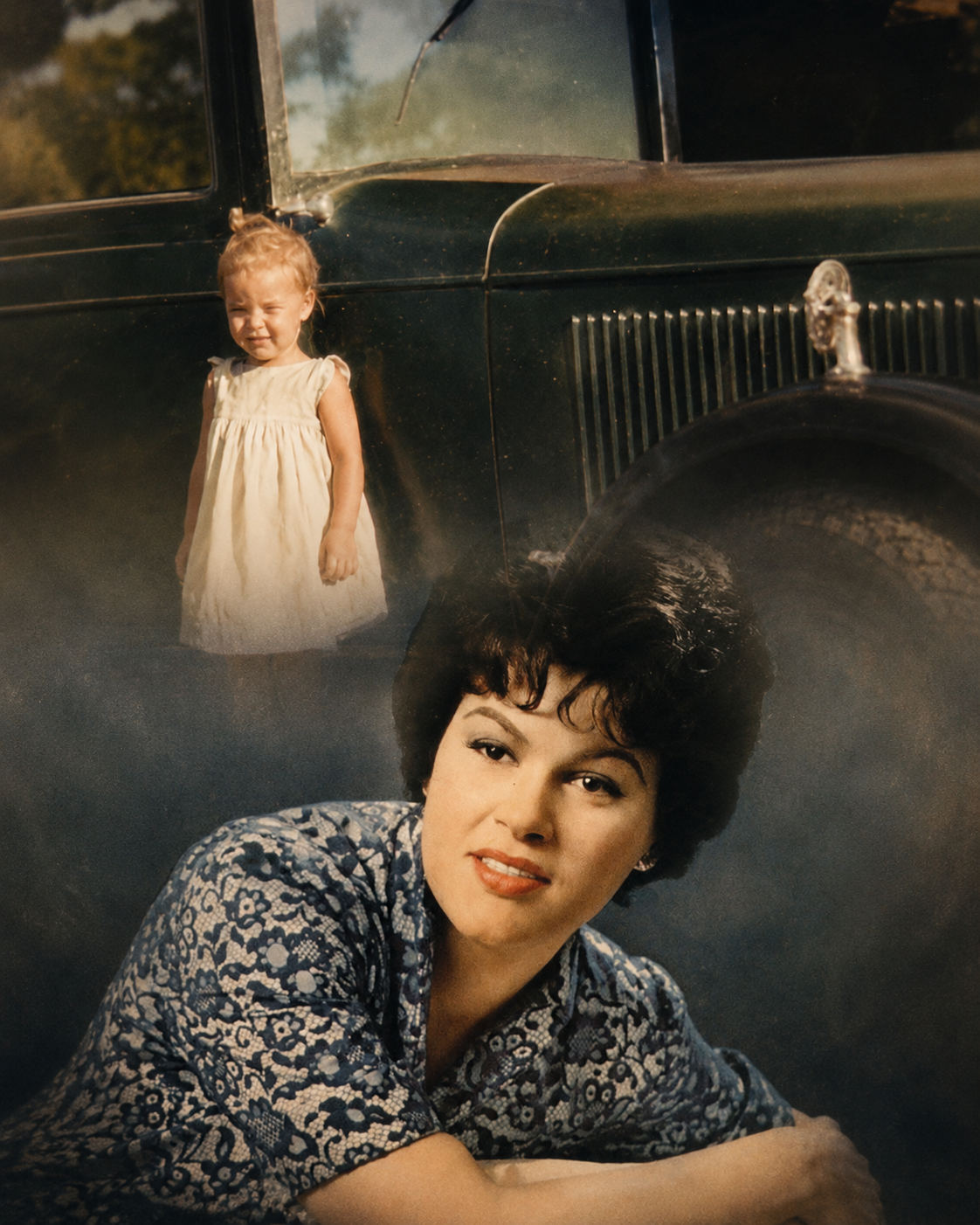
Introduction:
The world remembers Patsy Cline as one of the greatest voices country music has ever known. Her recordings remain timeless, her influence stretches across generations, and songs like “Crazy,” “I Fall to Pieces,” and “Walkin’ After Midnight” continue to comfort listeners decades after they were first released. Yet behind that remarkable voice was a woman whose strength was forged through extraordinary hardship long before she ever stepped onto a stage.
Born as Virginia Patterson Hensley in Winchester, Virginia, Patsy’s childhood was shaped by uncertainty during the Great Depression. According to the Country Music Hall of Fame, her family moved an astonishing nineteen times before she reached the age of fifteen. Each move meant another unfamiliar neighborhood, another temporary home, and another attempt to build stability where very little existed. Poverty was a constant companion, and the security that every child deserves seemed forever just out of reach.
But the greatest challenges in her early life were not the ones the outside world could see.
Years later, Patsy revealed that she had endured abuse at the hands of her own father—a painful truth that remained hidden behind closed doors throughout her childhood. The person who should have offered protection instead became the source of deep emotional wounds. When her father eventually abandoned the family, he left behind far more than financial hardship. He left a young girl carrying burdens no child should ever have to bear.

Forced to leave school, Virginia began working to help support her family. Childhood gave way to responsibility almost overnight. While many young people were dreaming about the future, she was focused on helping keep food on the table and the household together. Experiences like these often leave lasting scars, and for many, they become impossible obstacles to overcome.
Yet Patsy Cline transformed her pain into something extraordinary.
Rather than allowing bitterness to define her, she poured every disappointment, every lonely moment, and every broken memory into her music. That emotional honesty became the heart of her artistry. When she sang “Crazy,” audiences heard far more than beautiful lyrics. They heard vulnerability. They heard resilience. They heard someone who truly understood heartbreak.

The same was true of “I Fall to Pieces” and “Walkin’ After Midnight.” Her performances never sounded rehearsed or manufactured. Every note carried a quiet authenticity that listeners immediately recognized. Patsy was not simply interpreting songs—she was sharing pieces of herself. Her voice possessed a rare ability to make people feel understood, especially those facing loneliness, grief, or loss.
Perhaps that is why her music continues to resonate more than six decades after her passing. Great singers perform songs, but legendary artists make listeners believe every word they sing. Patsy Cline achieved that remarkable connection because her compassion was rooted in lived experience. She knew what it meant to feel abandoned, uncertain, and heartbroken, and she transformed those experiences into songs that offered comfort to millions.
For countless fans, listening to Patsy Cline has always felt less like hearing a performance and more like sitting beside a trusted friend who understands life’s deepest sorrows without needing them explained. Her voice carried warmth without sentimentality and strength without hardness. It reminded listeners that healing is possible, even when life has been unimaginably difficult.
Patsy Cline’s life was tragically brief, but her legacy reaches far beyond her extraordinary recordings. She gave the world more than unforgettable music—she offered empathy, hope, and reassurance to generations of people searching for comfort. In transforming her own hardships into timeless art, she created a lasting home for every lonely heart. And that is why her voice continues to echo through the years, reminding us that even the deepest pain can become a source of enduring beauty and compassion.