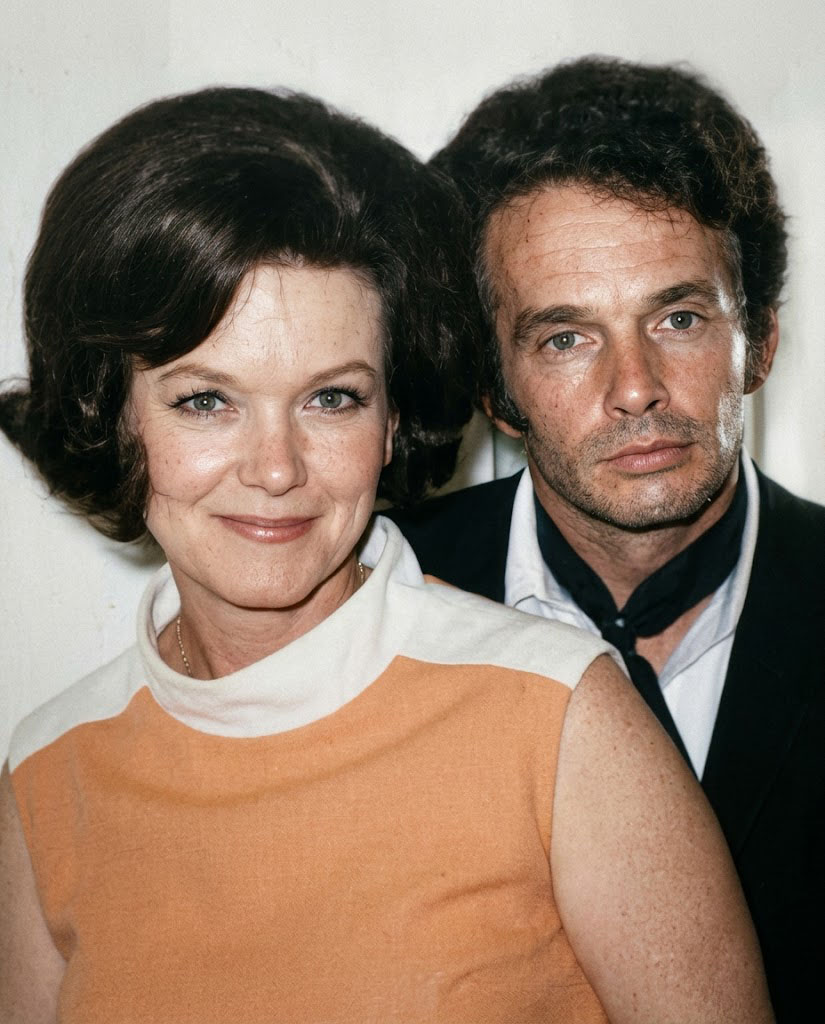
Introduction:
Behind every unforgettable voice, there is often another voice that history forgets.
For decades, country music celebrated the rugged storytellers who stood beneath the brightest lights. Audiences remembered the names on the marquees, the men holding the guitars, and the legends whose songs shaped generations. Yet just beyond the spotlight stood artists whose quiet dedication made those performances complete. Few embodied that grace more than Bonnie Owens.
Before she became known as Merle Haggard’s wife, Bonnie Owens had already earned deep respect in the Bakersfield sound. She was an accomplished singer, songwriter, and performer in her own right. She had also shared both life and music with Buck Owens, helping shape one of country music’s most influential eras. While others often received the headlines, Bonnie was building a legacy through talent, humility, and unwavering professionalism.
When Bonnie married Merle Haggard in 1965, she became much more than a partner on stage. She offered stability during one of the busiest and most demanding periods of his career. Together they traveled countless miles, recorded memorable music, and shared a creative bond that left an enduring mark on country music. Their collaboration on the beloved classic “Today I Started Loving You Again” remains one of the defining achievements of that remarkable partnership.

Night after night, audiences heard Merle’s unmistakable voice leading the songs. But just behind him was Bonnie, adding harmonies that brought warmth, depth, and emotional balance to every performance. Her voice never competed for attention. Instead, it elevated the music, gently weaving itself into every lyric until the songs felt complete.
Their marriage ended in 1978, and like many relationships lived under constant public attention, it could not withstand the pressures of life on the road. Merle soon remarried, and many would have expected Bonnie to leave that chapter behind forever.
Instead, she made a remarkable choice.
Bonnie continued performing as a member of Merle Haggard’s touring band for many years after their divorce. While the exact number of years is often remembered differently depending on the source, what remains beyond dispute is her extraordinary professionalism. She returned to the stage, evening after evening, standing only a few feet behind the man with whom she had once shared both a home and a dream.
That decision spoke volumes about her character.

It was never about seeking sympathy or proving a point. Music had always been Bonnie’s calling. The stage was where she belonged, and her commitment to the songs was greater than any personal disappointment. She chose dignity over bitterness, artistry over resentment, and the music above everything else.
When Bonnie Owens passed away in 2006, there were no extravagant tributes that matched the magnitude of her contribution. Yet among musicians, devoted country fans, and those who understand the history of the Bakersfield sound, her influence has never disappeared.
Today, when listeners revisit those classic recordings, they hear more than Merle Haggard’s powerful storytelling. They hear the gentle harmony that gave those songs another layer of heart. Bonnie’s voice may have stood just behind the lead, but it was never truly in the background.
Some artists leave their mark by standing in the center of the stage.
Others leave it by making everyone around them sound better.
Bonnie Owens belonged to the second group, and country music is richer because she did.