Introduction:
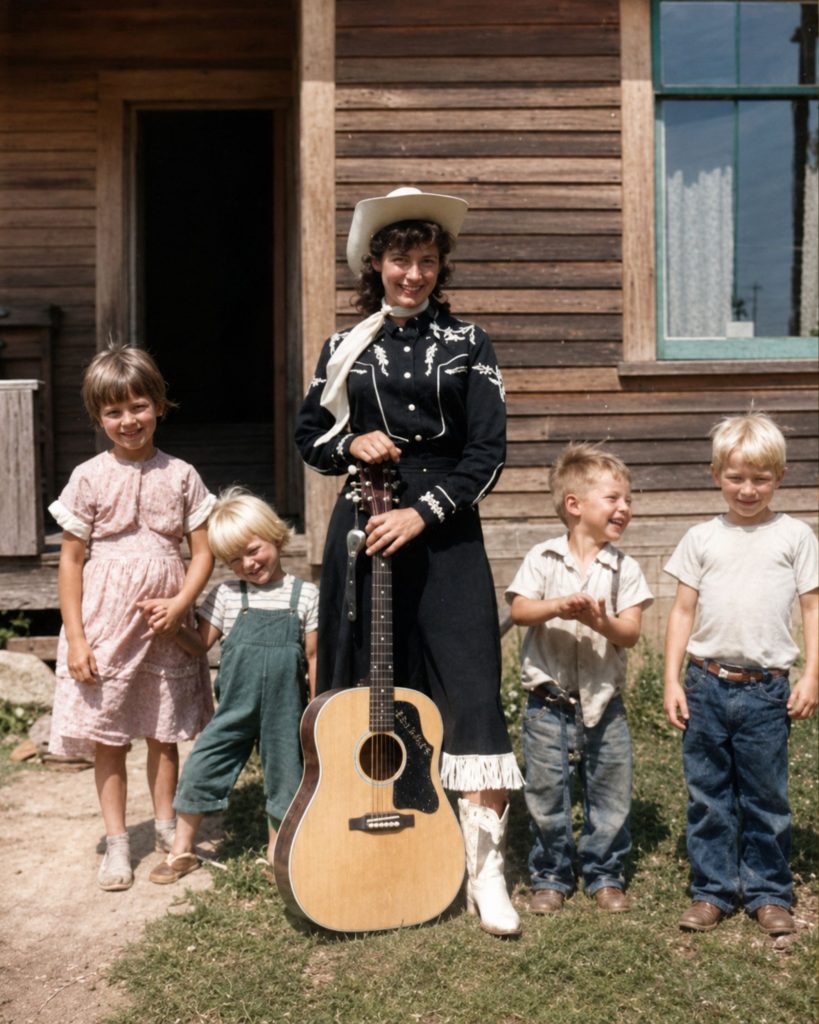
Long before the bright lights of Nashville ever shone on her, Loretta Lynn was already living the stories that would one day make her one of country music’s most authentic and beloved voices. The songs that changed the genre did not begin in recording studios or on famous stages—they began in a modest kitchen, surrounded by children, housework, and the everyday struggles of a young wife determined to keep her family together.
Born Loretta Webb in the small community of Butcher Hollow, Kentucky, she married Oliver “Doolittle” Lynn when she was just fifteen years old. He was a World War II veteran, while she was the daughter of a coal miner who had rarely ventured beyond the Appalachian hills she called home. Soon after their wedding, the young couple left Kentucky behind and settled in Custer, Washington, a quiet logging town that seemed worlds away from the dreams of the country music industry.
Life there was far from glamorous. Loretta was expecting her first child when they arrived, and by the time she celebrated her twentieth birthday, she was already the mother of four. Her days were consumed with washing clothes, preparing meals, caring for babies, and stretching every dollar to make ends meet. Nashville had never heard her name. No record label was searching for a young mother raising a growing family. There was little reason for anyone to imagine that this hardworking woman would someday become one of country music’s greatest songwriters.

Yet something remarkable was already taking shape.
Recognizing her love of music, Doolittle bought Loretta a simple seventeen-dollar Sears guitar. It wasn’t an expensive instrument, but it became the beginning of something extraordinary. She learned each chord patiently, practicing whenever she could find a quiet moment between the endless responsibilities of motherhood. Before long, she was performing at local clubs and community gatherings, singing wherever someone was willing to hand her a microphone.
What made Loretta different wasn’t just her voice—it was the life behind every lyric.
She never needed Nashville to invent stories for her. She had already lived among the women whose experiences would fill her songs. She knew mothers who married young, wives carrying the weight of entire households, women whose husbands drank too much, women who were overlooked, underestimated, betrayed, yet expected to endure it all with quiet dignity. These weren’t fictional characters. They were neighbors, friends, relatives, and often reflections of her own life.
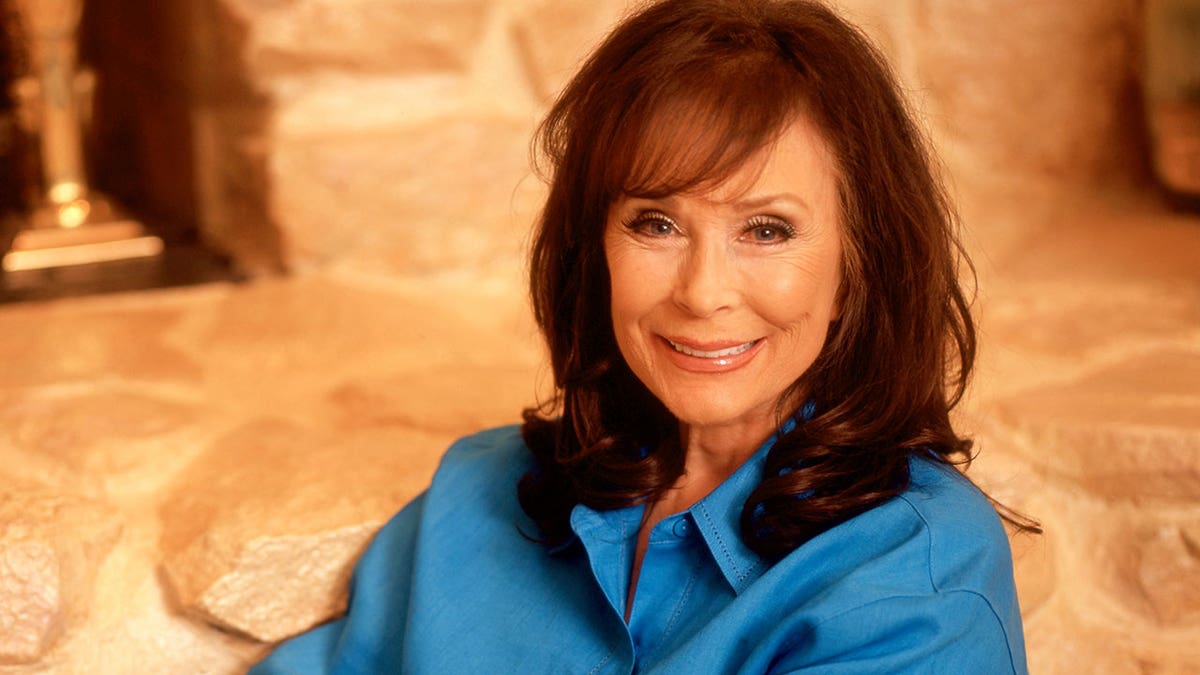
In 1960, Loretta recorded “I’m a Honky Tonk Girl.” With no major label backing them, she and Doolittle personally promoted the record, driving from one radio station to another and asking disc jockeys to give the song a chance. Their persistence paid off. The single became a hit, opening the door to Nashville and launching a remarkable career that would later produce classics like “Success,” “You Ain’t Woman Enough,” “Don’t Come Home A-Drinkin’,” and the unforgettable “Coal Miner’s Daughter.”
But the true beginning of Loretta Lynn’s legacy wasn’t marked by chart success or industry recognition. It started years earlier in a small home where a teenage bride balanced motherhood with quiet dreams, where a seventeen-dollar guitar rested within reach after the children were asleep, and where an ordinary woman discovered she had an extraordinary gift for giving voice to lives that had rarely been heard.
Loretta Lynn never waited for Nashville to tell her she belonged in country music. By the time the city finally welcomed her, she had already become the storyteller that millions of fans would come to admire. Every song carried the honesty of a woman who had lived every word—and that authenticity remains one of the greatest reasons her music continues to resonate with listeners across generations.