Introduction:
Robin Gibb: The Voice of Emotion Behind the Bee Gees’ Extraordinary Legacy
When people think of the Bee Gees, they often remember the dazzling disco era, chart-topping hits, and unforgettable harmonies that defined an entire generation. Yet behind that legendary sound stood a voice unlike any other—the clear, emotional, and instantly recognizable tenor of Robin Gibb. While millions around the world celebrated the Bee Gees as a group, Robin’s unique contribution was essential in shaping the musical identity that made the trio one of the most successful acts in music history.
Born on December 22, 1949, on the Isle of Man, Robin entered the world just 35 minutes before his twin brother Maurice. Together with their older brother Barry, the three boys grew up in a household where music was woven into everyday life. Their parents, Hugh and Barbara Gibb, encouraged creativity, and the brothers spent countless hours singing, writing songs, and perfecting harmonies long before fame ever found them.
The family’s journey took them from England to Australia, where the young brothers began performing at local venues, talent shows, and community events. Even as a child, Robin’s voice stood out. His distinctive vibrato carried a depth of feeling far beyond his years, adding a powerful emotional dimension to the group’s performances. As the Bee Gees gained popularity in Australia, Robin emerged as both a gifted vocalist and a talented songwriter, helping shape the group’s early artistic direction.

Their return to England in 1967 marked the beginning of international success. Songs such as “Massachusetts,” “I’ve Gotta Get a Message to You,” and “I Started a Joke” showcased Robin’s extraordinary vocal abilities. His heartfelt delivery transformed these songs into timeless classics, connecting deeply with listeners around the world. While the Bee Gees were often compared to other major acts of the era, Robin’s voice gave their music a character that was entirely their own.
The late 1970s brought a dramatic evolution. As the Bee Gees embraced a more dance-oriented sound, they became the defining voices of the disco movement. The soundtrack to Saturday Night Fever became a global phenomenon, selling millions of copies and cementing their place in music history. Although Barry’s falsetto became the most recognizable feature of this period, Robin remained a vital creative force. His vocals provided emotional balance and sophistication, helping songs like “How Deep Is Your Love” and “More Than a Woman” achieve lasting appeal.
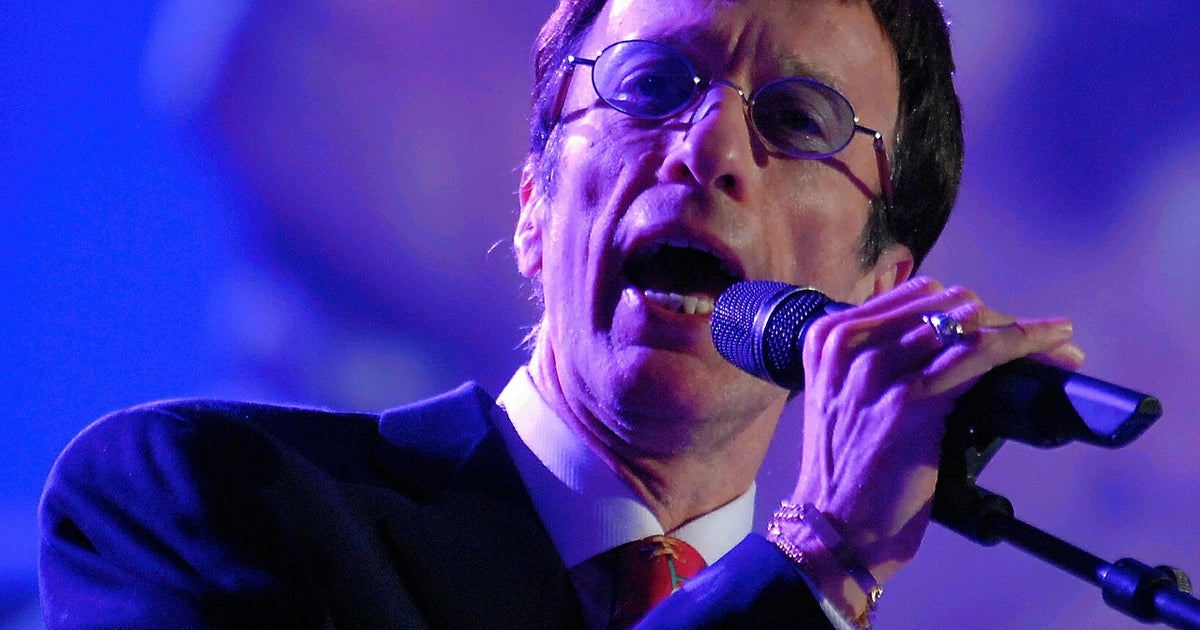
Behind the enormous success, however, Robin faced personal challenges. Fame, family tensions, and industry pressures tested his resilience. Yet throughout every triumph and setback, his dedication to music never wavered. He pursued solo projects, supported his brothers through difficult times, and continued exploring new artistic directions well into later life.
The loss of Maurice in 2003 was a devastating turning point. Robin often said that the Bee Gees were, above all else, three brothers, and the group could never truly exist without all three members. Despite his grief and later health struggles, he remained active creatively, continuing to write, record, and champion causes close to his heart.
When Robin Gibb passed away on May 20, 2012, the world lost more than a remarkable singer. It lost an artist whose voice carried genuine emotion, vulnerability, and beauty. Today, his influence lives on through a catalog of songs that continue to inspire new generations of musicians and fans alike.
Robin Gibb’s story is not simply one of fame and success. It is a story of perseverance, artistry, family, and an unwavering commitment to music. Decades after his voice first captivated audiences, it still resonates with listeners around the world, reminding us why truly great music never fades.