
Introduction:
The Truth About Young Elvis Presley: Why the “Lonely Boy” Story May Have Gotten It Wrong
For decades, the story of Elvis Presley has often begun with heartbreak.
Books, documentaries, and television specials have repeatedly portrayed the future King of Rock and Roll as a lonely child growing up in poverty in Tupelo, Mississippi, carrying the emotional weight of losing his stillborn twin brother, Jesse Garon Presley. It is a narrative that has become deeply embedded in popular culture—a tale of isolation that supposedly fueled one of the most remarkable rises in music history.
But as historians continue to examine archival records and firsthand accounts, a different picture of young Elvis is emerging. And it may be far more inspiring than the legend itself.
The truth is that Elvis Presley was not defined by loneliness. He was surrounded by family, friendship, faith, music, and community from the very beginning.

Those who knew Elvis during his childhood rarely describe him as an isolated boy. Instead, they remember a lively, curious, and energetic youngster who was constantly surrounded by people. In the close-knit neighborhoods of East Tupelo during the 1930s and 1940s, extended families lived deeply interconnected lives. Cousins, grandparents, aunts, uncles, neighbors, and church members formed an everyday support network that played a significant role in shaping Elvis’s early years.
Childhood friends recalled a boy who spent his days exploring creeks, attending church gatherings, and sharing adventures with cousins. Far from sitting alone in silence, Elvis was often right in the middle of community life.
Music, too, was never far away.
Long before the world heard his voice on a record, Elvis was immersed in a rich musical environment. The First Assembly of God Church in Tupelo introduced him to the emotional power of gospel music, while family gatherings frequently turned into informal musical celebrations. Songs drifted through homes, church services, front porches, and community events, creating a soundtrack that would influence him for the rest of his life.
Rather than simply listening to music, Elvis lived inside it.
His upbringing also placed him at a unique cultural crossroads. Growing up in Mississippi and later moving to Tennessee exposed him to a wide range of musical traditions, including gospel, country, blues, and folk music. His curiosity about different sounds and styles helped shape the groundbreaking musical fusion that would eventually transform American popular culture.
Another quality that distinguished Elvis early on was his willingness to be different. Friends and classmates remembered his interest in fashion, style, and self-expression. While others blended into the crowd, Elvis embraced individuality. He experimented with clothing, hairstyles, and personal presentation years before becoming a global icon.
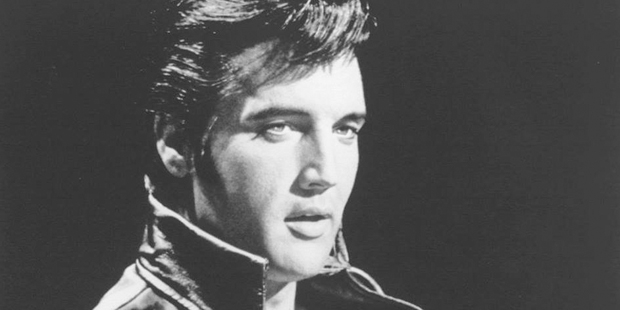
Perhaps most importantly, he grew up in a home filled with love. His parents, Vernon and Gladys Presley, believed in him deeply. Their unwavering support provided the emotional foundation that allowed him to dream beyond the limitations of his circumstances. They gave him something every future star needs: confidence that he mattered.
The enduring image of a lonely boy rising from obscurity to become the King of Rock and Roll is undeniably compelling. But reality appears far richer than myth.
Elvis Presley did not emerge from isolation. He emerged from belonging.
He was a son, a cousin, a friend, a churchgoer, and a dreamer. He was nurtured by a community that filled his life with music, encouragement, and human connection. And when we listen to those early recordings today, we may not be hearing the sound of loneliness at all.
We may be hearing the sound of an entire community speaking through one extraordinary voice.
The King of Rock and Roll was never truly raised alone.
He was raised by a chorus.