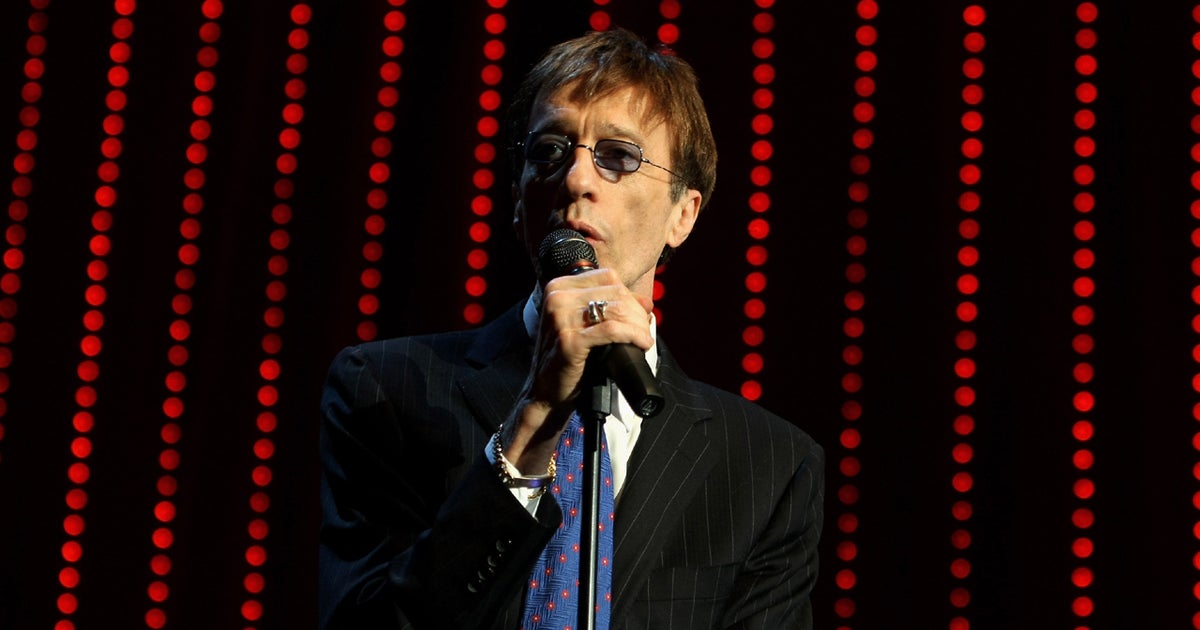
Introduction:
Robin Gibb: The Voice That Turned Emotion Into Eternity
Few voices in the history of popular music have possessed the emotional power of Robin Gibb’s. Haunting yet tender, fragile yet unwavering, his voice carried a rare ability to reach listeners almost instantly. It was never simply a voice people heard—it was a voice they felt. Every note seemed to hold a lifetime of reflection, longing, and sincerity, leaving an emotional imprint that transcended generations. As one-third of the legendary Bee Gees, Robin helped define the sound of modern popular music, but beyond the global fame stood an artist whose greatest gift was his ability to make music profoundly human.
Born in 1949, Robin Gibb shared an extraordinary musical destiny with his brothers, Barry and Maurice. Together, they built one of the most successful catalogs in music history, creating timeless songs marked by unforgettable harmonies and masterful songwriting. While the Bee Gees became celebrated for their remarkable vocal blend, Robin’s voice always remained instantly recognizable. There was a trembling honesty in his delivery, a vulnerability that could communicate heartbreak, hope, and reflection within a single phrase. It was not merely technically impressive—it felt deeply personal, as though every lyric revealed a piece of his soul.
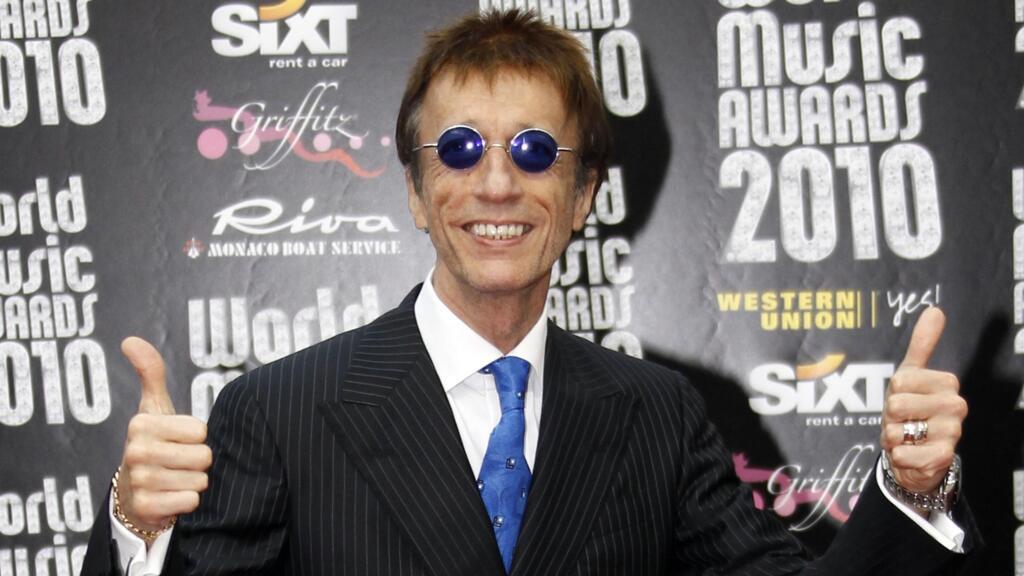
That emotional authenticity became the heartbeat of some of the Bee Gees’ most beloved classics. Songs such as I Started a Joke, Massachusetts, and How Can You Mend a Broken Heart showcased Robin at his most powerful. He did more than perform these songs—he inhabited them. Every word carried weight, every melody felt lived-in. Fans often described him as “a voice from heaven,” not because he pursued perfection, but because he offered something far more meaningful: truth. His ability to express vulnerability created an intimate bond between artist and listener, one that continues to resonate decades later.
As the Bee Gees evolved and became icons of the disco era, their music transformed into a global phenomenon. Their soaring harmonies, irresistible rhythms, and groundbreaking sound dominated charts around the world. Yet even amid the glittering energy of disco, Robin remained an essential emotional anchor. While many of the era’s biggest hits celebrated movement and excitement, Robin ensured the music retained its heart. His presence brought depth and humanity to the Bee Gees’ sound, helping the group achieve a balance that few artists have ever matched.
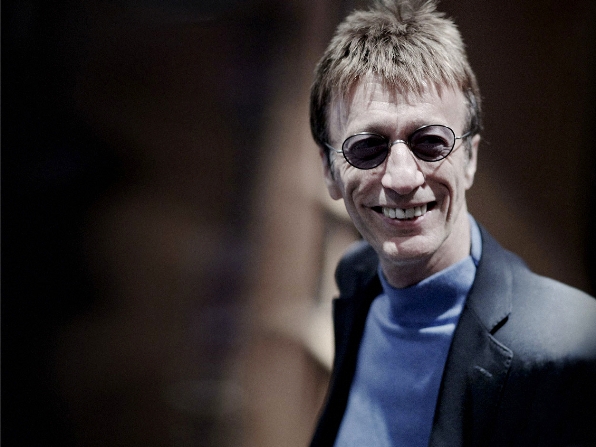
In his later years, Robin displayed the same resilience that defined his artistry. Even while facing serious health challenges, he remained devoted to music. He continued writing, recording, and sharing his creativity whenever possible, driven by a passion that never diminished. That determination reflected the very qualities listeners had always heard in his voice—sensitivity paired with strength, vulnerability combined with endurance.
When Robin Gibb passed away in 2012, the loss was felt around the world. Music had lost one of its most distinctive voices, and millions mourned an artist who had given expression to emotions they often struggled to put into words themselves. Yet his presence has never truly disappeared.
Today, whenever a Bee Gees song begins to play—whether in a crowded arena, on a quiet radio station, or during a moment of personal reflection—Robin’s voice lives on. It continues to comfort, inspire, and connect people across generations. His legacy extends far beyond any single era or musical style. It serves as a timeless reminder that authenticity remains the most powerful force in art.
Robin Gibb may be gone, but his music endures. His voice still drifts effortlessly through time, carrying the same honesty, warmth, and emotion that made it unforgettable. In every sense, it remains a voice from heaven.