Introduction:
The Quiet End of a King: The Lonely Final Hours of Elvis Presley and the Humanity Behind the Legend
On the morning of August 16, 1977, the world unknowingly stood on the edge of a cultural heartbreak. Inside the gates of Graceland, far from the spotlight that had defined his life, Elvis Presley—the man known across the globe as the King of Rock and Roll—spent his final hours in silence.
There were no roaring crowds. No stage lights. No grand farewell before thousands of devoted fans.
Only stillness.
For a performer whose voice transformed popular music and whose influence reached every corner of the world, the contrast was striking. Elvis had become more than a musician; he was a symbol of an era. His image was instantly recognizable, his records sold in extraordinary numbers, and his impact on modern entertainment remains immeasurable even today.
Yet his final chapter unfolded behind closed doors, away from the adoration that had followed him for decades.
Those closest to Presley had long observed signs that the pressures of fame were taking a toll. Years of relentless touring, exhausting performance schedules, and ongoing health complications had gradually weakened the man behind the legend. While the public often saw only the charismatic superstar, friends and associates witnessed a far different reality—one marked by fatigue, physical pain, and increasing isolation.
“He gave everything he had to the audience every single night,” one longtime associate later reflected. “People saw the superstar, but they did not always see how exhausted he truly was.”
In the years before his death, Elvis struggled with chronic health issues, including severe digestive disorders and cardiovascular problems. Medical experts would later conclude that his passing was not the result of a sudden collapse, but rather the culmination of years of declining health. The medications prescribed to help him endure the demands of constant performances placed additional strain on an already fragile body.
That morning at Graceland began much like many others. Elvis had battled insomnia for years and often spent long nights reading books and reflecting in solitude. Friends recalled that reading had become one of the few comforts that helped quiet his restless mind.
Shortly after entering the bathroom of his private suite, his heart stopped.
When the news broke, disbelief swept across America and beyond. Radio stations interrupted regular programming. Television anchors delivered reports with visible shock. Outside Graceland, grieving fans gathered almost immediately, struggling to comprehend that one of the most recognizable voices in history was gone at just 42 years old.
But beyond the headlines and public mourning lay a more personal truth.
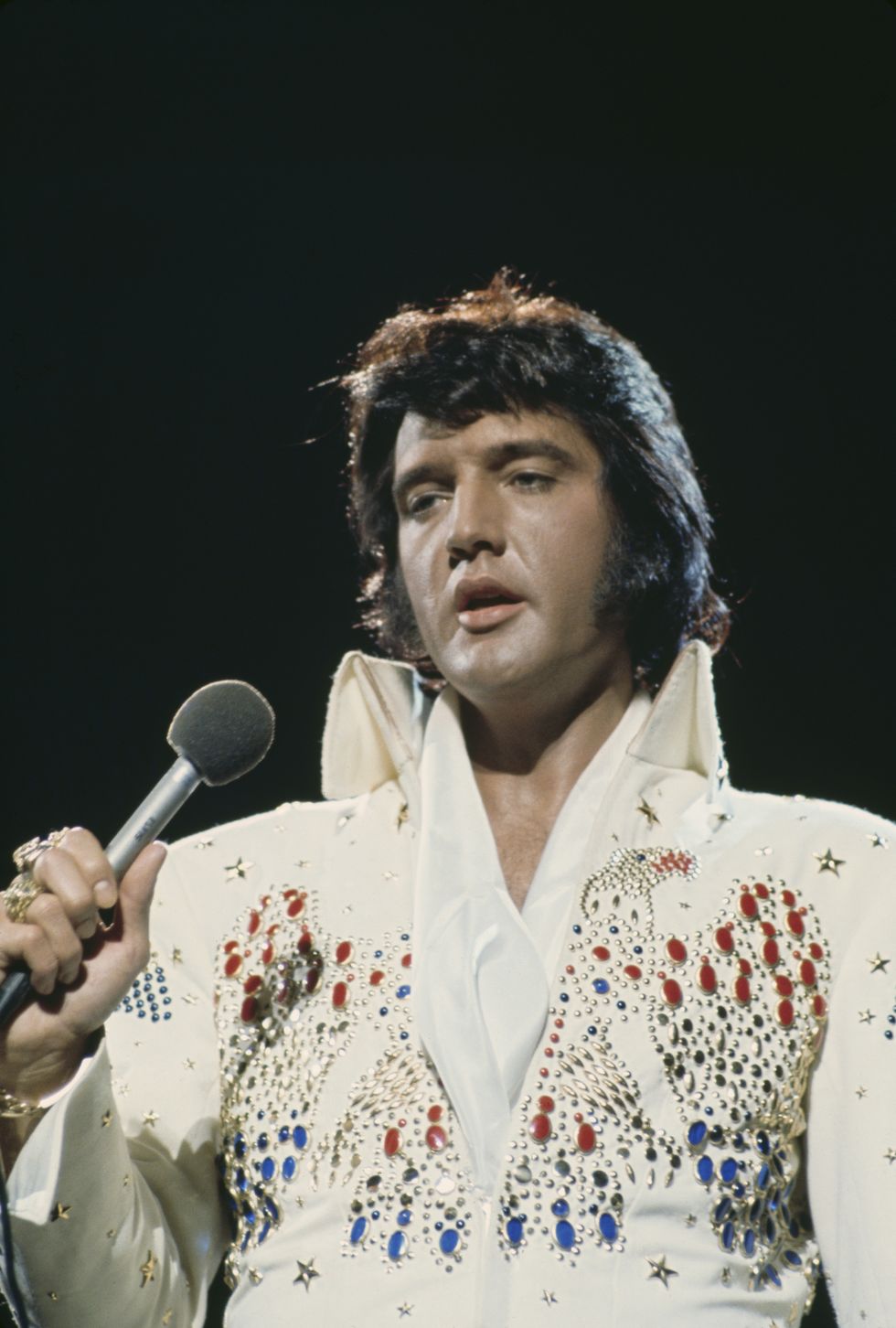
Behind the rhinestone jumpsuits, sold-out concerts, and global fame was a man carrying burdens few could fully understand. Elvis Presley embodied charisma, success, and cultural revolution, yet he also faced loneliness, emotional pressure, and physical struggles hidden from public view.

That contradiction remains one of the most compelling aspects of his story.
He was adored by millions, yet often felt isolated. He appeared larger than life on stage while privately confronting challenges that no amount of fame could erase. Those who knew him best frequently described him as thoughtful, introspective, generous, and deeply sensitive—a man searching for meaning beyond celebrity.
Nearly half a century later, that humanity continues to resonate.
Visitors still travel from around the world to Graceland, drawn not only by the music but by the man behind it. They come to celebrate an artist who changed music forever, but also to remember someone profoundly human.
Elvis Presley did not leave the world as an untouchable icon frozen in myth. He left as a man who gave everything he had—physically, emotionally, and artistically—to the audiences who loved him.
And perhaps that is why his voice still endures.
Not simply because it changed music history, but because the humanity behind that voice made people believe every word he sang.