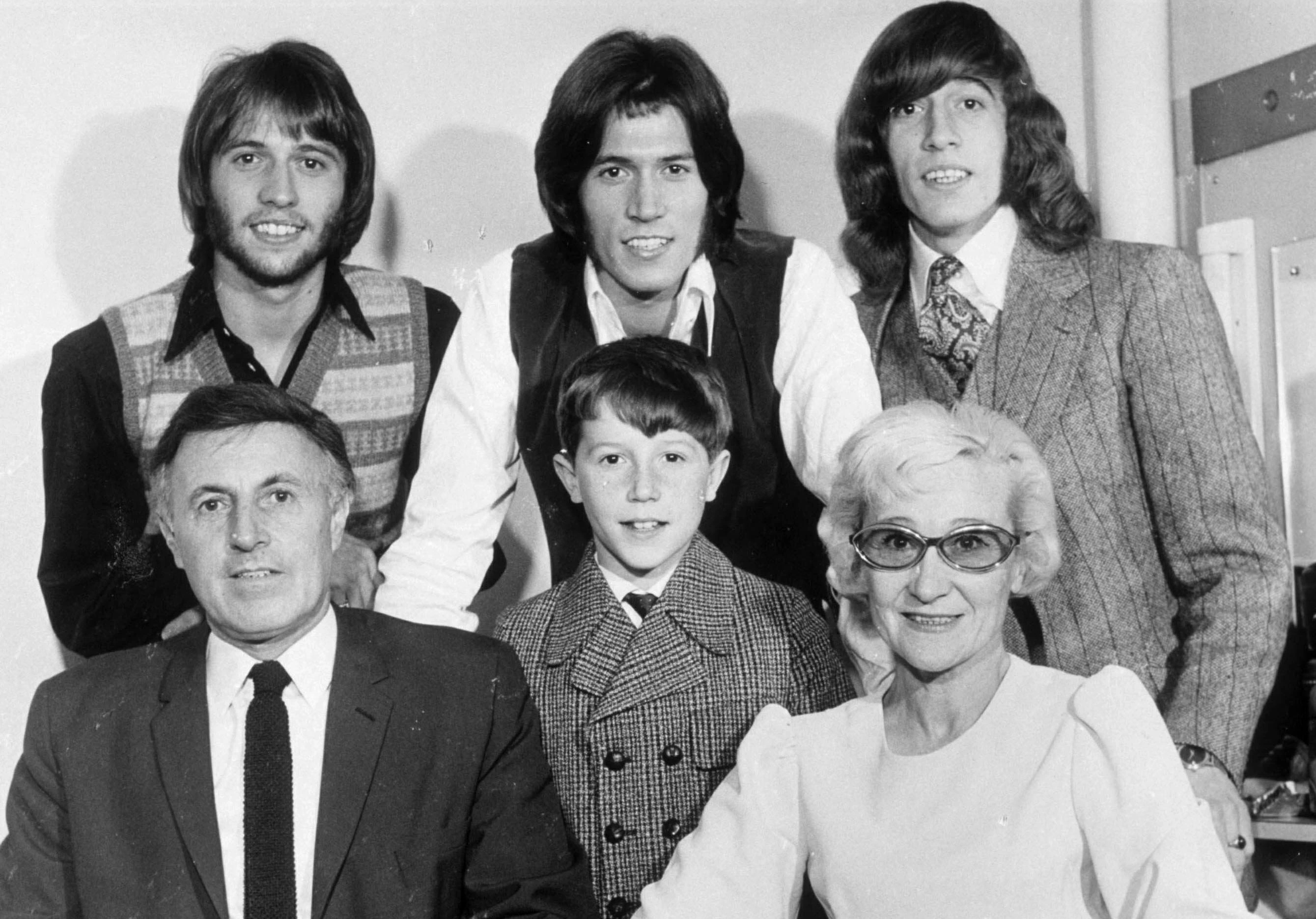
Introduction:
The Bee Gees’ Greatest Heartbreak: How Music Helped Barry, Robin, and Maurice Survive an Unimaginable Family Tragedy
For millions around the world, the Bee Gees represented musical perfection. Their soaring harmonies, timeless songwriting, and extraordinary influence on popular music transformed them into one of the most successful groups in history. Yet behind the glittering success, sold-out arenas, and chart-topping hits was a deeply personal tragedy that would forever change the lives of the Gibb family.
At the center of that heartbreak was the loss of the youngest Gibb brother, Andy.
While Barry, Robin, and Maurice Gibb built an empire together as the Bee Gees, Andy carved out his own remarkable path. Blessed with natural charisma, striking good looks, and undeniable talent, he quickly became a global sensation in his own right. During the late 1970s, Andy achieved what few artists ever could—three consecutive No. 1 singles, establishing himself as one of the brightest young stars in music.

But success came with a heavy price.
Living in the shadow of three legendary older brothers was never easy. Barry Gibb later reflected on the unique challenge Andy faced throughout his life.
“There was always that ten-year difference,” Barry recalled. “We were always ten years older than him, so it was never right for Andy to be in the band.”
Although Andy earned fame on his own terms, the pressures of celebrity, combined with personal struggles, gradually pushed him into a devastating battle with addiction. By the late 1980s, the vibrant young performer who had once captivated audiences around the world was fighting for his future.
Seeking a fresh start, Andy moved to England and stayed with Barry, hoping to escape the destructive influences surrounding him. But years of physical and emotional strain had already taken their toll. Just days after celebrating his 30th birthday, Andy was diagnosed with myocarditis, a severe inflammation of the heart muscle.
Barry would later remember the heartbreaking reality of those final days.
“He came to stay with us for a few weeks, and he was in a very bad state,” he said. “It affected his heart.”
One of the most painful moments came during Andy’s final trip to the hospital. According to Maurice, Andy looked at his mother in the ambulance and asked, “You can’t die from this, can you, Mum?” Tragically, only three days later, he was gone.

The loss shattered the entire family, but perhaps no one suffered more deeply than their father, Hugh Gibb. Having guided his sons from humble beginnings to worldwide fame, Hugh found himself powerless to save his youngest child. The grief consumed him.
“My father really died when Andy died,” Maurice once said.
For three years, Hugh carried the unbearable weight of that loss before passing away himself. Looking back, Maurice described feeling a bittersweet sense of peace, believing his father had finally been reunited with Andy.
Left to navigate a world forever altered by loss, Barry, Robin, and Maurice turned to the one place that had always given them strength—the recording studio.
Their grief became the foundation of the Bee Gees’ 1989 album One, a deeply emotional project that served as both a tribute and a healing process. The haunting song “Tears,” dedicated to Andy and Hugh, captured emotions too profound for ordinary conversation. Through music, the brothers found a way to express sorrow, love, and remembrance.
Today, the Bee Gees are often remembered for their dazzling success and iconic sound. Yet beneath the fame lies a powerful story of family, resilience, and heartbreak. Their music remains more than entertainment—it stands as a lasting testament to the bonds that united four brothers, and to the memories of one who left the stage far too soon.