Introduction:
The Heartbreaking Final Photos of Elvis Presley: When a Legend Gave Everything He Had Left
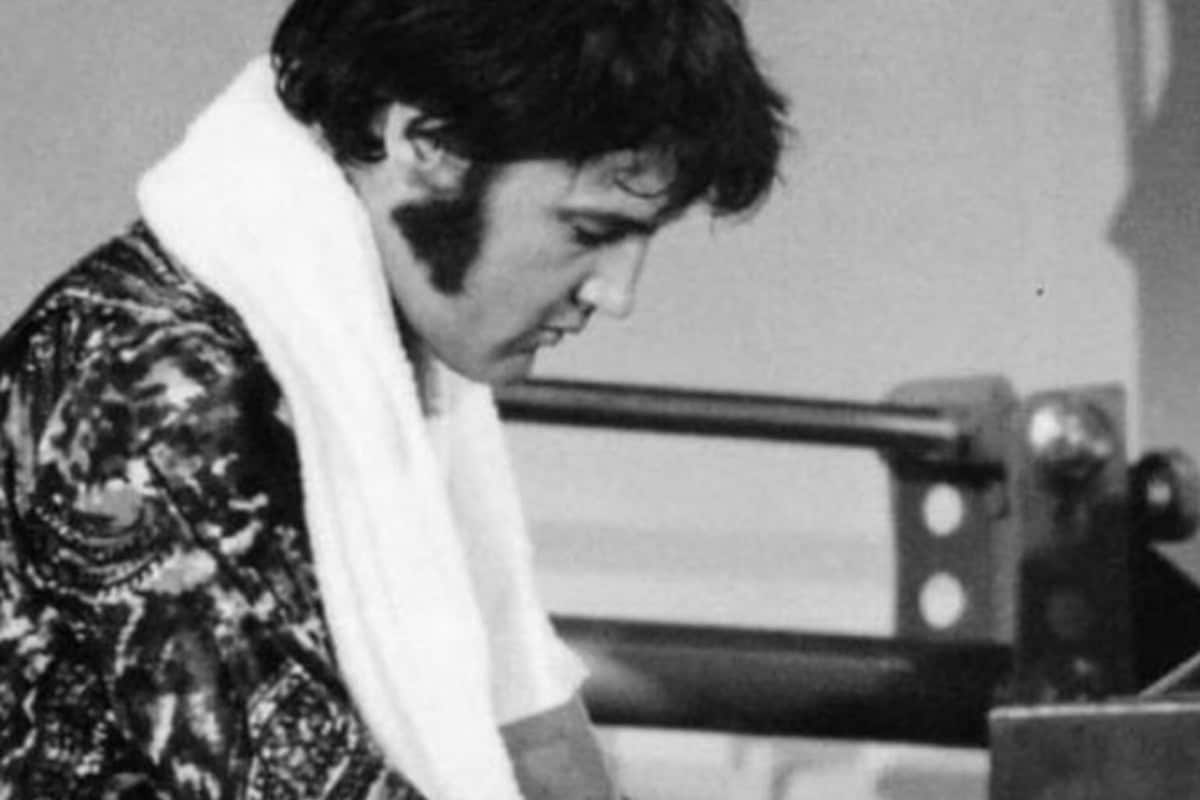
The final photos of Elvis Presley are heartbreaking because they show more than a legend — they reveal a tired man who kept giving the world everything he had left, even when there was almost nothing remaining to give.
At first glance, those last images feel familiar. Elvis is still there in all his iconic form: the shimmering jumpsuit, the microphone held with instinctive confidence, and the unmistakable stage presence that once defined an era. Under the glow of stage lights, he still commands attention. The crowd still rises the moment he appears. For a brief moment, it is easy to believe that nothing has changed, that the magic remains untouched by time.
And in many ways, it does.
But if you look closer, beyond the surface of spectacle and nostalgia, another truth begins to emerge.
By 1977, Elvis Presley had spent more than two decades living under the crushing weight of global fame. His life had become a cycle of performances, travel, expectations, and the constant demand to be larger than life. Night after night, city after city, he gave himself to audiences who expected perfection every time he stepped onto the stage.

That level of devotion came at a cost.
Friends and those close to him later spoke of exhaustion that never seemed to leave him during his final tours. His body was tired, worn down by years of relentless performance. His spirit, too, carried the quiet burden of someone who had been everything to everyone for far too long. Yet despite it all, Elvis still showed up.
That is what makes those final photographs so deeply emotional today. They do not capture a man who surrendered. They capture a man who continued to give, even when giving had become painfully difficult.
Fans who witnessed his final concerts often recall small, telling moments. The way he paused between songs longer than before. The subtle struggle to catch his breath. The heaviness in his movements that contrasted sharply with the explosive energy of his earlier years. There were even fleeting moments where his gaze drifted, distant and reflective, before he forced a smile and returned to the audience with familiar warmth.
Then came “Unchained Melody.”
Sitting at the piano, Elvis delivered a performance that remains haunting to this day. Technically imperfect, perhaps, but emotionally overwhelming in its honesty. Every note seemed to carry layers of lived experience — age, loneliness, tenderness, memory, and a quiet heartbreak that words could never fully express. It was not just singing. It was a man speaking through music from the deepest parts of himself.

That is why these final performances continue to move people decades later.
They remind us that even legends grow tired. Even icons carry invisible burdens. Even the strongest figures can be quietly struggling behind a public smile.
And yet, Elvis kept walking onto that stage.
Night after night.
City after city.
Song after song.
Not because he had to prove anything anymore, but because music was not just his career — it was his identity, his purpose, and his way of surviving the weight of everything he had become.
Those final photographs, then, are not simply images of the end of a career. They are a quiet farewell from a man standing beneath the lights one last time, offering the world the final pieces of his heart before the music slowly faded into history.