Introduction:
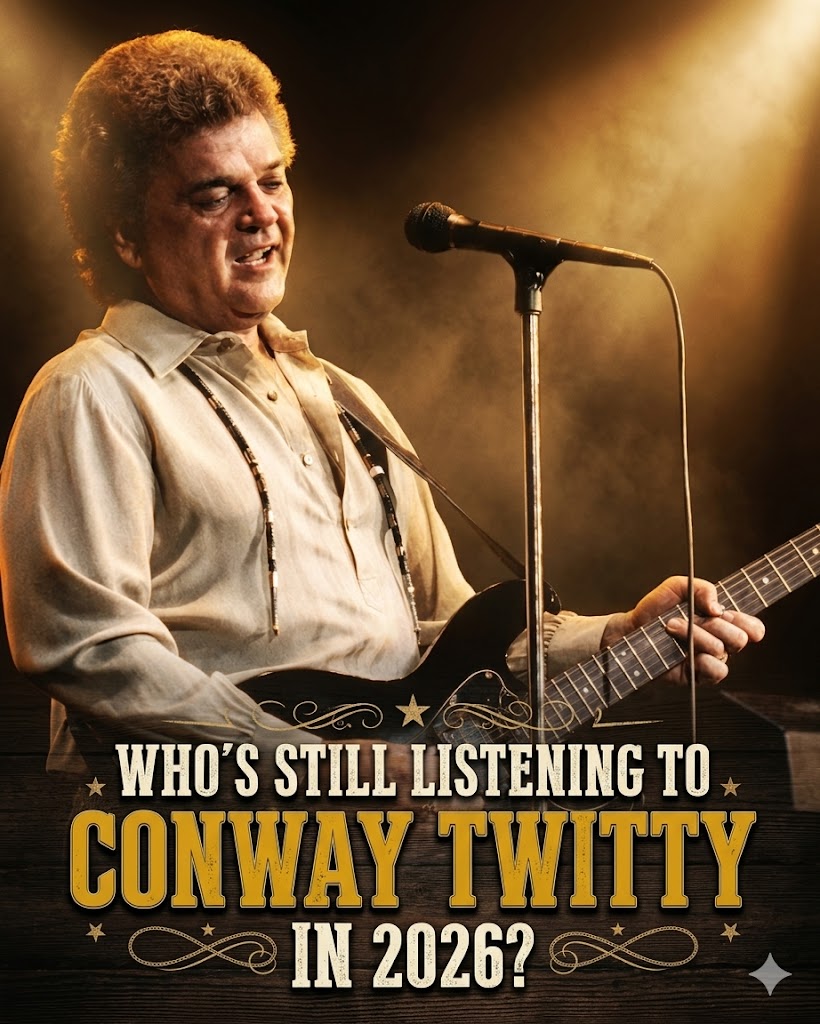
Conway Twitty: The Country Music Legend Nashville Could Never Ignore
Few artists in the history of country music have dominated the charts the way Conway Twitty did. With an astonishing 55 No. 1 hits, he built a legacy that few performers have ever approached, let alone surpassed. Yet behind the bright stage lights, sold-out crowds, and decades of success, one surprising truth remained: Nashville’s most prestigious institutions never fully embraced him.
Conway Twitty never entered country music as a man seeking approval.
Long before he became one of the genre’s defining voices, he had already found fame as a rock-and-roll star. Born in Mississippi, Twitty possessed a restless spirit and undeniable charisma that refused to fit neatly into any industry blueprint. His breakthrough hit, “It’s Only Make Believe,” revealed a performer who instinctively understood how to connect with listeners on a deeply emotional level.
But there was one problem: he came from outside Nashville’s traditional system.

Unlike many of the artists celebrated by Music Row, Conway did not follow the expected path. He wasn’t shaped by the city’s institutions, nor did he rely on its gatekeepers to build his career. As a result, despite his overwhelming success, the industry often seemed hesitant to fully welcome him into its inner circle.
The contrast was impossible to ignore.
A man who held the record for the most country No. 1 hits for decades was never invited to become a member of the Grand Ole Opry. He never earned a Grammy Award for his legendary solo country career. For many artists, such omissions might have become lifelong frustrations.
For Conway Twitty, they became irrelevant.
Rather than chasing trophies or seeking validation from industry elites, he focused on the people who mattered most—the fans.
When Conway stepped onto a stage, politics disappeared. Under the glow of the spotlight, he became something far more powerful than an award-winning entertainer. He became a storyteller, a confidant, and a voice for millions of ordinary Americans.
Songs such as “Hello Darlin’” and “I Love You More Today” were not crafted to impress critics. They were heartfelt confessions delivered with remarkable sincerity. His music spoke directly to husbands and wives, to couples navigating life’s challenges, and to people carrying regrets they struggled to express.
Few singers possessed Conway’s extraordinary ability to put unspoken emotions into words.
His voice carried honesty, vulnerability, and understanding. It reached beyond concert halls and radio stations into living rooms, kitchens, and long drives down quiet highways. For countless listeners, his songs offered comfort, healing, and reassurance during life’s most difficult moments.
Nashville’s gatekeepers may have kept certain doors closed, but Conway Twitty discovered something far more valuable than institutional acceptance.
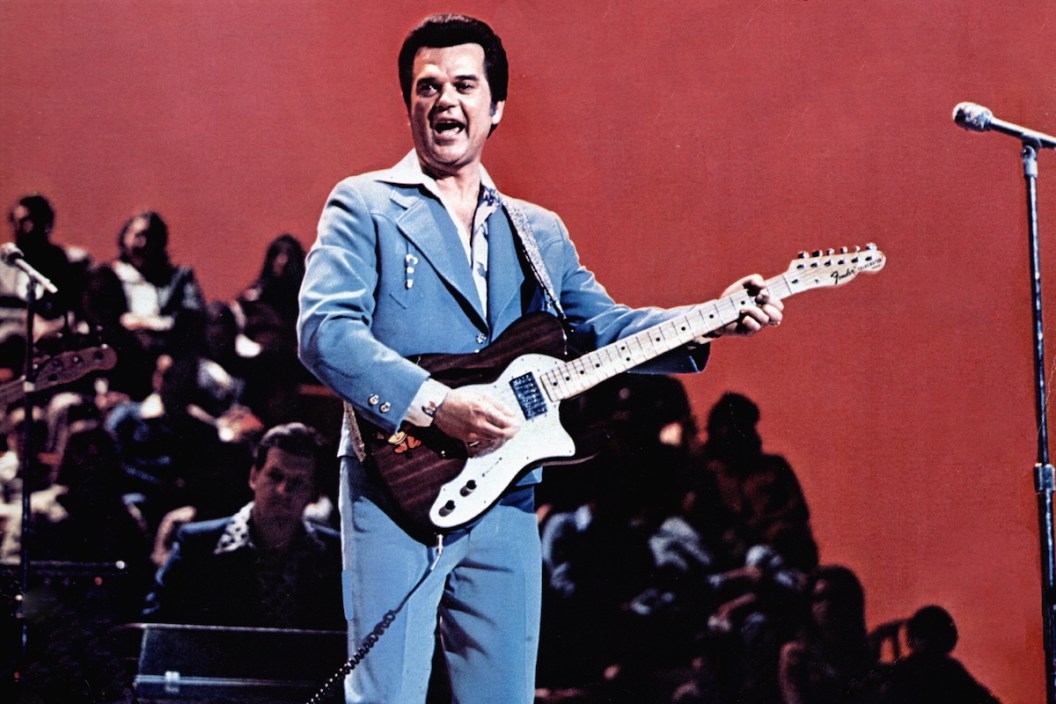
He became essential.
He understood the difference between being recognized by an organization and being remembered by generations of people. While awards gather dust and prestigious memberships become historical footnotes, genuine emotional connection endures.
That is why Conway Twitty’s legacy remains so powerful today.
His story is not defined by the honors he never received. It is defined by the timeless songs that continue to resonate whenever they begin to play. Decades after his greatest hits first filled the airwaves, his voice still speaks to listeners searching for love, forgiveness, understanding, and hope.
Perhaps Nashville never fully claimed Conway Twitty.
But in the end, he achieved something far greater.
He earned a permanent place in the hearts of the people—and that is a legacy no institution could ever bestow or take away.