
Introduction:
For many people, Elvis Presley will always be remembered as the young man who changed music forever. His voice, charisma, and rebellious energy transformed rock and roll into a worldwide phenomenon almost overnight. By 1958, Elvis was not simply a singer — he was the biggest entertainment star on Earth. Hollywood studios wanted him for films, record labels depended on his success, and millions of fans followed his every move with devotion bordering on obsession. Yet at the absolute peak of his fame, Elvis made a decision that stunned the world: he stepped away from it all to serve in the United States Army.
When Elvis was drafted in March 1958, countless people expected special treatment to keep him out of uniform. With his influence and celebrity status, exemptions could have easily been arranged. But Elvis refused to avoid responsibility. “The Army can do anything it wants with me,” he reportedly said. In that single statement, the world’s most famous performer willingly gave up privilege and accepted duty like any ordinary American citizen.
Stationed in Friedberg, Germany, Elvis entered a completely different world — one far removed from screaming crowds, flashing cameras, and sold-out arenas. Army life demanded discipline, routine, and endurance. The glamour of Hollywood disappeared behind early morning drills, tank training exercises, and strict military schedules. Elvis lived under the same rules as every other soldier. He ate the same meals, followed the same commands, and earned the rank of Sergeant through dedication and steady work rather than celebrity influence.

What surprised many soldiers who served beside him was how naturally Elvis adapted to military life. Despite being the most recognizable face in America, he never behaved as though fame made him superior to anyone else. Fellow servicemen later described him as polite, respectful, and hardworking. He carried himself with humility, blending into daily military routines without complaint or entitlement. For a man who could have demanded special privileges at every turn, Elvis instead chose simplicity and discipline.
Yet behind the structure of Army life, Elvis carried a deep personal sorrow. Shortly before leaving for Germany, he suffered one of the greatest heartbreaks of his life — the death of his beloved mother, Gladys Presley. Her passing devastated him emotionally, and friends later admitted they noticed a profound sadness settle within him during his years overseas. The carefree young rebel who had once electrified audiences with raw energy slowly became quieter, more reflective, and emotionally changed by grief and responsibility.
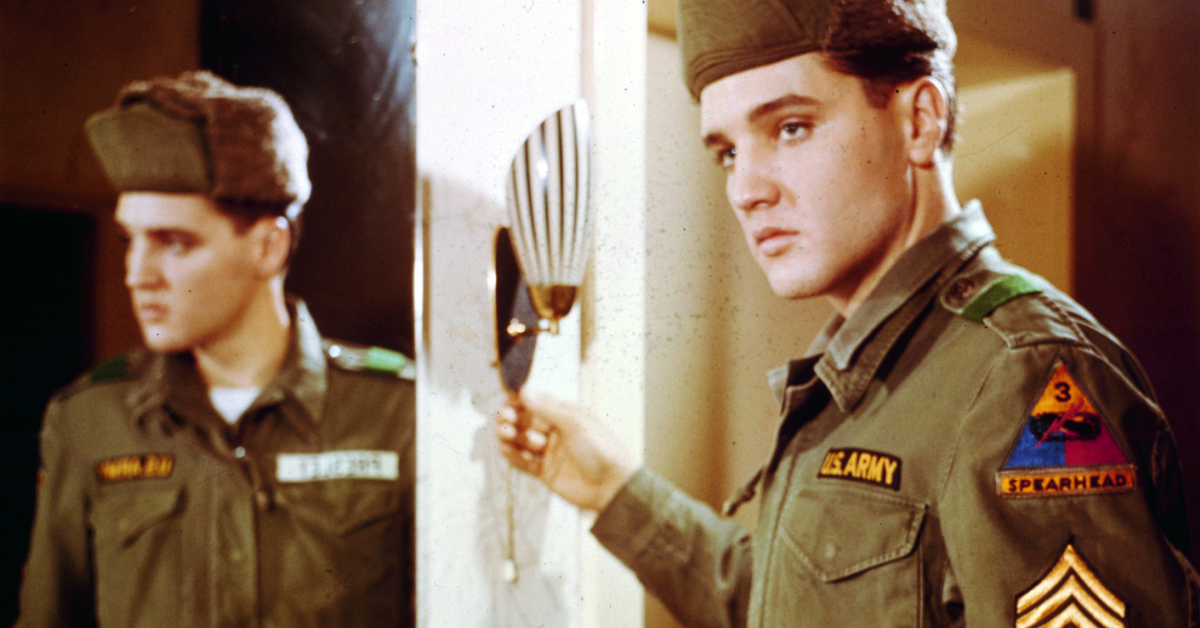
When Elvis returned to America in 1960 with an honorable discharge and the rank of Sergeant E5, the reception awaiting him was enormous. Fans crowded everywhere to welcome home the king of rock and roll, and his music career resumed almost immediately. But those closest to him understood that something inside Elvis had changed permanently. The Army had revealed another side of the global superstar — not only the performer capable of captivating millions, but also the man willing to stand shoulder to shoulder beside ordinary people without asking to be treated differently.
Perhaps that is why Elvis Presley’s military service continues to resonate so strongly decades later.
Because beneath the fame, the fortune, and the legend was a man who understood humility, sacrifice, discipline, and responsibility.
And sometimes, those qualities speak louder about true greatness than applause ever could.