
Introduction:
In the fading glow of the Las Vegas Hilton showroom, Elvis Presley stood beneath the spotlight as though the weight of an entire lifetime had finally settled onto his shoulders. The mid-1970s audiences who packed the Hilton each night expected spectacle from The King of Rock and Roll — the electrifying charisma, the swagger, the explosive energy that had once changed popular music forever. But during one unforgettable performance, they witnessed something far more powerful. They saw a man quietly confronting sorrow, mortality, and the fear of goodbye.
The room reportedly fell into complete silence as Elvis stepped forward holding a single sheet of paper in his hand. His voice softened. The larger-than-life performer who once shook concert halls with rebellious confidence suddenly appeared deeply vulnerable. Then came the haunting introduction that would linger in the minds of fans long after the curtain fell.
“Now ladies and gentlemen, the next song we’d like to do is a song we’ve done many times out here and it’s a true story.”

With those words, Elvis introduced “Softly, As I Leave You,” a performance that would become one of the most emotionally devastating moments of his later career. Originally adapted from the Italian song “Piano,” the piece was transformed entirely by Elvis’s interpretation. Rather than simply singing the lyrics, he narrated the heartbreaking story of a dying man speaking his final thoughts to the woman he loved.
As the orchestra swelled behind him, Elvis described a hospital room where a faithful wife had remained beside her husband for days and nights as he slowly slipped away. Exhausted, she eventually fell asleep at his bedside. In Elvis’s telling, the dying man realized his final moments had arrived and made one last heartbreaking decision.
“He didn’t want her to see him leave.”
The emotional weight of those words hung heavily over the Hilton showroom. Behind Elvis stood Sherrill Nielsen, whose soaring tenor vocals floated above the orchestra with almost spiritual beauty. The contrast between Nielsen’s angelic singing and Elvis’s deeply emotional narration created something far beyond a traditional concert performance. It felt like grief unfolding in real time.
“Softly, I will leave you softly. For my heart would break if you should wake and see me go.”
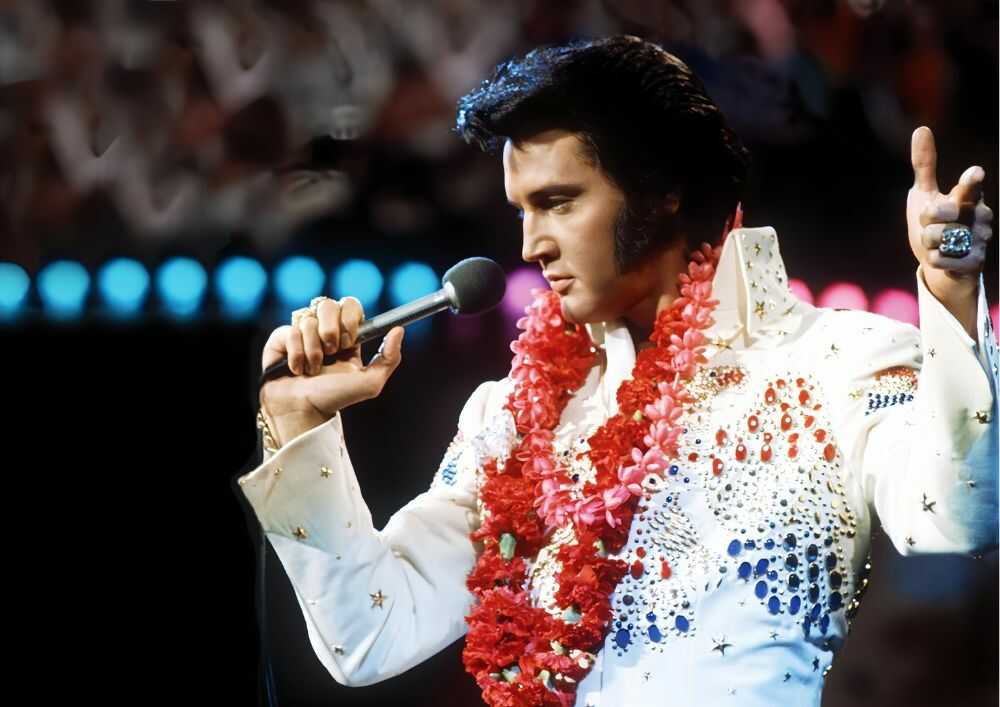
For audiences inside the Hilton, the performance became unforgettable. Witnesses often recalled fans openly crying as Elvis delivered the story with startling sincerity. Gone was the untouchable icon hidden behind rhinestone jumpsuits and roaring applause. In his place stood a fragile man exposing fears that every human being understands — loneliness, loss, and the inevitability of time.
By that point in his life, Elvis himself was already struggling beneath the crushing pressures of fame. Endless touring schedules, deteriorating health, emotional isolation, and dependency on prescription medications had begun to reshape the once-invincible superstar. Those closest to him frequently described his later performances as darker, heavier, and more introspective than the explosive years that first built his legend.
“Softly, As I Leave You” became one of the clearest reflections of that transformation.
Producer Felton Jarvis later praised the extraordinary chemistry between Elvis and Nielsen, noting how deeply Elvis connected to the material. Every line sounded personal. Every pause carried emotional exhaustion. It was no longer simply acting or performance — it felt painfully real.
In retrospect, the song now carries an almost chilling sense of prophecy. Its central image — a quiet departure before loved ones can stop it — eerily mirrors the tragic final chapter of Elvis Presley’s own life. Only a few years later, the world would lose him far too soon inside Graceland, leaving millions stunned by how suddenly the end had arrived.
Watching surviving footage today feels less like revisiting a Las Vegas concert and more like witnessing a farewell hidden in plain sight. As Nielsen’s voice soared through the showroom one final time, Elvis lowered his head beneath the spotlight, appearing emotionally distant even as thunderous applause surrounded him.
For many fans and historians, “Softly, As I Leave You” remains one of the most haunting performances of Elvis Presley’s career — not because of spectacle, but because it stripped away the myth of The King and revealed something achingly human underneath. Long before the world realized goodbye was coming, Elvis Presley had already whispered it from the stage.