Introduction:
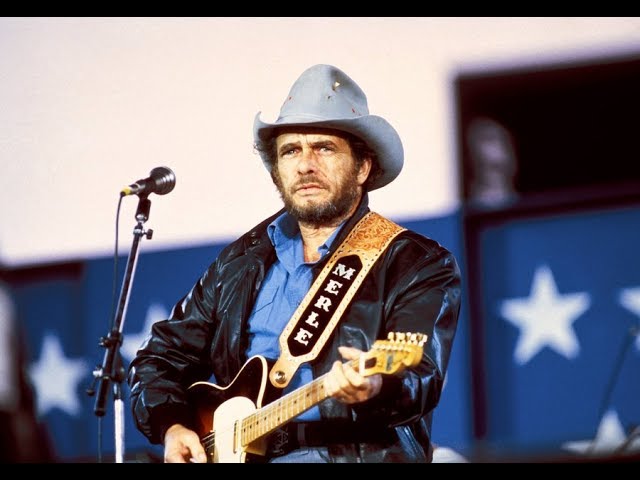
In 1968, Merle Haggard had already secured his place as one of country music’s most unmistakable voices. Yet when he recorded “Mama Tried,” he wasn’t chasing another chart-topping hit. He was doing something far more difficult—he was telling the truth. Not the polished truth of a performer, but the raw, unguarded truth of a son looking back on the damage he had caused and finally acknowledging the weight his mother had carried for years.
Long before the fame, Haggard was a restless boy growing up in Oildale, California, in a converted boxcar home after his family migrated west from Oklahoma. Hardship defined those early years, but nothing shaped him more than the death of his father when he was just nine. That loss left a fracture in the household that never fully healed. It also marked the beginning of a slow drift—a boy becoming increasingly distant, increasingly defiant, and increasingly difficult to reach.
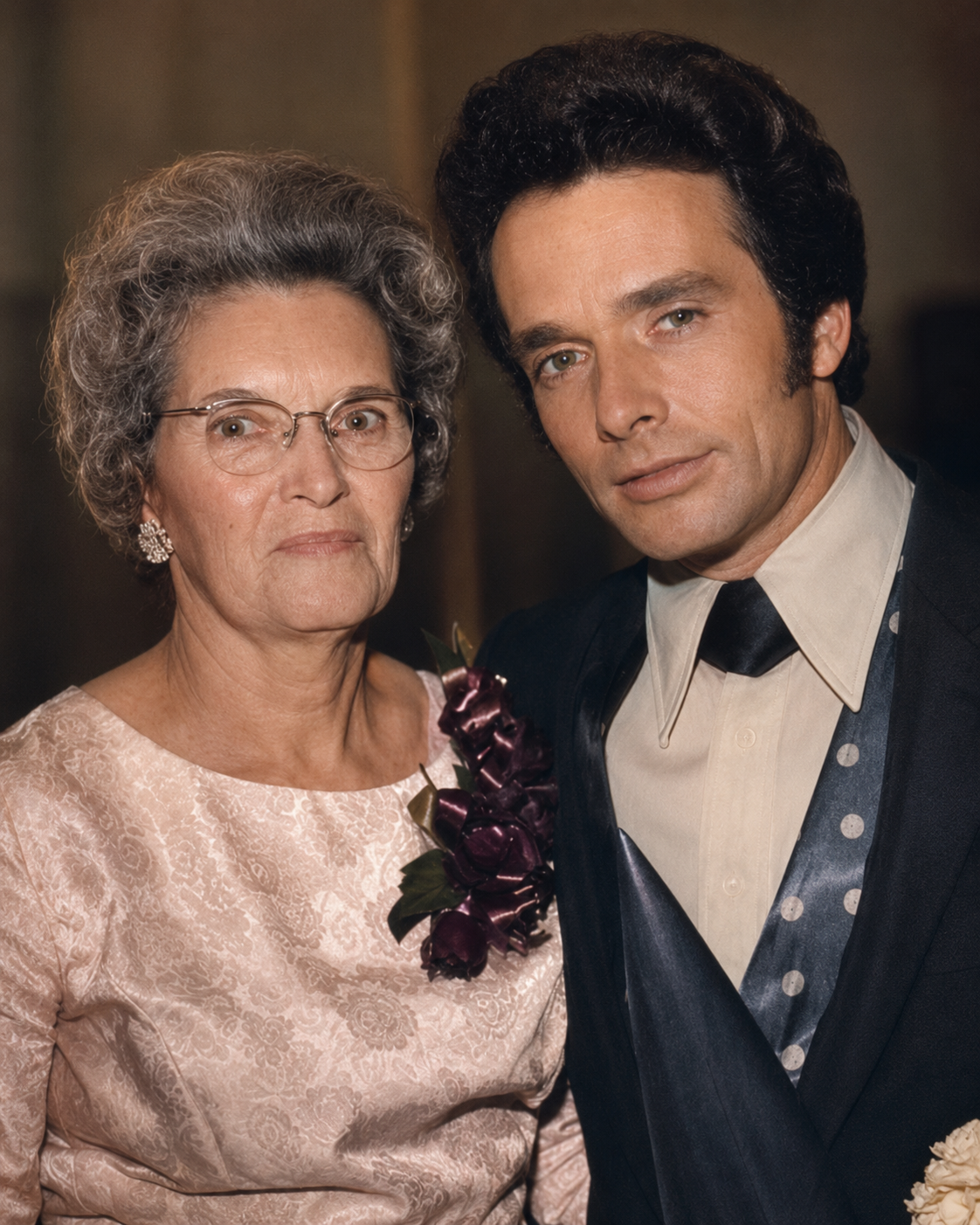
At the center of that struggle stood his mother, Flossie Mae Haggard. Left to hold the family together, she tried everything a mother could—guidance, discipline, patience, faith. But her son was moving in the opposite direction. There were run-ins with the law, repeated attempts to run away, and eventually time spent in San Quentin State Prison. For years, it seemed as though Haggard was racing toward a future no one could stop.
That is what gives “Mama Tried” its enduring power. It is not simply a song about rebellion; it is about what comes after rebellion—when excuses fall away and only responsibility remains. Haggard does not blame poverty, circumstance, or fate. Instead, he does something far rarer in music: he takes ownership. The famous line about turning twenty-one in prison and serving life without parole may not have been a literal account of his sentence, but it captured something deeper than facts—it captured guilt.
And guilt, in this case, was inseparable from love.
Haggard understood what it meant to be the son of a woman who had truly tried. Flossie Mae had done everything she could to guide him, to protect him, to raise him right after losing her husband. And for years, he had made that burden heavier. “Mama Tried” became his way of saying what words alone could not: You did your best. What went wrong was not your fault.

Country music has never lacked songs about mothers, regret, or hard living. But “Mama Tried” stands apart because it refuses to soften the pain. There is no romanticizing here, no easy redemption. Instead, Haggard paints a portrait of a mother who is loving, worried, and ultimately powerless in the face of a son determined to learn life the hard way. That honesty is why the song still resonates decades later—it belongs not just to Haggard, but to anyone who has ever looked back and realized they were loved more than they deserved at the time.
By the time the song reached the public, Haggard had changed. Music had given him discipline, purpose, and a path forward. But success did not erase his past—it amplified it. Fame gave him a larger stage, but also a deeper responsibility to confront who he had been.
Listeners heard a country classic. Radio heard a hit. But beneath the melody was something quieter, more personal—a confession carried in every line. And perhaps no one would have felt it more deeply than his mother, hearing not a performance, but an apology that had taken years to find its voice.
That is why “Mama Tried” still hurts. Its pain does not come from the image of prison, but from the love inside the regret. Haggard sings not as a man proud of his past, but as one who understands its cost. The song lives in that fragile space between gratitude and shame, reminding us that even late apologies matter—and that a mother’s love can follow her child into the darkest places, waiting patiently to be recognized.
In the end, “Mama Tried” is more than a song. It is the sound of a son finally telling the truth—and discovering that truth, no matter how late, still carries the power to heal.