Introduction:
Still Woman Enough: Loretta Lynn’s Final Answer to Time, Pain, and Silence
When Loretta Lynn lost her voice to a stroke at 85 and her ability to stand after a devastating hip fracture, the world quietly assumed her story had reached its final chapter. After all, she had already given more to country music than most artists could in several lifetimes. But Loretta Lynn was never one to follow expectations—especially not at the end.
At 88, long after the spotlight had dimmed and the road had gone silent, she returned to music. Not with fanfare or industry pressure, but in a way that reflected who she had always been: grounded, unfiltered, and fiercely honest. Inside her home in Hurricane Mills, surrounded by memory and meaning, she recorded what would become her fiftieth studio album—Still Woman Enough.
The title wasn’t marketing. It was a statement.
To understand its weight, you have to look back to Butcher Hollow, where Loretta Lynn began as a coal miner’s daughter. Her life was shaped by poverty, responsibility, and resilience long before she ever stepped into a recording studio. She married young, became a mother early, and carried the weight of real life into her songwriting.

That authenticity became her signature. Loretta Lynn didn’t polish the truth—she sang it. Her songs spoke openly about marriage, jealousy, hardship, and womanhood in ways that were bold for their time. She gave a voice to women who had long been expected to stay silent, reshaping country music in the process.
For nearly six decades, the stage was her home. Then, in 2017, everything changed. A stroke halted her touring career, leaving her voice uncertain. Months later, a fall at her ranch resulted in a broken hip. At 85, it would have been understandable—even expected—for her to step away completely.
But she didn’t.
While many artists fight to reclaim what they’ve lost, Loretta Lynn seemed driven by something deeper: the need to finish what she still had to say. And for her, there was no better place to do that than Hurricane Mills—a place filled not just with land, but with legacy. It was where she had built her life, where her husband Oliver “Doo” Lynn was laid to rest, and where her story had taken root.
Recording there wasn’t just practical—it was personal.

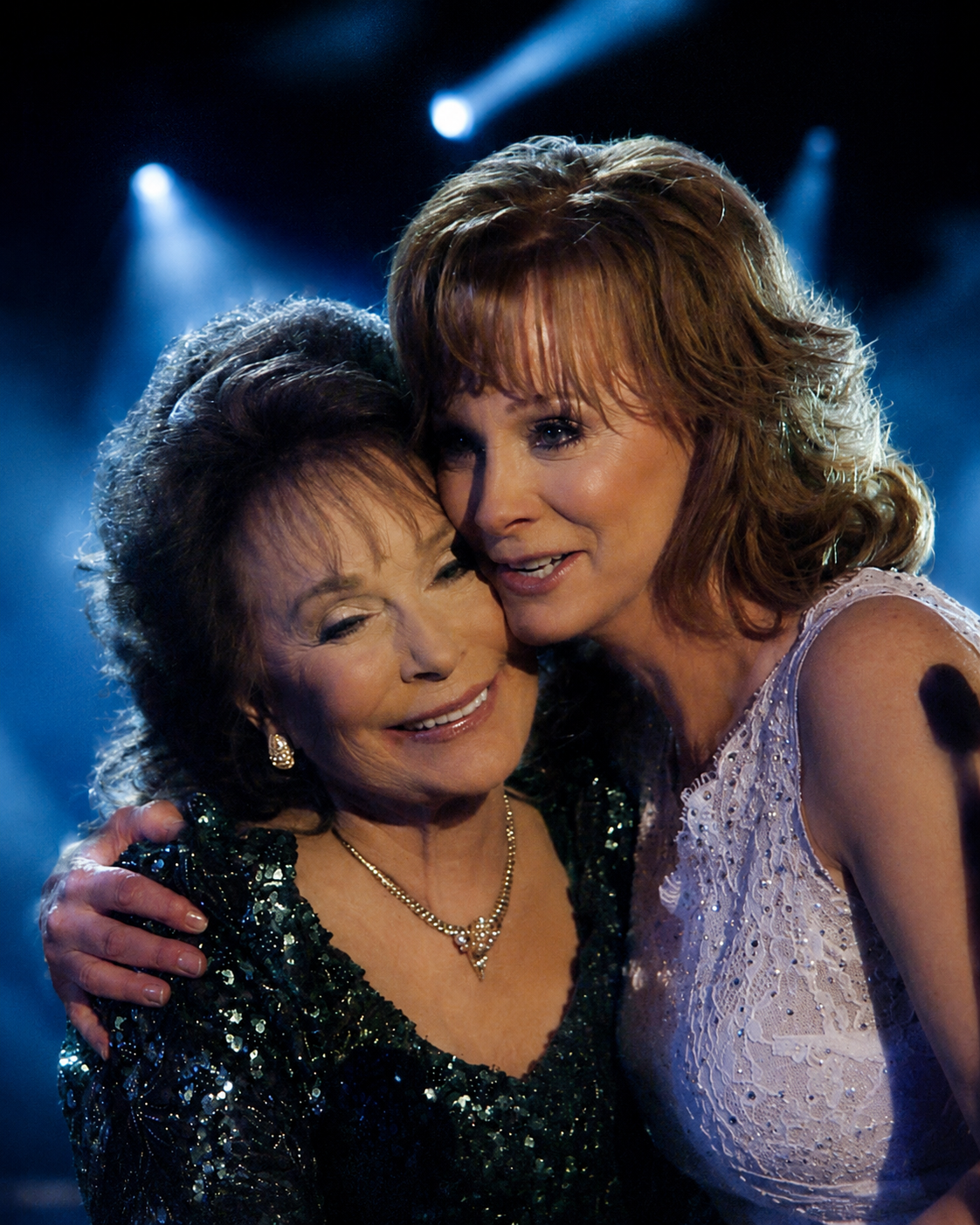
When Still Woman Enough was released in March 2021, it carried both reflection and defiance. On its title track, she was joined by Reba McEntire, Carrie Underwood, and Tanya Tucker—three generations of women shaped by the path Loretta Lynn helped create. Their voices together felt less like a collaboration and more like a passing of the torch, a recognition of a legacy that refused to fade.
Nineteen months later, on October 4, 2022, Loretta Lynn passed away peacefully at her home in Hurricane Mills at the age of 90. She left behind more than songs—she left a blueprint for truth, courage, and endurance.
Some may call Still Woman Enough her final album. But that doesn’t quite capture its meaning.
It was her answer.
An answer to illness. An answer to age. An answer to the idea that a woman’s voice must grow quieter with time. Loretta Lynn didn’t fade. She didn’t shrink. She stood—if not physically, then in spirit—and sang one more time.
And in doing so, she reminded the world exactly who she was.
Still woman enough.