Introduction:
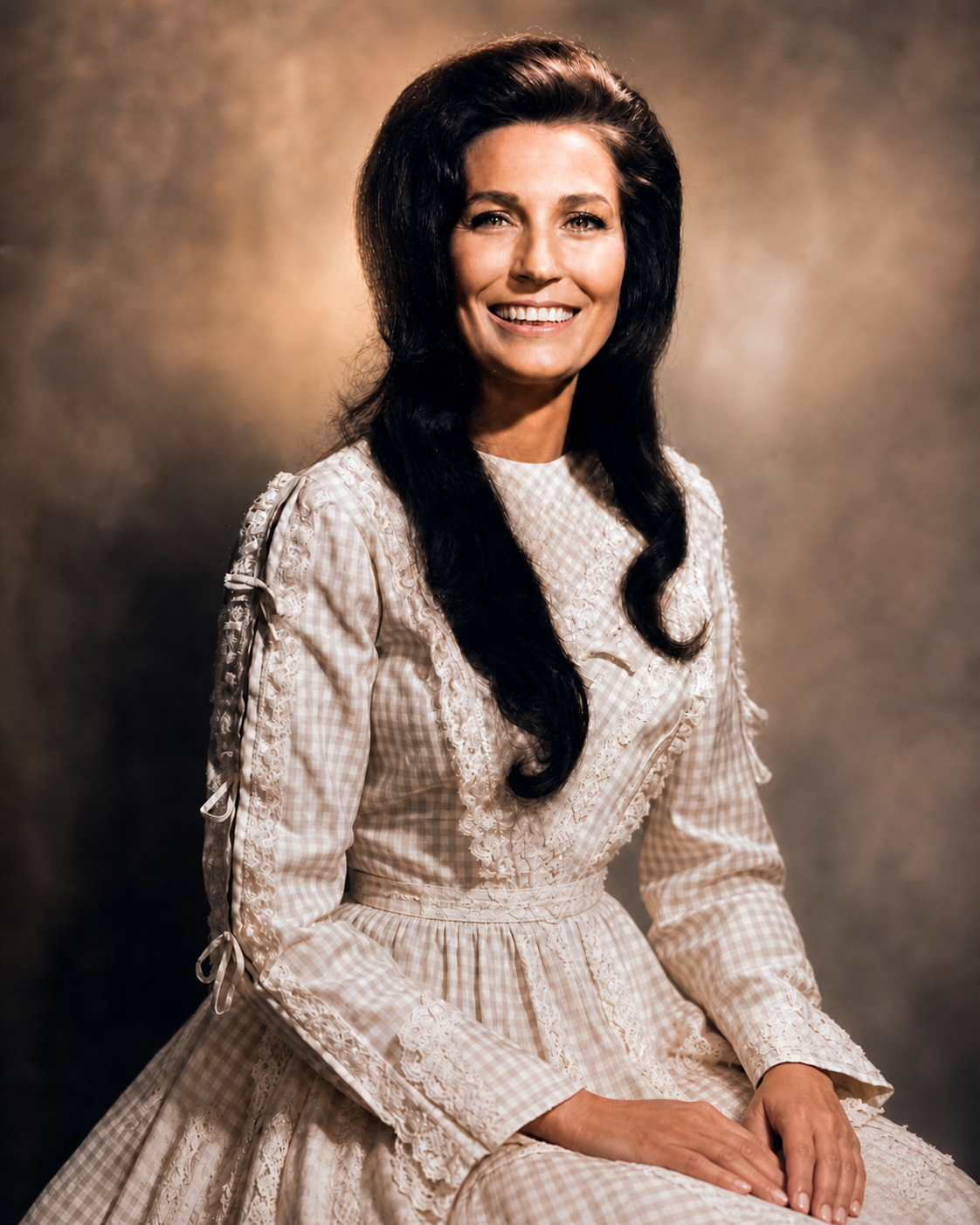
Few songs in American country music carry the emotional gravity and quiet power of “Coal Miner’s Daughter.” For Loretta Lynn, it was never just a hit record—it was a return, a reckoning, and, in many ways, a homecoming for a father she had lost far too soon.
In 1969, at 37 years old, already a mother of six and nearly a decade into a hard-earned career, Lynn sat down to write what would become her defining song. But this was no ordinary songwriting session. She wasn’t crafting fiction or chasing radio success—she was revisiting the raw, unpolished truth of her life. Before she was a star, she had been a girl in the hills of Butcher Holler, a teenage bride, and a young mother navigating adulthood long before she had the chance to grow up. “Coal Miner’s Daughter” became her bridge back to that world.
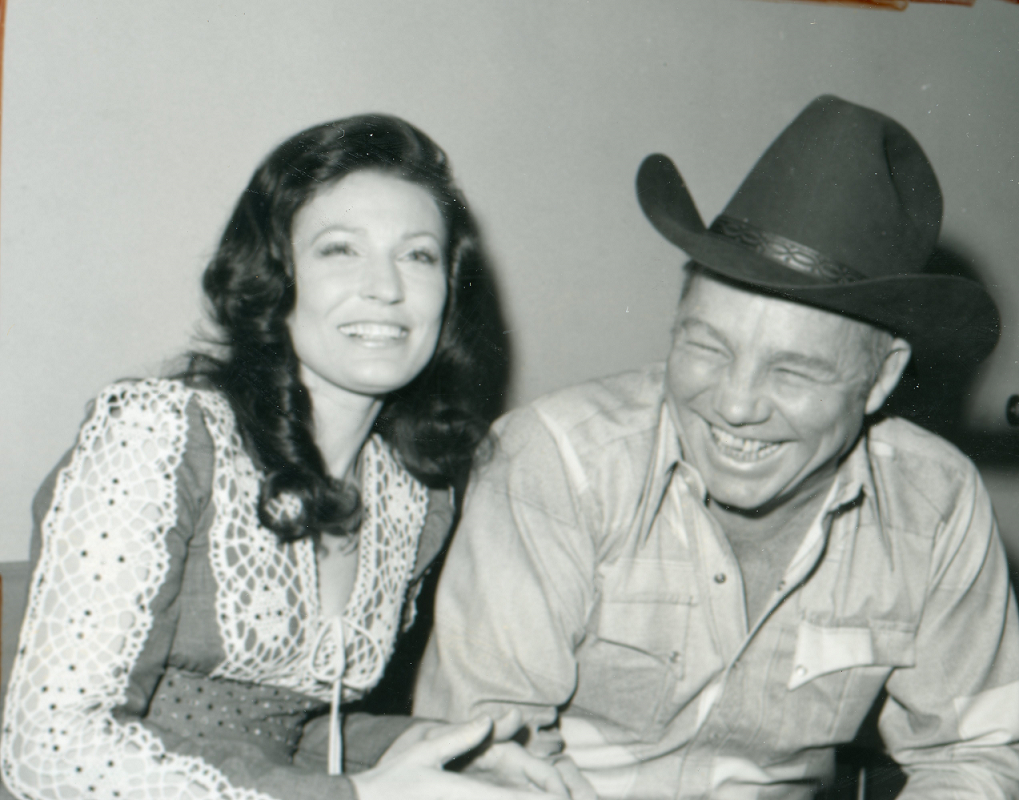
The writing process was anything but effortless. Lynn worked line by line, shaping words that had to carry the full weight of memory. Each image—creeks, cabins, coal dust—was real. At the heart of it all was her father, Melvin “Ted” Webb, a coal miner whose life embodied sacrifice and quiet endurance. He had passed away a decade earlier, in 1959, at just 52 years old. The song became, in part, a conversation that could never happen—a daughter speaking into silence, hoping somehow to be heard.
What makes the song endure is its sincerity. Lynn wasn’t writing to impress—she was writing because she needed to. There’s a subtle ache beneath its simplicity, a sense that the story demanded to be told not for fame, but for remembrance. Sometimes, songs are born not from ambition, but from an emotional necessity—and this was one of them.
Originally, Lynn wrote nine verses—far more than a standard country single could hold. She wanted everything included: the hunger, the pride, the warmth of family, and the hardship of survival. But legendary producer Owen Bradley understood the constraints of radio. Together, they trimmed the song down, cutting several verses that would later be lost. Lynn would eventually express regret over those missing lines—they were more than edits; they were fragments of her family’s history.
Still, what remained was enough. More than enough. Recorded in 1970 and released later that year, “Coal Miner’s Daughter” quickly rose to number one on the country charts. What might have seemed deeply personal became universally relatable. Listeners across America saw themselves in her story—their own parents, their own struggles, their own beginnings.
That was Lynn’s rare gift: turning the specific into the universal. Her father became every hardworking parent. Her childhood home became a symbol of resilience shared by millions.

The song’s legacy didn’t stop there. It became the foundation for her 1976 autobiography and later the acclaimed 1980 film adaptation, with Sissy Spacek delivering an Oscar-winning portrayal that introduced Lynn’s story to an even broader audience.
But before the accolades, before the cultural recognition, there was simply a woman trying to put her past into words. Perhaps Lynn wrote the song because success couldn’t erase where she came from. Perhaps she wrote it because grief doesn’t fade with time. Or perhaps she wrote it because her father never got to see the life she built—and she needed to carry him there in some way.
“Coal Miner’s Daughter” didn’t bring him back. No song ever could. But it did something just as powerful: it gave him a permanent place in the world she had reached. And in doing so, Loretta Lynn proved that sometimes, music isn’t just about being heard—it’s about remembering, honoring, and finally saying what the heart has held onto for far too long.