Introduction:
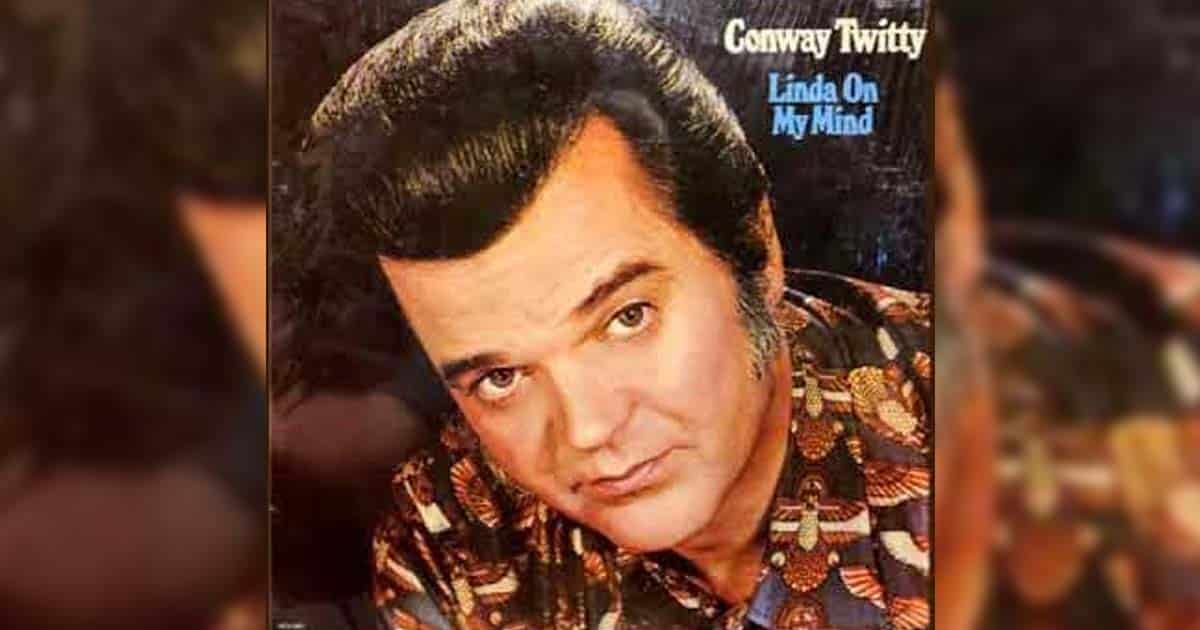
Few artists in country music have ever mastered emotional contradiction quite like Conway Twitty. His songs often lived in the uneasy space between desire and regret, weaving together themes of infidelity, longing, and guilt into a formula that—against all odds—resonated deeply with audiences. One of the most striking examples of this signature style is his 1975 hit Linda on My Mind, a track that not only climbed to number one but held its position for an impressive eight weeks. More than just another chart-topper, it marked Twitty’s twelfth number-one single and stood among his remarkable collection of self-penned hits.
At first glance, the title invites a simple question: Who is Linda? Yet Twitty never offered a clear answer. Whether she was real or imagined remains part of the song’s enduring mystique. But the intrigue surrounding her identity is not what made the song so compelling—or controversial. Instead, it was the brutally honest narrative at its core.

From the very first line, Twitty abandons subtlety in favor of confession. The protagonist admits he is lying beside one woman while thinking of another. It is a moment that feels almost intrusive in its intimacy, as listeners are pulled into a private space filled with emotional conflict. The pain is immediate and palpable—not only his own, but also that of the woman beside him, who senses his emotional absence. She is physically close, yet worlds away from his thoughts, and her quiet suffering becomes one of the song’s most haunting elements.
As the story unfolds, Twitty introduces Linda not as a distant memory, but as someone very much present. She is revealed to be a close acquaintance—his wife’s friend—who has harbored feelings for him over time. Her confession adds a layer of complexity that transforms the song from a simple tale of regret into a tangled web of emotional betrayal. The narrator is no longer just reminiscing; he is actively caught between past affection and present temptation.

This narrative twist is precisely what fueled debate among listeners. For some, the song crossed a moral line. Marriage, after all, is built on trust and commitment, and the idea of emotional infidelity—especially so openly expressed—felt unsettling. Others, however, recognized something more universal beneath the controversy: the uncomfortable truth that human emotions are rarely neat or predictable.
Even Linda herself becomes a subject of reflection. Her decision to confess her feelings raises questions about timing, responsibility, and consequence. There are moments in life when speaking up feels necessary—and others when silence might prevent harm. In this case, her honesty, though genuine, sets off a chain of events that leaves no one unscathed.
Despite its morally ambiguous narrative, the song’s artistic brilliance is undeniable. Twitty’s vocal delivery is controlled yet deeply expressive, capturing every shade of conflict and vulnerability. The harmonies provided by Carol Lee Cooper and L.E. White add richness and depth, elevating the track beyond its controversial storyline.
In the end, Linda on My Mind endures not because it offers answers, but because it dares to ask difficult questions. It reflects the messy, imperfect nature of human relationships—and in doing so, cements its place as one of the most unforgettable recordings in country music history.