
Introduction:
The story of Elvis Presley and Priscilla Presley has often been framed as a romance that could not last. But to see it simply as a failed relationship is to miss the deeper truth. Their connection feels less like something that broke apart—and more like something that never had the chance to grow under ordinary conditions.
When they first met in 1959 in Germany, the imbalance was already present. Elvis, at twenty-four, was not just a young man but a global phenomenon. His life was defined by fame, expectation, and constant scrutiny. Priscilla, only fourteen at the time, was still discovering herself, standing at the very beginning of her personal journey. From that moment forward, their lives were moving at entirely different speeds, shaped by forces far beyond their control.
Yet in those early days, there was something undeniably sincere between them. Those close to Elvis often spoke of his capacity for deep affection, a gentler side that contrasted with his larger-than-life public image. Around Priscilla, that side seemed to emerge more naturally. She, in turn, tried to understand the man behind the myth—the person hidden beneath the spotlight. But even in these tender beginnings, the imbalance quietly lingered, influencing the course of their relationship before it had fully taken shape.
As the years passed, their story did not unravel because of one dramatic moment. Instead, it shifted gradually, shaped by distance, pressure, and the relentless demands of Elvis’s career. Fame brought constant travel, endless attention, and a world that never allowed him to stand still. For Priscilla, growing into her own identity within that environment was no small task. She had to navigate a life that was never built for normal love—a life where privacy was rare and expectations were constant.
Their separation in 1973 was not marked by bitterness or public conflict. Rather, it carried a quiet sense of understanding. Priscilla would later reflect on the complexity of loving someone who, in many ways, belonged not just to her, but to the world. That reality made their bond both extraordinary and deeply challenging. Love was present, but it existed alongside pressures that neither of them could fully escape.
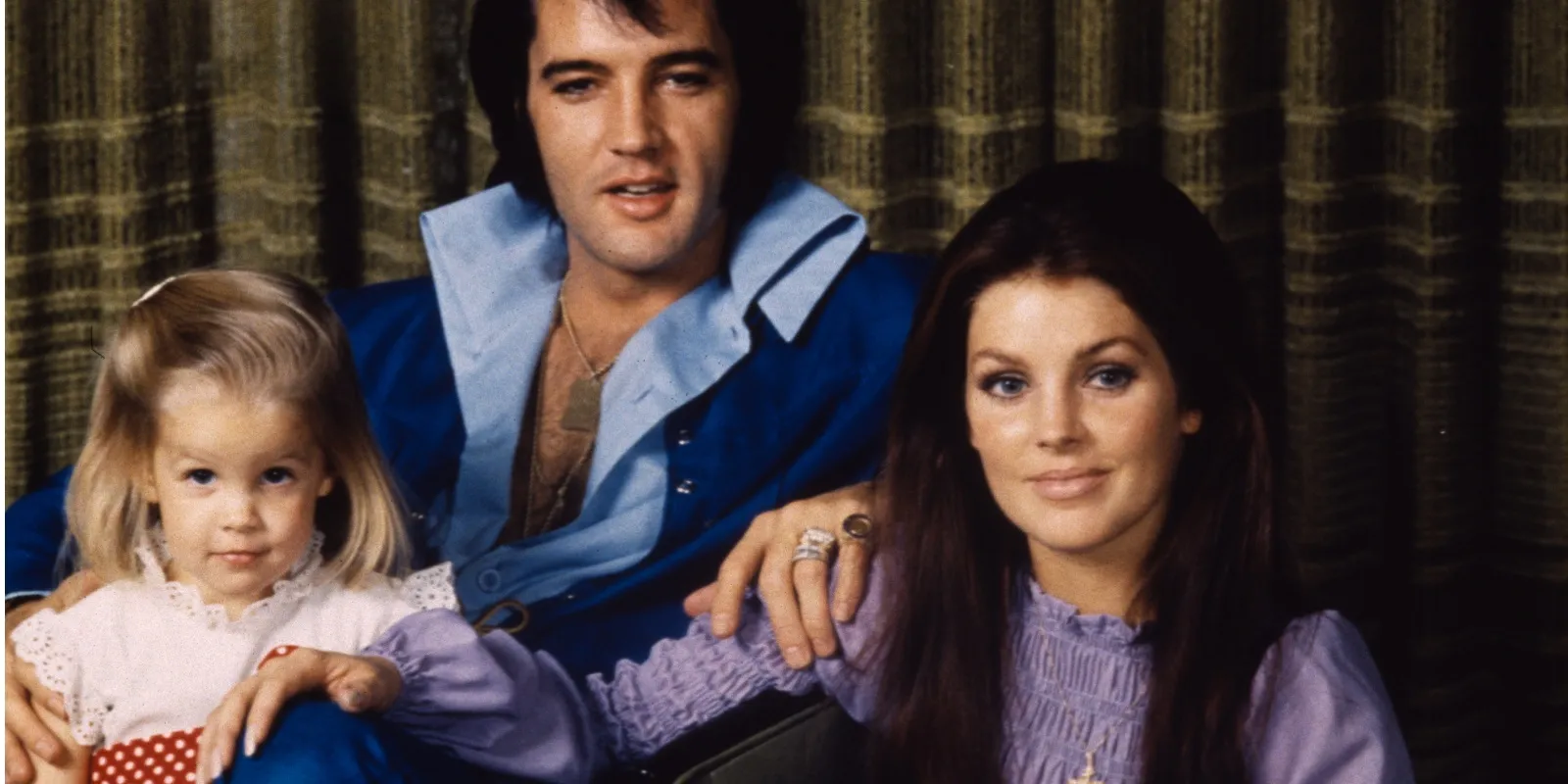
There is a particular kind of sadness in stories like theirs. It is not dramatic or loud, but subtle and enduring. It lingers in the spaces between what was shared and what could never fully be realized. And yet, there is also a quiet grace in how their story concluded. They parted with mutual respect, carrying with them the knowledge that what they had was real, even if it could not survive the circumstances surrounding it.
Looking back, their relationship feels less like a failure and more like a question of timing and environment. Had they met in a different life—one without the weight of fame and expectation—perhaps their story would have unfolded differently. But as it stands, their love became part of something larger, shaped by identity, circumstance, and the unrelenting spotlight.
It was real. It was fragile. And in its own quiet way, it remains unforgettable.