Introduction:
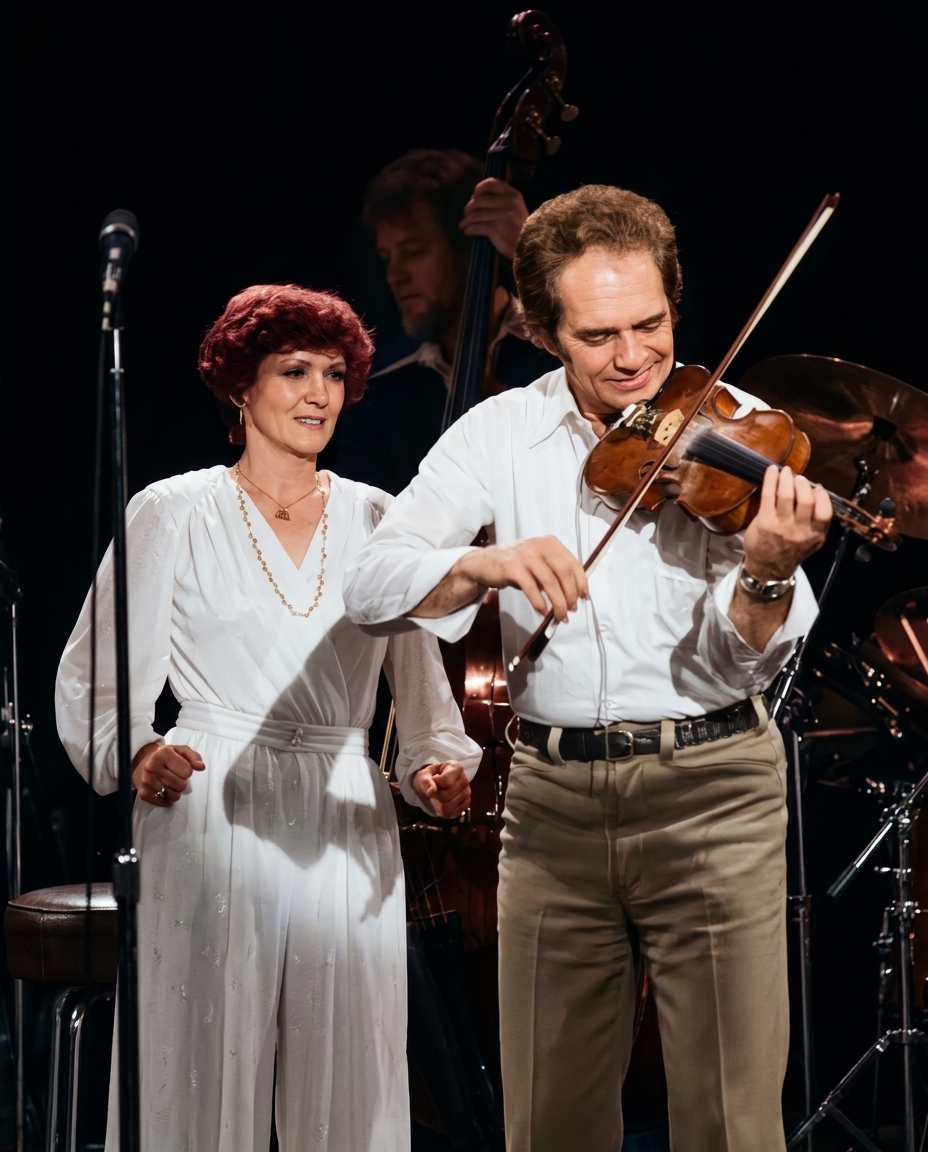
Merle Haggard, Bonnie Owens, and the Love Song That Outlived a Marriage
Country music has always made space for life’s contradictions. It understands that tenderness can exist alongside regret, and that love does not always end when relationships do. Few stories reflect that emotional complexity more deeply than the one shared by Merle Haggard and Bonnie Owens—a partnership that blurred the lines between personal heartbreak and timeless artistry.
When Merle Haggard married Bonnie Owens in 1965, their union already carried the weight of country music legend. Bonnie had previously been married to Buck Owens, one of the defining figures of the Bakersfield sound. But beyond the headlines and curiosity surrounding their past, what truly mattered was the creative bond that formed between Merle and Bonnie. She was far more than a supportive spouse—she was an essential collaborator, a quiet force shaping the music from within.
Bonnie Owens contributed to Haggard’s work in ways that often went unrecognized. She listened with intention, offered insight when songs were still taking form, and helped refine ideas before they ever reached an audience. In an industry that tends to spotlight the voice at center stage, Bonnie’s role was more subtle but no less vital. She helped create the emotional foundation that made the music resonate so deeply.

One of the most enduring results of their partnership came from a simple, unguarded moment. As the story goes, Merle once said softly, “I finally have time to love you again.” Bonnie immediately grasped the emotional weight behind those words. What followed was the creation of Today I Started Loving You Again—a song that would go on to become one of the most beloved ballads in country music history.
The beauty of the song lies in its restraint. It does not over-explain or dramatize. Instead, it gently opens a space for listeners to bring their own memories into it. There is both longing and devotion in its simplicity, and perhaps that is why it has endured across generations. Countless artists have recorded it, yet its emotional core always leads back to the shared history of Merle and Bonnie.
In 1978, their marriage came to an end. By all expectations, that could have marked a clean break—not only personally, but professionally. Yet what followed was something far more unusual, and far more moving. Bonnie Owens returned to the stage as Merle Haggard’s backup singer. Night after night, they performed together, standing side by side as the music carried echoes of what they once were.

Among those songs was “Today I Started Loving You Again.” The significance of that is difficult to ignore. It is one thing to part ways; it is another to continue singing the emotional truth of that relationship in front of an audience. Their performances became layered with meaning—every note carrying both history and resilience.
As the years passed, the song seemed to evolve. It was no longer just a love song tied to a particular moment. It became something broader—a reflection on memory, forgiveness, and the enduring nature of feeling. In 1996, Merle Haggard reportedly said, “I still love Bonnie.” It was a simple statement, yet it confirmed what many had long sensed: some connections do not fade, even when life moves forward.
When Bonnie Owens passed away in 2006, and Merle Haggard followed in 2016, their story reached its final chapter. But what remains is not only a sense of loss—it is a legacy. Together, they transformed private emotion into public art, creating something that continues to speak to listeners long after both voices have gone quiet.
Their story endures because it reminds us of something essential: not all love stories are meant to last in the way we expect. Some are meant to be remembered, revisited, and felt through music. Merle Haggard and Bonnie Owens may not have held onto their marriage, but they preserved something just as powerful—a song that continues to live, breathe, and quietly tell their story.