Introduction:
There are performances that entertain audiences for a night, and then there are performances that become immortal — not because they were flawless, but because they captured something painfully human. The final concert of Elvis Presley belongs to that rare category. More than four decades later, the echoes of that evening still linger in music history like a voice refusing to disappear.
On June 26, 1977, nearly 18,000 fans filled the Market Square Arena in Indianapolis, expecting another unforgettable night with the King of Rock and Roll. No one inside that building could have imagined they were witnessing the last live performance of one of the most influential artists the world had ever known. There were no dramatic announcements, no emotional farewell speeches, and no hint that history was quietly unfolding before their eyes. That is perhaps what makes the night feel even more haunting today.
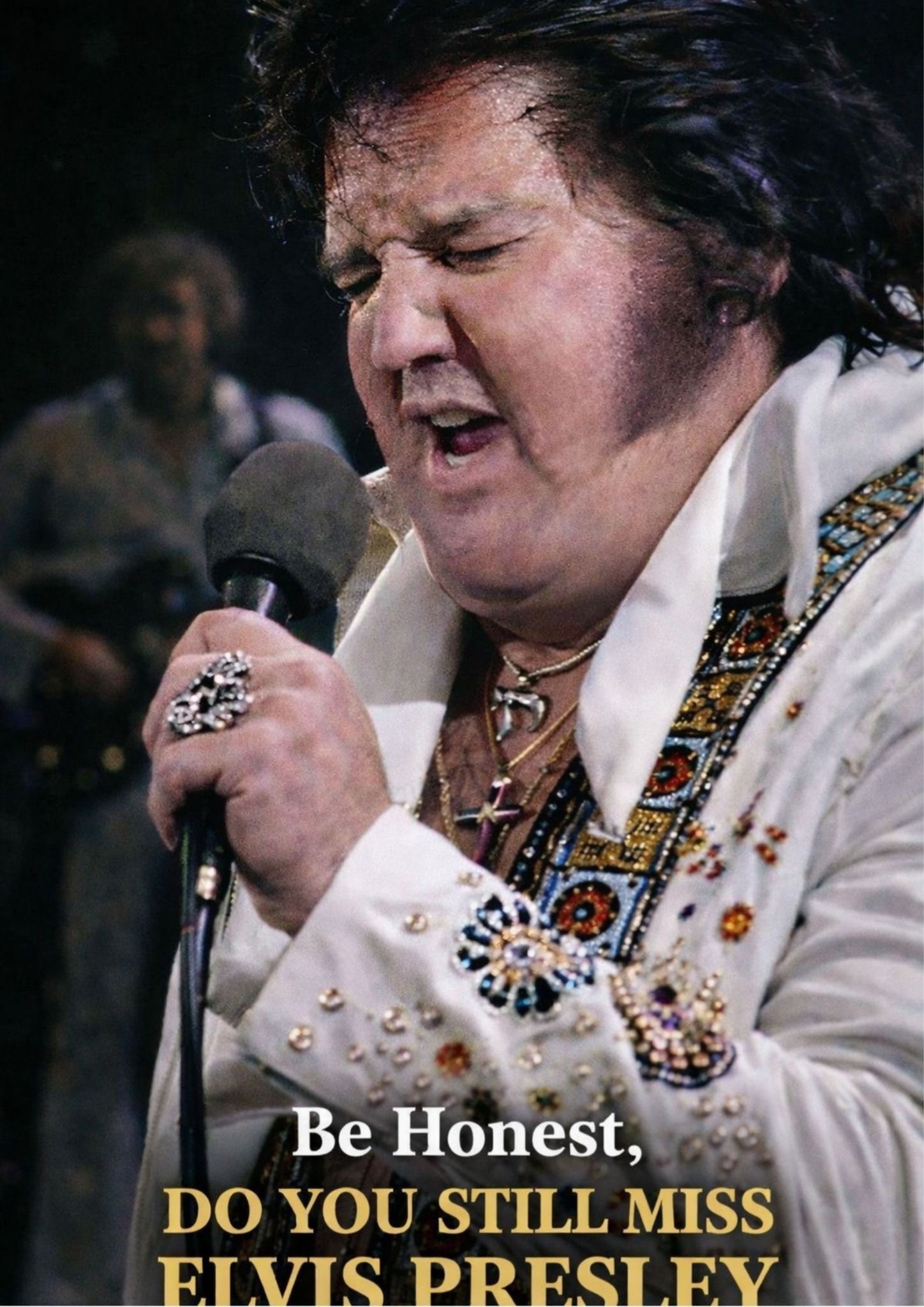
By then, Elvis was no longer the untouchable young rebel who had once transformed popular music forever. The years of relentless fame, exhausting tours, and deeply personal struggles had visibly changed him. Yet despite the exhaustion etched into his appearance, there remained something undeniably powerful about him the moment he stepped onto the stage. Dressed in his legendary white rhinestone jumpsuit, he still commanded the arena with a presence few performers in history have ever possessed.

As the crowd erupted into cheers, time seemed to collapse into itself. For a moment, fans were transported back to the golden years — to the electrifying energy, the cultural revolution, and the unforgettable charisma that had once shaken the world. Songs like “Jailhouse Rock” and “Hound Dog” ignited waves of nostalgia across the arena. They were more than hits; they were pieces of American cultural history, reminders of a man who had forever changed the sound and spirit of modern music.
Yet what made this performance unforgettable was not simply nostalgia. It was the emotional contrast visible throughout the night. Physically, Elvis appeared tired and fragile. But vocally, there were moments where he sounded astonishingly strong, almost transcendent. His voice carried a depth and weariness that made every lyric feel more personal than ever before.
When he performed “Love Me Tender,” the song no longer felt like a simple romantic ballad. It sounded reflective, intimate, almost as if he were speaking directly through the music rather than merely performing it. And when “Can’t Help Falling in Love” filled the arena near the concert’s conclusion, it carried an emotional gravity that no one fully understood until later.
Perhaps the most chilling moment of the evening came during his rendition of “My Way.” Looking back now, the performance feels almost unbearably symbolic. The lyrics — centered on reflection, acceptance, and facing the end of life honestly — seemed to mirror the reality surrounding him. There was no theatrical attempt to turn the song into a farewell. Yet in hindsight, every word feels loaded with meaning. It was as though the song itself had become a quiet confession.
The emotional intensity deepened further during songs like “Hurt” and “How Great Thou Art.” These performances revealed something audiences rarely saw beneath the myth of Elvis Presley: vulnerability. Not the larger-than-life icon worshipped by millions, but a man carrying the weight of fame, loneliness, and expectation while still giving everything he had left to the people who came to see him.

As the concert drew to a close, Elvis delivered what would become some of the most haunting final words ever spoken on a concert stage: “We’ll meet you again. God bless. Adios.”
Simple words. Ordinary words. Yet history transformed them into something unforgettable.
For longtime fans, this final performance remains deeply emotional precisely because it was imperfect. It captured a legend at his most human — exhausted yet determined, fragile yet passionate, struggling yet still capable of extraordinary beauty through music. It showed that greatness is not always found in perfection, but in the courage to continue despite pain and weariness.
Today, the final concert of Elvis Presley stands as more than the end of a tour. It represents the closing chapter of an era that reshaped music forever. Long after the lights dimmed inside that arena, the impact of that night continued to resonate across generations.
Because while voices may eventually fall silent, true legends never really leave the stage.